Africa’s position in global gas markets is entering a structural shift as the European Union moves to permanently end imports of Russian gas, creating a long-term supply gap African producers are increasingly well placed to fill.
Under a provisional agreement reached in December 2025, the EU will ban Russian liquefied natural gas from 2026 and pipeline gas from 2027 as part of its REPowerEU strategy to reduce geopolitical risk and strengthen energy security. The move represents more than a short-term response to the Ukraine war. It locks in a policy realignment that forces Europe to secure alternative gas supplies under long-term, rules-based arrangements.
For African exporters, the decision marks a rare inflection point — one that could reshape investment flows, export strategies and domestic energy development across the continent.
A Permanent Demand Gap
Russian gas still accounts for about 13% of Europe’s consumption, worth more than €15 billion annually, despite sharp reductions since 2022. Replacing those volumes cannot be achieved through renewables alone in the near term, forcing European buyers back toward long-term gas contracts they had largely abandoned.
That shift improves the commercial viability of large-scale gas projects, reducing price volatility risk and strengthening the case for investment at a time when uncertainty around the energy transition has slowed capital deployment into fossil fuels.
Africa, with its proximity to Europe, established export infrastructure and large undeveloped reserves, is emerging as a preferred alternative.
Africa’s Competitive Edge
The continent holds an estimated 620 trillion cubic feet of proven gas reserves but remains underdeveloped relative to its resource base. North Africa — led by Algeria, Egypt and Libya — still dominates production, though its share is projected to fall below 40% by 2035 as new projects in West and East Africa come onstream.
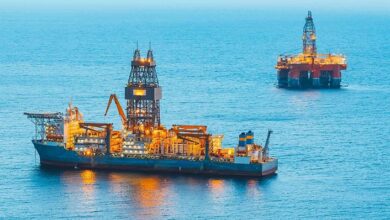
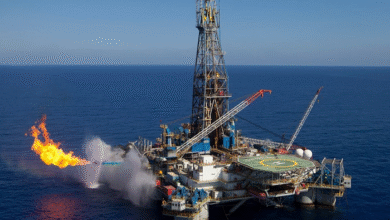
Momentum is already visible. In 2025, several flagship projects advanced, including the Greater Tortue Ahmeyim LNG development in Mauritania and Senegal, Congo LNG Phase 2, and the restart of Mozambique LNG and Rovuma LNG.
West and East African producers also offer Europe strategic flexibility. With access to both Atlantic and Indian Ocean shipping routes, African LNG suppliers can act as swing producers, redirecting cargoes in response to price signals — a capability increasingly valued by European buyers seeking resilience against global supply shocks.
Why It Matters for Ghana
For Ghana, Europe’s gas pivot strengthens the economic logic for accelerating gas development alongside oil production.
The country holds more than 2.1 trillion cubic feet of proven gas reserves, much of it associated with offshore oil fields. Historically, gas has been treated as a secondary output, constrained by limited processing capacity and infrastructure bottlenecks. That approach is becoming increasingly misaligned with global demand and domestic energy needs.
A more robust gas strategy could help Ghana deepen upstream investment, expand processing capacity and improve monetization. Beyond exports, greater gas availability would stabilize power generation, reduce fuel imports and lower energy costs for industry — a critical factor for manufacturing competitiveness.
Unlike pure LNG exporters, Ghana’s advantage lies in linking export potential with domestic demand, using gas as both a revenue generator and an industrial enabler.
Balancing Exports and Development
Africa’s opportunity comes with a constraint. More than 600 million people across the continent lack access to electricity, while gas demand within Africa is projected to rise by 60% by 2050. Ensuring exports do not crowd out domestic needs is becoming a central policy challenge.
New project structures are beginning to address this tension. The GTA LNG project allocates dedicated volumes for domestic use in Mauritania and Senegal alongside exports, tying production growth directly to local energy availability.
For Ghana, similar frameworks could align investor incentives with national development priorities while preserving export revenues.
Investment Is the Real Prize
Energy analysts argue that Africa’s goal should not simply be replacing Russian gas in Europe, but securing investment on terms that support long-term economic transformation.
Embedding domestic market obligations, infrastructure development and industrial linkages into gas projects can help translate geopolitical demand into jobs, skills and fiscal stability.
“Gas must serve African development first,” said NJ Ayuk, Executive Chairman of the African Energy Chamber, arguing that contracts should support power generation and industrial growth alongside exports.
A Defining Moment
As Europe reshapes its energy supply chain, Africa enters 2026 with unusual leverage. For Ghana, the challenge is strategic: whether gas is treated as a short-term export opportunity or as a pillar of industrial and energy policy.
Handled well, Europe’s gas pivot could mark not just a shift in trade flows, but a redefinition of Africa’s role in the global energy economy from marginal supplier to strategic partner, on terms that support long-term growth at home.