BoG Signals Rethink of Domestic Gold Purchase Programme as Balance-Sheet Risks Come Into Focus
The Bank of Ghana has signalled a more cautious reassessment of its Domestic Gold Purchase Programme (DGPP), even as it maintains that the initiative remains critical to external stability and reserve accumulation.
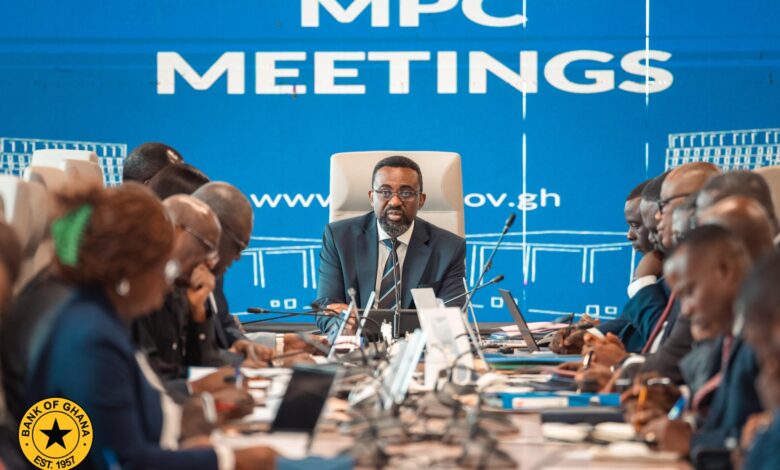
Speaking at the opening of the 128th Monetary Policy Committee (MPC) meeting, Governor Dr Johnson Asiama acknowledged the programme’s role in strengthening Ghana’s external buffers, while underscoring the need for policymakers to carefully examine its timing, sustainability and balance-sheet implications going forward.

“The role of the Domestic Gold Purchase Programme in supporting stability remains critical,” Dr Asiama said. “While the programme has played an important and deliberate role in strengthening external buffers, members will need to consider how its timing, sustainability, and balance-sheet implications should inform the calibration of policy and the ongoing policies to build reserves.”
The remarks come amid sustained public debate over the financial performance of the DGPP, following reports of losses linked to the programme—claims that have been repeatedly disputed by the management of GoldBod, while being partially contextualised by the central bank in earlier explanations.
Although Dr Asiama stopped short of explicitly referencing the controversy, his emphasis on balance-sheet implications and policy calibration represents the clearest acknowledgment yet from the regulator that the programme carries non-trivial financial and accounting risks, even as it delivers macroeconomic benefits.
Launched as part of broader efforts to shore up foreign exchange reserves and reduce pressure on the cedi, the DGPP allows the central bank to purchase domestically produced gold for reserve accumulation. In recent years, the programme has gained prominence amid elevated global gold prices and Ghana’s renewed focus on rebuilding external buffers.
At the opening of the 128th MPC meeting, Dr Asiama pointed to measurable improvements in Ghana’s macroeconomic position. Inflation declined to 5.4 percent at end-2025, expectations well anchored, and gross international reserves had risen to US$13.8 billion, equivalent to 5.7 months of import cover. These gains, he noted, were supported by a current account surplus of 8.1 percent of GDP, as well as favourable external conditions, including higher gold prices.
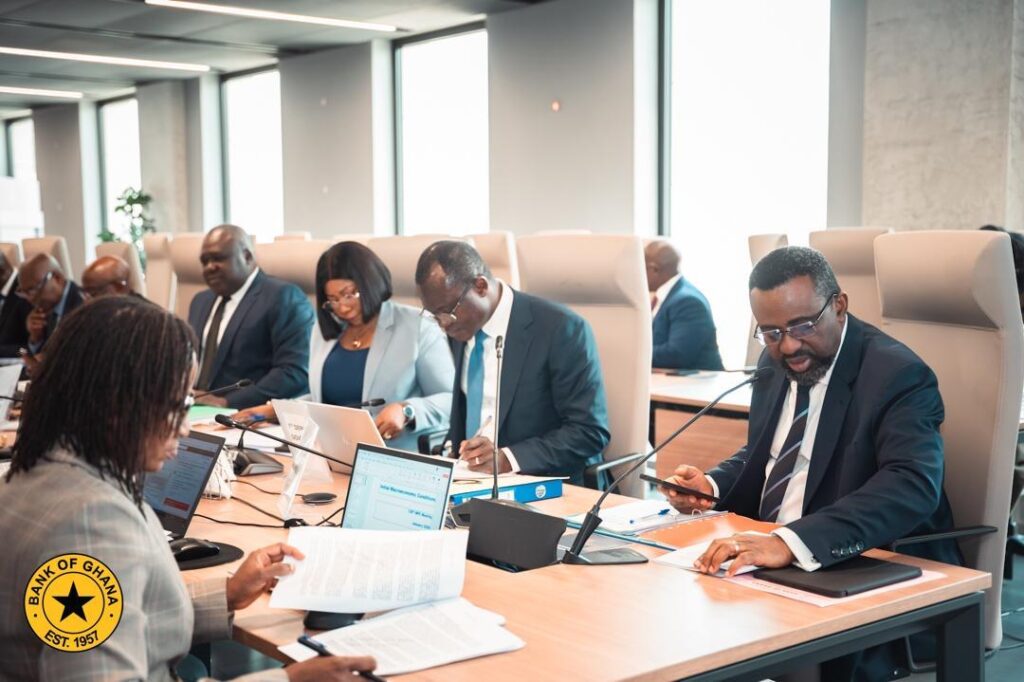
However, the Governor cautioned against complacency, warning that external tailwinds particularly strong commodity prices may not be permanent. Against that backdrop, he stressed that the task before the MPC was not to celebrate progress, but to interrogate whether current policy choices can guarantee stability over the medium term.
Within that framework, the DGPP appears to be entering a more scrutinised phase. Dr Asiama’s remarks suggest that while the programme has contributed to reserve accumulation, its design and execution must now be weighed more carefully against its impact on the central bank’s balance sheet, especially as monetary policy shifts from crisis management to consolidation.
Policy analysts say this distinction is critical. A programme can strengthen headline reserve numbers while still generating valuation, liquidity or timing-related losses particularly in volatile commodity markets. The Governor’s language indicates that the central bank is increasingly conscious of this trade-off and is prepared to factor it more explicitly into policy decisions.
The broader message of the MPC opening statement was one of guarded confidence. Ghana’s rapid disinflation and improved macro indicators have created policy space, Dr Asiama noted, but they also raise difficult questions about durability, sequencing and risk management.
In that sense, the Domestic Gold Purchase Programme has become a test case for the next phase of Ghana’s stabilisation effort, one in which credibility will depend not only on outcomes, but on how transparently risks are acknowledged and managed.
As the MPC deliberates, the signal from the Governor is clear: the DGPP remains an important tool, but it is no longer beyond critical evaluation