
Ghana’s improving macroeconomic indicators will face early and intense scrutiny as the Bank of Ghana’s Monetary Policy Committee (MPC) begins deliberations ahead of a key International Monetary Fund (IMF) programme review due in April 2026.
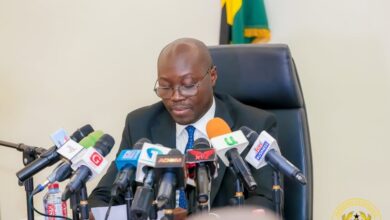
Opening the 128th MPC meeting, Bank of Ghana Governor Dr Johnson Asiama cautioned that while headline indicators had strengthened, the Committee had to rigorously interrogate the data underpinning programme performance, particularly inflation, reserve accumulation and compliance with the zero central bank financing rule.
“The upcoming IMF review in April 2026 will be based on end-December 2025 data,” Dr Asiama said, positioning the MPC as one of the first bodies to subject those figures to detailed assessment. He stressed that this includes the “transparent recognition of legacy and policy-mandated quasi-fiscal activities,” a reference that underscores the importance of data integrity and disclosure as Ghana navigates its IMF-supported adjustment programme.
The Governor’s remarks come at a moment of apparent macroeconomic relief. Inflation slowed to 5.4 percent at the end of 2025, with expectations described as well anchored. Gross international reserves rose to US$13.8 billion, providing 5.7 months of import cover, supported by a current account surplus equivalent to 8.1 percent of GDP. Economic growth through the third quarter remained strong, with leading indicators pointing to further expansion, helping restore confidence among businesses and consumers.
Yet Dr Asiama was careful to frame the gains as provisional rather than permanent. “This meeting is not about touting the successes achieved,” he said, but about assessing whether stability can be sustained as Ghana enters what he described as a critical test period for monetary policy in 2026.
External conditions, he noted, remain supportive but uncertain. Global growth is projected at about 3.3 percent into 2026, even as geopolitical risks persist. Ghana, in particular, has benefited from favourable external tailwinds, including higher gold prices, but the Governor warned against assuming these conditions will endure.
Within this context, the IMF review looms as a discipline-enforcing milestone. Programme assessments will hinge not only on headline outcomes, but on the credibility of the underlying policy framework especially adherence to zero central bank financing and the proper accounting of quasi-fiscal operations that have historically complicated Ghana’s macroeconomic management.
Dr Asiama acknowledged that rapid disinflation has created policy space, but said it also raises new questions about calibration. While coordinated monetary and fiscal actions have delivered recent improvements, the MPC’s task is to judge whether these policies are durable enough to support growth without undermining hard-won credibility.
The emphasis on external scrutiny signals a shift from celebrating recovery to stress-testing it. As Ghana approaches the next IMF checkpoint, the message from the central bank is clear: economic progress will now be measured less by momentum and more by transparency, consistency and the resilience of the data behind the numbers.