Ghana–China Cultural Ties Strengthened Through Chinese New Year Exchange
Cultural exchange between Ghana and China continues to deepen beyond formal diplomacy and trade, finding growing expression in education, language, and the creative arts. As both countries place renewed emphasis on people-to-people relations, initiatives that allow young people to encounter each other’s traditions firsthand are becoming a vital bridge for mutual understanding.
It was against this backdrop that the Confucius Institute, based at the University of Ghana, hosted a Chinese New Year garden party for Ghanaian students ahead of the Chinese Spring Festival. The event was designed not merely as a celebration, but as a deliberate cultural encounter aimed at strengthening ties between the two countries through shared learning and experience.
Speaking at the event, the institute’s Chinese Director, Liu Baijun, underscored the broader purpose behind the celebration. He explained that the garden party was organised to “build a bridge between China and Ghana,” noting that exposing Ghanaian students from primary and secondary schools to the university level to Chinese culture was essential to deepening mutual understanding. According to him, cultural appreciation forms the foundation for long-term cooperation, and engaging young people early helps sustain that connection into the future.
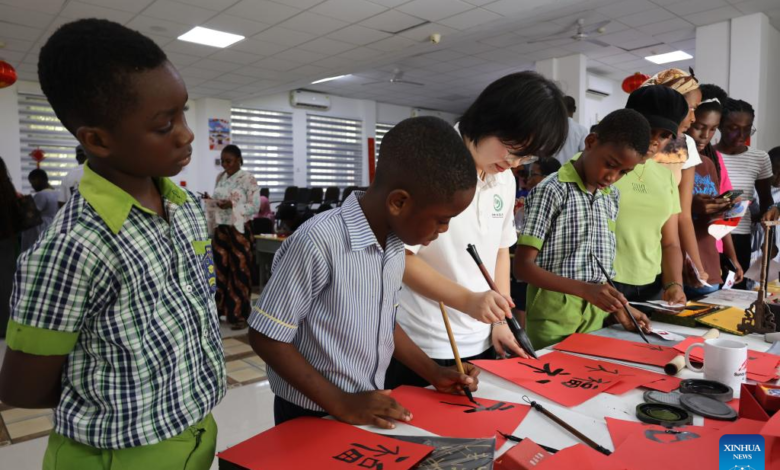
The garden party brought this vision to life through a range of interactive cultural activities. Students were treated to Chinese opera performances and drama displays, offering insight into traditional storytelling and performance styles. An exhibition showcased artworks produced by participating students from primary, junior and senior high schools, as well as members of the university community, reflecting how Ghanaian learners are interpreting and engaging with Chinese cultural themes.
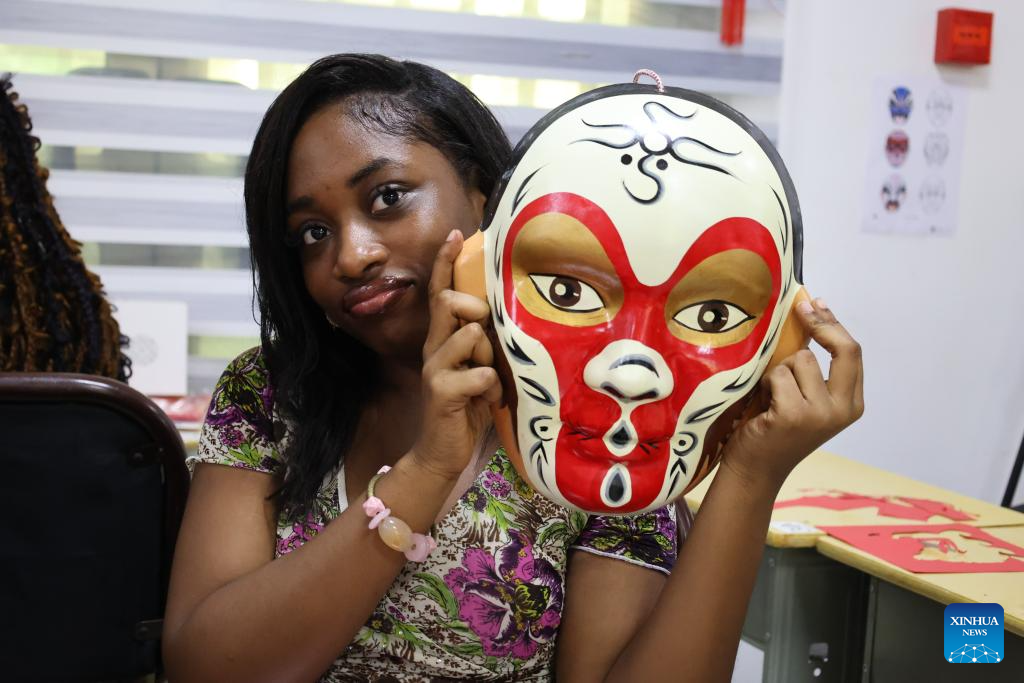
Hands-on sessions proved particularly popular. Participants tried their hand at Chinese calligraphy and sketching, including painting traditional opera masks. These activities allowed students to move beyond observation to active participation, reinforcing the cultural exchange Liu Baijun described as central to the institute’s mission. The experience was complemented by the tasting of various Chinese snacks, adding a culinary dimension to the cultural immersion.
Local Chinese language teacher Beverly Sowah praised the enthusiasm and creativity displayed by the students, noting that the opera masks they painted carry deep symbolic meanings. She explained that colours and patterns on the masks represent different characters and moral traits, offering students an opportunity to learn cultural narratives embedded in Chinese art forms.
For many students, the event provided a rare chance to experience Chinese New Year traditions in an authentic setting. Agnes Dacosta, a sophomore at the University of Ghana, said the garden party helped participants better appreciate Chinese culture during the festive season, describing it as both educational and enjoyable.
By centring cultural exchange on shared experiences rather than formal instruction alone, the Confucius Institute’s New Year garden party highlighted how cultural diplomacy can be lived, felt, and remembered. In doing so, it reinforced the idea that the Ghana-China relationship is increasingly being shaped not only by policy and commerce, but by the everyday interactions of students, teachers, and communities building understanding across cultures.