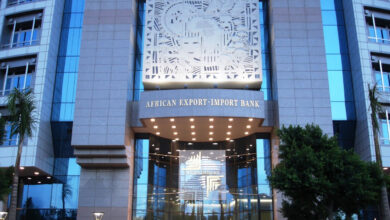

The African Export-Import Bank has launched its first Accelerator Programme, selecting eight startups from more than 1,600 applicants in a move aimed at strengthening the digital backbone of intra-African trade.
The inaugural cohort, unveiled during a week-long engagement in Cairo from March 23–27, brings together ventures operating across payments, logistics, agri-exports, artificial intelligence, and supply chain finance sectors seen as critical to unlocking the full potential of the African Continental Free Trade Area.
From Policy to Execution
The programme signals a shift in how Africa’s trade ambitions are being operationalised, moving beyond policy frameworks to direct investment in businesses building cross-border solutions.
“Trade does not happen within the pages of policy documents. Trade happens through businesses,” said Haytham Elmaayergi, underscoring the bank’s focus on execution over rhetoric.
Each startup is eligible for up to $250,000 in funding, alongside access to mentorship, regulatory guidance, and Afreximbank’s network of governments, financial institutions, and trade partners.
Betting on Digital Trade Rails
The selected startups—including Egypt’s Fincart.io, Nigeria’s Capsa Technologies, and pan-African platforms such as Fluna and Timon—collectively operate across more than 15 countries, targeting some of the continent’s most persistent trade bottlenecks.
Their solutions address long-standing friction points: cross-border payments, fragmented logistics systems, limited access to trade finance, and weak integration of diaspora capital.
Some are already operating at scale. Fluna has facilitated over $50 million in trade across 10 countries, while Capsa has processed more than NGN70 billion in supply chain finance. OnePort 365 is linking trade flows across Nigeria, Ghana, and Kenya, and Zowasel has onboarded over 4,000 cooperatives and agribusinesses.
Together, they reflect a growing pipeline of African startups building the “digital rails” required for seamless continental trade.
Strategic Alignment with AfCFTA
Afreximbank’s intervention is closely aligned with the implementation of AfCFTA, which aims to create a single African market but continues to face structural barriers, particularly in payments, logistics, and regulatory harmonisation.
By integrating startups into its digital ecosystem—including platforms such as the Africa Trade Gateway and the Pan-African Payments and Settlement System (PAPSS)—the bank is positioning itself as both financier and infrastructure provider.
This dual role allows it to address not just capital constraints, but also market access and compliance challenges that often stall expansion across borders.
A Competitive Play in Africa’s Innovation Economy
The launch of the accelerator also reflects intensifying competition among African institutions to shape the continent’s digital economy.
With global supply chains shifting and geopolitical pressures pushing for diversification, Africa’s ability to facilitate internal trade is becoming increasingly strategic. Digital platforms that reduce transaction costs and improve efficiency are emerging as key enablers.
For Afreximbank, the programme offers a pipeline of scalable ventures that can plug directly into its trade finance architecture, while also reinforcing its mandate to drive economic integration.
Investor Signal and Policy Implications
For investors, the initiative provides a curated entry point into Africa’s trade-tech ecosystem—de-risked through institutional backing and aligned with continental policy priorities.
For policymakers, it highlights the growing importance of enabling regulatory environments that allow such platforms to scale across jurisdictions without friction.
The presence of startups operating across multiple countries also underscores the urgency of harmonising rules under AfCFTA, particularly in areas such as payments, data governance, and trade documentation.
The Bottom Line
Afreximbank’s accelerator is less about early-stage experimentation and more about scaling proven solutions to continental level.
If successful, the programme could help bridge the gap between Africa’s trade ambitions and execution—by backing the businesses building the infrastructure to make cross-border commerce work in practice.