Africa’s $1 Trillion Food Economy Hinges on Fixing How Governments Spend
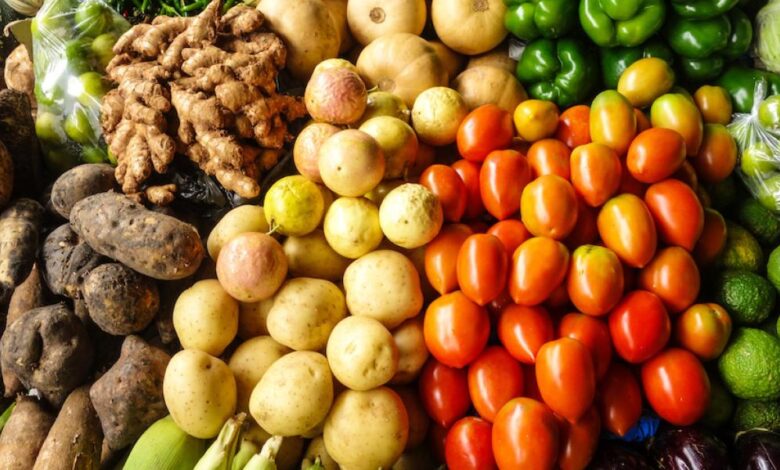
A plate of pilau rice from Tanzania, meat from Kenya, spices sourced through global trade routes captures both the complexity and the untapped potential of Africa’s food system.
Scale that across a continent of 1.4 billion people, and the sector is projected to grow into a $1 trillion market by 2030. But the real story is not about size, it is about whether Africa can convert that potential into jobs, productivity and sustained economic growth.
Each year, roughly 12 million young Africans enter the labour force. Few sectors are as well-positioned to absorb that surge as agriculture and agribusiness. Yet the system that should drive this expansion remains structurally weak.
A Growth Engine That Isn’t Firing
In theory, a competitive food system should trigger broad-based economic activity. Higher farm productivity increases demand for storage, processing, transport, packaging and logistics. It expands access to credit and insurance, lowers food costs and opens new trade corridors.
In practice, those linkages remain underdeveloped.
Africa’s food systems are still largely low-productivity, fragmented and undercapitalised, limiting their ability to generate jobs beyond primary farming.
The constraint is not just financing. It is how existing resources are being used.
Billions Spent, Limited Impact
African governments already spend an estimated $17 billion annually on agriculture, largely through input subsidies aimed at boosting yields and reducing food prices.
But much of that spending is delivering weak returns.
Blanket fertilizer subsidies, often poorly targeted, are encouraging monocropping, degrading soils and increasing emissions while doing little to build resilient, diversified food systems. At the same time, price controls and state-led distribution systems are crowding out private suppliers, lenders and processors.
The result is a cycle of low productivity and limited private sector participation.
Rethinking the Model
The World Bank Group argues that the issue is not the scale of spending, but its structure.
Redirecting existing subsidies toward better seeds, appropriate fertilizers, mechanisation and climate-smart practices could significantly raise productivity while making agriculture more attractive to private investors.
Such a shift would also strengthen value chains, creating jobs in processing, logistics and agri-services.
This approach sits at the core of the Bank’s “AgriConnect” initiative, which aims to help 300 million smallholder farmers integrate into higher-value markets.
Signs of a Shift
Some countries are already moving in this direction.
Zambia has introduced electronic vouchers that allow farmers to choose inputs through digital platforms, stimulating competition among suppliers. Senegal is shifting away from subsidies toward long-term investments in irrigation and farmer skills. Malawi is using a digital registry to better target support, freeing up resources for research and climate resilience.
More than 40 countries are now working with the World Bank to reshape agricultural spending, influencing around $13 billion in public investment.
The focus is moving from blanket support to targeted, market-oriented systems.
The Financing Gap and the Opportunity
Building a competitive food system will require an estimated $80 billion annually through 2030, covering infrastructure, technology, research and skills development.
Most governments cannot meet that demand alone.
The strategy, therefore, is to use public funds more effectively to unlock private capital, creating an ecosystem where agribusinesses, financiers and entrepreneurs can scale.
Agriculture has already been identified as one of the Bank’s priority sectors for job creation, alongside energy, infrastructure, healthcare, tourism and manufacturing.
The Stakes
Africa’s agricultural sector sits at a crossroads.
Handled well, it could become a magnet for investment and a major employer of young people, driving industrialisation and regional trade. Managed poorly, it risks remaining a low-productivity sector that young people increasingly abandon.
The Bottom Line
The opportunity is clear, and much of the required funding is already in the system.
The challenge is execution, shifting from broad, inefficient subsidies to targeted investments that raise productivity, crowd in private capital and build competitive food systems.
If that transition happens, Africa’s farms could become the foundation of a trillion-dollar economy—and a central pillar of its future growth.