NFL, IFAF Step Up Flag Football Push in Ghana as Africa Emerges Growth Frontier
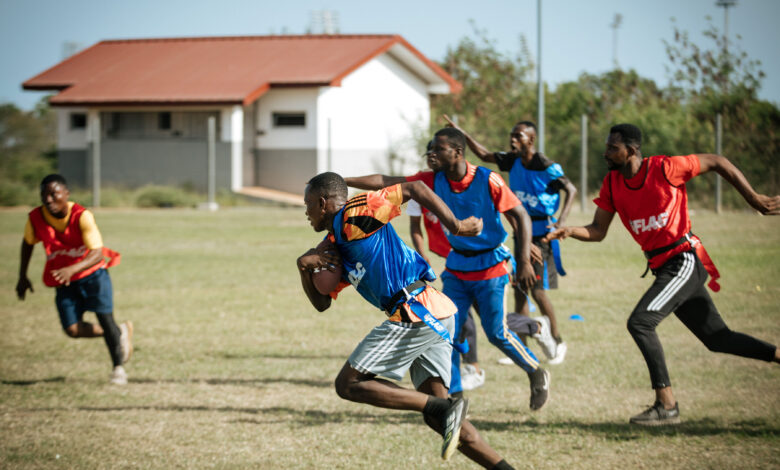
The National Football League (NFL) and the International Federation of American Football (IFAF) have intensified efforts to expand flag football across Africa, hosting a four-day development programme in Ghana aimed at strengthening grassroots participation and building long-term talent pathways.
Held in Accra, the initiative brought together local teachers, international coaches and federation representatives, highlighting Ghana’s growing role in the sport’s expansion on the continent.
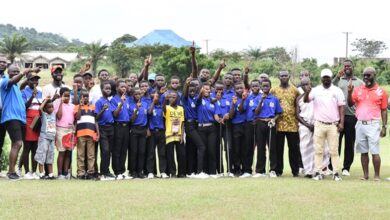
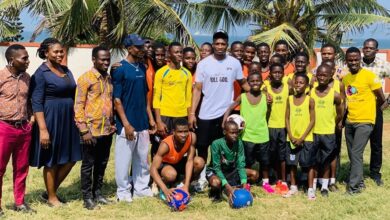
The programme combined local capacity-building with continental collaboration. It opened with a Ghana-focused teachers’ clinic designed to equip about 40 educators involved in the NFL Flag programme with practical tools to introduce and scale flag football in schools. Sessions covered coaching frameworks, programme sustainability and game fundamentals, supported by on-field drills and hands-on gameplay.
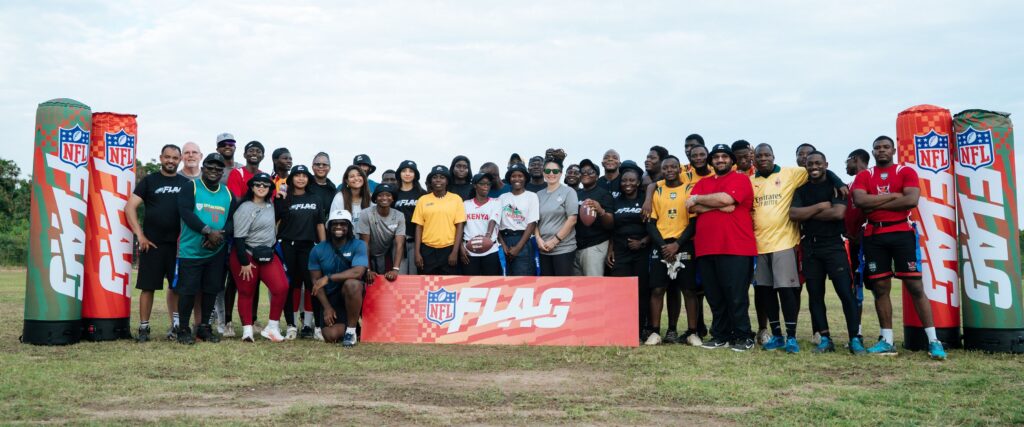
The final two days shifted to a broader African focus, as the Africa Coaching Clinic convened delegates and coaches from 11 countries, including Ghana, Nigeria, Kenya, South Africa and Egypt. The sessions emphasised technical development, knowledge-sharing and cross-border collaboration, as stakeholders work to build a more structured and competitive ecosystem for the sport.
Flag football—one of the fastest-growing sports globally is now played by millions across more than 100 countries. Its inclusion in the 2028 Olympic Games in Los Angeles has further accelerated interest, positioning it as a viable pathway for athletes and federations seeking global exposure.
NFL International Flag Football Development Manager, Afia Law, said the Ghana programme reflects a broader strategy to deepen access and create sustainable growth structures.
“Flag football continues to create new opportunities for athletes and communities around the world,” she said. “Through this work in Ghana, we’re proud to support local educators and coaches while also partnering with federations across Africa to expand access to the game and build sustainable pathways for growth across the region.”
IFAF Sport Manager, Lars Carlsen, emphasised the importance of partnerships in driving the sport’s global expansion.
“Programs like this demonstrate the power of collaboration in driving the global development of flag football,” he said. “By working together with partners like the NFL, we are able to support national federations, strengthen coaching structures and continue building momentum for the sport as it grows internationally and moves toward its Olympic future.”
The clinics also provided a platform for interaction among coaches from different countries, fostering collaboration and strengthening networks within Africa’s flag football community. Participation by a retired Olympic sprinter from Sierra Leone further underscored the sport’s growing alignment with the Olympic movement.
The Ghana initiative builds on ongoing efforts by the NFL and IFAF to expand flag football globally, with a focus on accessibility, inclusion and structured development. Across Africa, member federations are already reporting rising participation levels, signalling strong momentum as the sport gains ground both at grassroots and competitive levels.
For Ghana and the wider region, the programme marks another step toward positioning flag football not just as a recreational activity, but as a structured sport with potential for international competition and economic opportunities within the evolving global sports industry.