ECOWAS Bank Defies Global Headwinds as Profit, Assets and Project Pipeline Surge
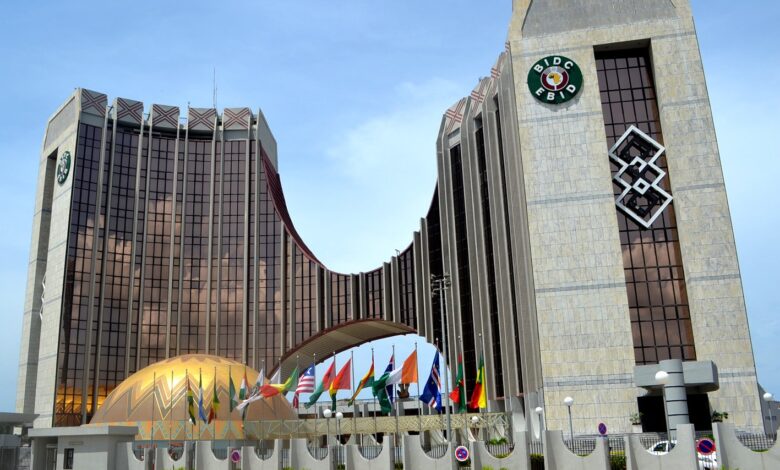
The ECOWAS Bank for Investment and Development (EBID) delivered resilient growth in 2025, expanding its balance sheet, improving profitability and accelerating project financing despite a turbulent global economic environment, Ghana’s Finance Minister Dr Cassiel Ato Forson has said.
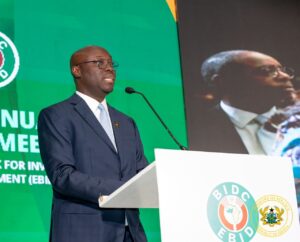
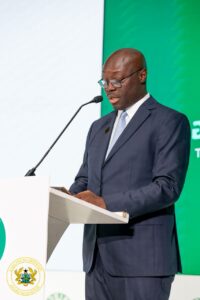
Addressing the Bank’s 24th Ordinary Session of the Board of Governors in Accra, the minister said EBID had “not just weathered the storm” of global uncertainty, but strengthened its role as a key driver of regional development.
The assessment comes against a backdrop of heightened geopolitical tensions, trade volatility and uneven global growth, conditions he described as creating a “steady but narrow” expansion path with significant implications for emerging economies.
Resilience Anchored in Financial Performance
The Bank’s financial results underscored that resilience. Total assets rose from US$1.97 billion in 2024 to US$2.39 billion by end-2025, reflecting increased scale of operations and lending activity.
Profitability also strengthened, with net income rising 13.3% to US$9.75 million from US$8.55 million a year earlier a performance the minister attributed to disciplined risk management and effective oversight.
Credit rating agencies Moody’s and Fitch Ratings reaffirmed the Bank’s ratings at B2-Stable and B-Stable respectively, signalling continued investor confidence in its financial position and governance framework.
Operational Momentum Gains Pace
Beyond balance sheet growth, EBID recorded a sharp acceleration in its development financing activities.
Project approvals rose by 50%, while total commitments surged by more than 83% to US$813.77 million, with a strong concentration in energy and transport infrastructure sectors widely seen as critical to unlocking regional trade and industrial growth.
The Bank also demonstrated increasing catalytic capacity, mobilising more than US$510 million and €310 million alongside an additional US$100 million in capital all deployed into priority projects across member states.
Strategic Positioning and Institutional Strength
Dr Forson said 2025 marked a “decisive phase” in EBID’s institutional consolidation, pointing to its accreditation with the Green Climate Fund as a key milestone that opens new avenues for climate financing.
The opening of a regional office in Abidjan was also highlighted as a move to deepen country presence and accelerate project delivery.
“These milestones underscore the Bank’s growing resilience, credibility and regional relevance,” he said.
Capital Constraints Pose Ongoing Risk
Despite the strong performance, the minister cautioned that capital mobilisation remains a critical constraint.
A 2022 decision to increase authorised capital to US$3.4 billion and raise an additional US$411.4 million in subscriptions has seen limited compliance, with only four member states, that’s Ghana, Côte d’Ivoire, Guinea and Togo fully meeting their obligations.
Outstanding arrears remain at approximately US$256 million, a gap he warned could limit the Bank’s ability to scale financing for development projects.
“Timely capital payments are critical. It strengthens EBID’s leverage and sustains its growth and impact,” he said.
Outlook: Resilience Tested, But Role Expanding
The minister framed EBID’s recent performance as evidence of a maturing regional financial institution capable of operating effectively in a volatile global environment.
As West Africa grapples with infrastructure deficits, energy constraints and fiscal pressures, the Bank’s ability to combine financial discipline with expanding development impact is likely to remain central to its relevance.
“The expectations of our citizens are high,” he said. “The future of EBID will be defined by what we commit to — and what we deliver.”