
Pension Funds and Global Capital Step In to Back Ghana’s SME sector
Ghanaian businesses are getting a fresh lifeline as long-term capital begins to flow into a segment of the economy that has long struggled to access it.
Growth Investment Partners (GIP) has attracted new investment from Axis Pension Trustees and Norfund, strengthening its ability to finance small and medium-sized enterprises (SMEs) and scale its impact across the economy.
The $20 million commitment marks a significant vote of confidence in a financing model designed to support businesses that are often too large for microfinance, yet not structured enough to attract traditional private equity.
A Different Kind of Capital
For many SMEs, the problem is not just access to money but the kind of money available. Short-term bank loans and foreign currency financing often limit growth or expose firms to exchange rate risks.
GIP is targeting that gap with longer-term, flexible funding in local currency, combined with operational support to help businesses expand sustainably.
Since its launch in 2023, the platform has invested more than $40 million in 16 companies, supporting over 3,356 jobs, including 533 new roles.
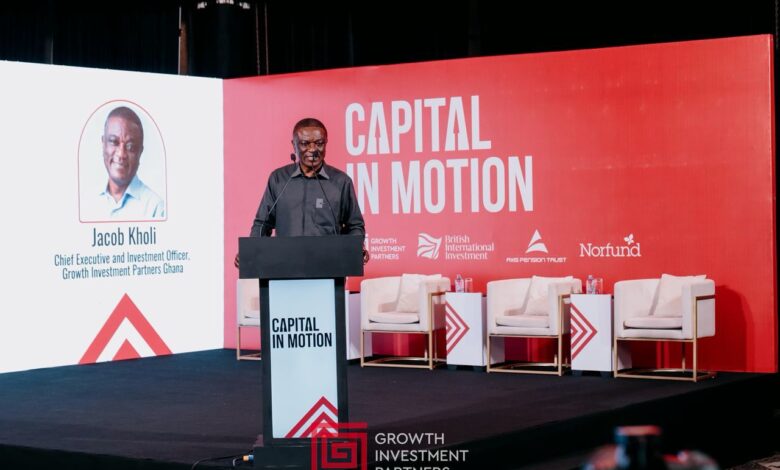
Jacob Kholi, Chief Executive Officer of GIP Ghana, said the latest investment builds on that momentum.
“The addition of Axis Pensions and Norfund marks an important milestone for GIP and reflects growing confidence in our investment model. Over the past two and a half years, we have demonstrated that flexible, local currency capital, combined with hands-on support, can unlock meaningful growth for Ghanaian businesses. This new capital positions us to scale that impact further.”
Blending Domestic and International Capital
The deal stands out not just for its size, but for who is investing. A local pension fund is joining forces with an international development finance institution, an approach increasingly seen as critical to unlocking long-term funding for African economies.
Leslie Maasdorp, CEO of British International Investment, which established GIP, said the platform was built to crowd in both local and global investors.
“From the outset, our ambition has been to build a scalable structure that mobilises both local and global investors, widening participation in areas that are often underserved. The entry of Axis Pension Trustees and Norfund is particularly significant, demonstrating growing interest in building a stronger base of long-term capital and technical support to help pioneering Ghanaian businesses succeed.”
For Axis Pension Trustees, the move signals a deliberate shift toward investing in the real economy.
“We are confident in their ability to deliver decent financial returns as well as real economic impact. For us, this partnership reflects our strategic focus on real sector investments that support productive local enterprises and drive sustainable economic growth,” said Chief Executive Officer Afriyie Oware.
Solving a Persistent Constraint
Access to patient capital remains one of the biggest barriers to business expansion in Ghana, particularly for firms seeking to scale operations or enter export markets.
Norfund sees GIP as a practical solution to that challenge.
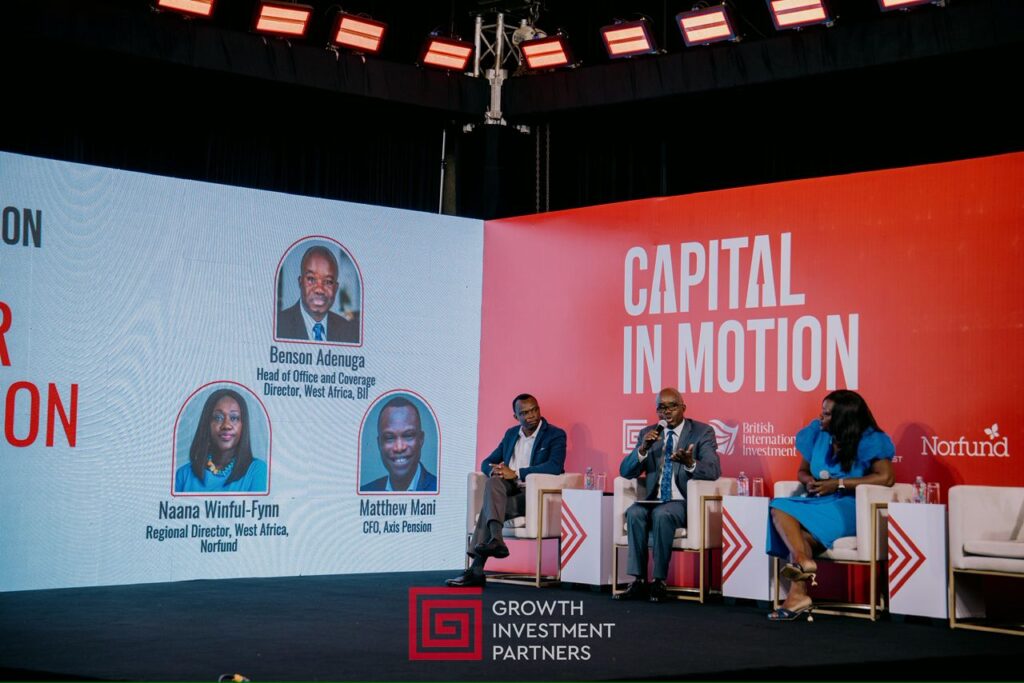
“Access to flexible, long-term capital remains a key constraint for many growing businesses. GIP’s approach provides an effective model for addressing this gap for SMEs, whilst delivering both development impact and sustainable returns,” said Naana Winful Fynn, Regional Director for West Africa.
The platform’s investments span sectors critical to economic transformation, including manufacturing, agribusiness and services.
More Than Financing
Beyond capital, GIP provides support in governance, financial management and strategy—areas that often determine whether businesses succeed or stall.
This hands-on approach is helping portfolio companies such as Maagrace Garments, Truecoco and eServices Africa strengthen operations and expand into new markets.
Outlook: A Model Gaining Traction
With additional funding secured and more capital in the pipeline, GIP is positioning itself as a key conduit for long-term investment into Ghana’s productive sectors.
The participation of pension funds also points to a broader shift mobilising domestic savings to support local enterprise rather than relying solely on external financing.
As pressure mounts to create jobs and drive industrial growth, the ability to connect capital with credible businesses could prove decisive.
And increasingly, that connection is being built around platforms like GIP.