SMEs Told Bankability, Not Growth Alone, Holds Key to Funding

Ghanaian SMEs seeking to raise capital must focus as much on becoming investment-ready as they do on growing their businesses, as lenders and investors increasingly look for evidence that businesses can manage and protect the capital they receive.
A Senior Manager at Deloitte Ghana, Cheryl Otoo, said revenue growth and market expansion could demonstrate that a business had potential, but they were not enough on their own to convince capital providers to commit funding.
“Growth demonstrates opportunity while bankability attracts capital,” she said.
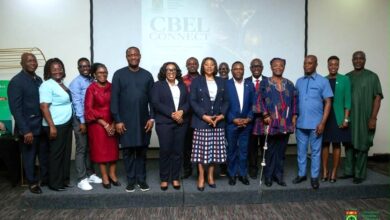
She was speaking at an Investment Readiness Series webinar organised by the UK-Ghana Chamber of Commerce (UKGCC) in partnership with Deloitte Ghana, under the theme “Bankability vs Growth: What Capital Providers Really Want, From Readiness to Deals – Practical Next Steps.”
The discussion brought together professionals from Deloitte, banking and investment to examine why some businesses struggle to secure funding even when they are growing.
What lenders look for
Ms. Otoo said a bankable business should have credible financial records, an effective management team, appropriate governance structures, documented risk management systems, a clear strategy and evidence that there is a market for its products or services.
George Ephraim Afotey Anang, Manager, Infrastructure and Capital Projects at Deloitte Ghana, said the distinction was important because growth measures the value a business is creating, while bankability gives investors and lenders confidence that the value can be sustained.
Tony Anderson, an investment and economic development professional supporting investment activities through the Ghana Investment Support Programme, said investors also need businesses to provide enough information to assess risk.
“Fund managers, private equity, and venture capitalists raise money from what we call a limited partner, promising them returns and reducing their risk by investing in good businesses,” he said.
He said poor documentation and weak organisational structures could raise concerns among potential investors.
Banks say liquidity is available
From the banking side, Dominic Donkoh, Group Head, General Operations at OmniBSIC Bank Ghana Ltd, said banks had funds available to lend but businesses still had to demonstrate that they could use and repay the money responsibly.
“Banks have a lot of liquidity, and OmniBSIC has a lot of liquidity, and so very willing to lend to bankable businesses,” he said.
He said the strongest businesses from a lending perspective were those that combined bankability with growth.
Mr Donkoh advised SMEs to maintain proper documentation, manage their cash flows closely and avoid spreading their resources across too many businesses at the same time.
He also linked financial weaknesses to corporate governance.
“If you have the right board that has the right expertise that is holding the management accountable, even if they are the owners, then one would expect that such inconsistencies will not happen,” he said.
Investment readiness starts before fundraising
For SMEs looking for external capital, preparation should begin well before an application is submitted.
Mr Anang said businesses that successfully raise capital often begin preparing one to two years before approaching a financier.
He recommended that SMEs first assess their investment readiness and understand the requirements of the particular type of financier they intend to approach.
For smaller businesses that cannot immediately afford professional advisory services, the panel identified several steps they could take themselves.
These include formalising business operations, keeping reliable books, establishing financial and operational controls, improving governance, reducing excessive dependence on founders and maintaining tax compliance.
Peter Charway, a Senior Manager in Infrastructure, Capital and Real Estate Projects at Deloitte Ghana, also encouraged businesses to conduct independent assessments of their operations and ensure their growth projections are supported by the underlying business performance.
The $4.8bn financing gap
The need for greater investment readiness comes against the backdrop of a large financing gap for Ghanaian SMEs.
Ms Otoo put Ghana’s estimated annual SME financing gap at $4.8 billion, while formal SME financing across Africa was estimated at between $300 billion and $331 billion.
Although access to finance is frequently cited as one of the biggest constraints facing SMEs, she said discussions with banks and investors pointed to problems within individual businesses that also make financing difficult.
Macroeconomic improvements, she said, did not automatically translate into easier access to finance because lenders and investors assess each business separately.
“Investors and funders are still very careful,” she said, noting that each funding proposal was considered on its own merits.
Capital opportunities require preparation
Ms Otoo said efforts were also being made to expand financing opportunities for SMEs.
She cited initiatives involving the Bank of Ghana to use digital transaction data in developing solutions for the SME financing gap, as well as funding from development finance institutions.
She said the World Bank deployed about $300 million in Ghana in 2025, while the African Development Bank committed and deployed about $75 million to support youth, businesses and women-owned businesses, with an intended 30,000 jobs.
The availability of such funding, she said, would only help businesses that were sufficiently prepared to access it.
The webinar also examined the role of environmental, social and governance (ESG) practices, independent boards and corporate governance in building investor confidence, as well as the differences between debt, equity and development finance.
For SMEs, the message from the industry participants was that fundraising should not begin when a business needs money. The systems, records and governance structures that make a company investable need to be built well before the funding application is made.