AfCFTA Pushes Africa Toward Payment Independence as PAPSS Takes Centre Stage
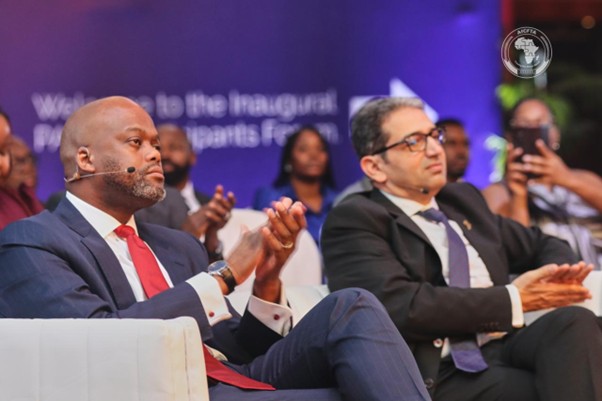
Africa’s ambition to unlock the full value of its continental free trade area will remain constrained unless the continent gains control over how its cross-border payments are settled, AfCFTA Secretary-General Wamkele Mene has warned.
Speaking in Lagos at the inaugural PAPSS COWRY Conference, Mr Mene argued that Africa’s dependence on foreign currencies and offshore payment rails continues to inflate transaction costs, slow trade flows and weaken the competitiveness of African businesses, particularly small and medium-sized enterprises.
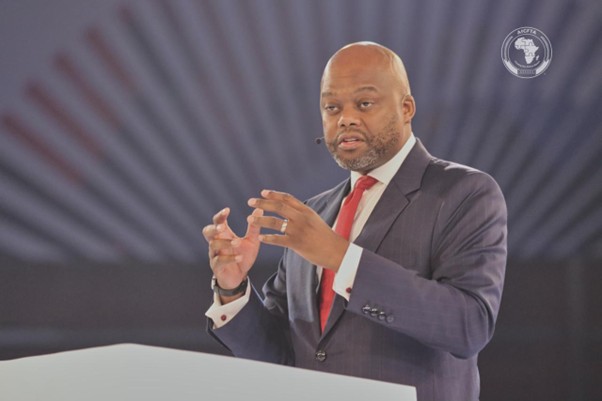
He described the Pan-African Payment and Settlement System (PAPSS) as a strategic economic tool capable of changing that reality by allowing instant cross-border settlements in local currencies. According to him, the system reduces reliance on third-party currencies, cuts payment costs and strengthens Africa’s ability to trade as an integrated market under the African Continental Free Trade Area (AfCFTA).
“At the heart of Africa’s trade challenge is not only tariffs or infrastructure, but the way we pay for goods and services across borders,” Mr Mene said, positioning PAPSS as central to Africa’s financial sovereignty and trade transformation agenda.
The conference brought together policymakers, central bankers, commercial banks and payment industry leaders, with discussions centred on how interoperable payment systems can remove persistent non-tariff barriers to intra-African trade. Participants noted that fragmented payment systems remain a hidden cost for African businesses, often forcing transactions through foreign correspondent banks and hard currencies.
PAPSS, developed as an African-owned platform, is designed to address this structural weakness. By enabling direct settlement between African banks in local currencies, the system aims to support faster trade execution, improve liquidity management and retain transaction value within the continent.
PAPSS Chief Executive Officer, Mike Ogbalu III, linked today’s payment inefficiencies to Africa’s colonial legacy, arguing that artificial borders and multiple currencies continue to undermine economic integration. He said PAPSS represents a deliberate effort to correct that imbalance by building modern financial infrastructure that reflects Africa’s trade realities.
The scale of the challenge was underscored by the President of the Chartered Institute of Bankers of Nigeria, Prof. Pius Olanrewaju, who noted that an estimated 80 per cent of intra-African trade transactions are still settled in non-African currencies. He warned that true monetary stability and integration would remain elusive unless Africans control their payment systems.
For the AfCFTA Secretariat, the linkage between payments and trade execution is increasingly critical. Officials at the conference stressed that without efficient, predictable payment mechanisms, businesses will struggle to take advantage of the continent’s emerging Single Market, regardless of tariff reductions.
Seamless payments, they argued, are essential to lowering operating costs, improving cash flow certainty and enabling SMEs to scale across borders — a key objective of the AfCFTA’s digital trade and trade facilitation agenda.
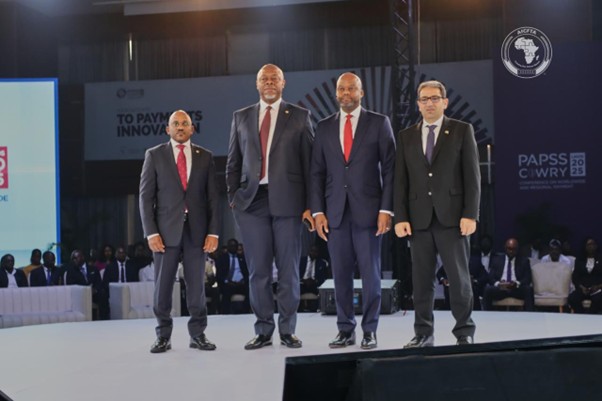
As implementation of the AfCFTA accelerates, the Secretariat reaffirmed its commitment to working with financial institutions and payment platforms to deepen interoperability across the continent. The message from Lagos was clear: Africa’s trade ambitions cannot be separated from who controls its money flows, and modernising payment infrastructure is now a business and economic imperative, not a technical afterthought.