AfCFTA Pushes Self-Sufficient African Market as Antidote to Persistent Poverty
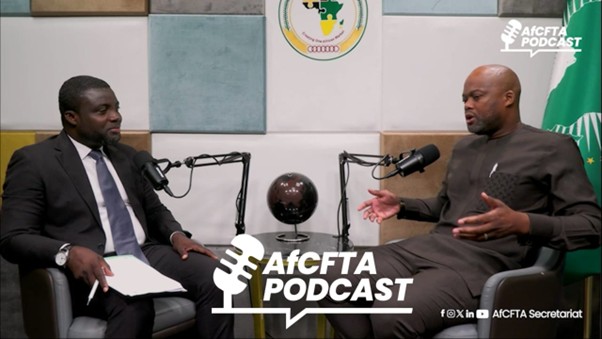
The African Continental Free Trade Area (AfCFTA) is intensifying efforts to build a self-sufficient continental market as a long-term solution to Africa’s recurring poverty and economic fragmentation, according to its Secretary-General, Mr Wamkele Mene.
Speaking on the maiden episode of the AfCFTA podcast, Mr Mene said Africa’s inability to trade effectively with itself has kept the continent dependent on external markets, limiting value creation and weakening domestic industries.
He described the AfCFTA as a decisive break from that cycle, positioning it as an African-driven integration project designed to unlock economies of scale across 55 countries and a combined market of 1.4 billion people.
Mr Mene noted that unlike earlier integration efforts, the AfCFTA was conceived, negotiated and driven entirely by African governments, with political backing from heads of state demonstrated by the signing of the agreement in Kigali in 2018.
Despite this progress, he acknowledged that implementation has been constrained by longstanding structural challenges, including weak transport networks, high logistics costs and fragmented customs systems that raise the cost of doing business across borders.
To address these barriers, the AfCFTA Secretariat has rolled out several operational tools aimed at making intra-African trade commercially viable.
One of the most significant is the Pan-African Payment and Settlement System (PAPSS), which allows businesses to trade in local currencies rather than relying on the dollar or euro. Mr Mene said the system could save Africa an estimated US$5 billion annually in currency conversion costs, freeing capital for productive investment.
The AfCFTA Adjustment Fund has also mobilised US$1 billion toward a US$10 billion target to support countries adjusting to the new trading regime. The fund is intended to strengthen industrial capacity and help local firms compete within the expanded continental market.
In addition, the AfCFTA Transit Guarantee Scheme is being deployed to reduce trade friction by replacing multiple national insurance requirements with a single bond valid across participating countries.
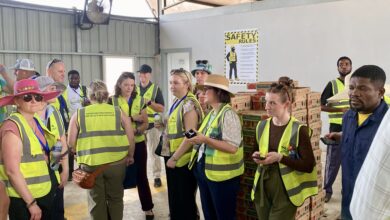
Mr Mene highlighted the Guided Trade Initiative (GTI) as a practical demonstration that AfCFTA rules can support real trade. Launched in 2022 with seven countries, the initiative has expanded to 24 countries, enabling businesses to test the framework, identify bottlenecks and generate lessons for full-scale implementation.
Beyond goods trade, the Secretary-General said digital trade is emerging as a critical frontier for Africa’s integration agenda. With the continent’s digital economy projected to reach US$700 billion by 2035, he stressed the urgency of finalising the AfCFTA digital trade protocol to facilitate data flows, attract investment and support small businesses.
He said digital platforms could play a transformative role in expanding market access for young entrepreneurs and small enterprises that have traditionally been excluded from cross-border trade.
Mr Mene said his commitment to the AfCFTA is rooted in the belief that Africa possesses the resources and talent needed to generate prosperity, but lacks the integrated market required to unlock that potential.
He encouraged African businesses, particularly young entrepreneurs, to actively engage AfCFTA platforms, noting that while implementation remains complex, the framework provides the clearest pathway yet toward building a resilient, internally driven African economy.
The AfCFTA podcast forms part of the Secretariat’s efforts to make the trade agreement more accessible to the public, as the success of the continental market increasingly depends on private sector participation rather than policy ambition alone.