
Bright Simons Accuses Governments of Misleading Ghanaians Over Lithium Deal
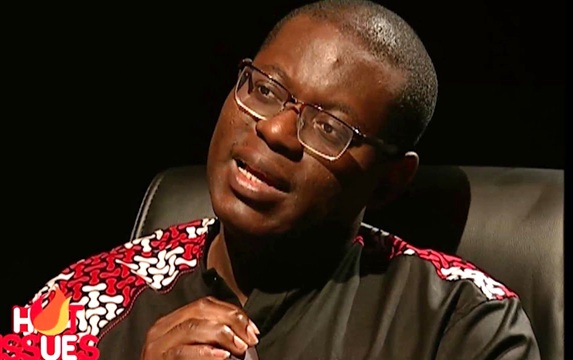
Vice President of IMANI Africa, Bright Simons, has raised serious concerns over Ghana’s lithium agreement with Atlantic Lithium, accusing ministers of Lands and Natural Resources of misleading the public and Parliament on plans to refine lithium locally.
In a series of posts on X, Simons alleged that successive Mining Ministers created the impression that Atlantic Lithium was open to refining lithium in Ghana, including inserting a requirement in the company’s lease agreement to conduct a “scoping study” on local refining.
According to Simons, new information suggests that this position may have been disingenuous.
“It is being suggested that we are being played,” Simons said, claiming that Atlantic Lithium had already completed a scoping study as far back as 2024 and concluded that refining lithium in Ghana was not commercially viable , a conclusion he says was communicated to government officials.
Simons further alleged that the company arrived at this conclusion by significantly underestimating the size of Ghana’s lithium resource, a move he described as strategic and potentially harmful to the country’s long-term value capture ambitions.

IMANI Africa, he said, is now publicly demanding that the Minister for Lands and Natural Resources confirm or deny these claims.
The policy think tank’s decision to go public follows what Simons described as repeated failed attempts to engage the Ministry in building a transparent national fiscal model to guide negotiations with Atlantic Lithium. He said IMANI had proposed collaborative modelling to ensure that royalty rates, incentives and value-add commitments were based on rigorous data and shared assumptions.
Despite direct encouragement from President John Dramani Mahama for stakeholders to work together to secure the best possible outcome for Ghana, Simons said the Minister has consistently refused to engage in good faith.
Central to IMANI’s criticism is the royalty framework approved by Parliament. Simons noted that the Minister proposed a sliding-scale royalty arrangement with a baseline rate of 7 per cent, a figure he said falls below what many independent analysts consider fair.
“Several analysts advised that the baseline should not fall below 10 per cent, at which level the investor would still earn strong profits,” Simons said, adding that these recommendations were ignored.
He also questioned why Parliament was presented with a provision requiring Atlantic Lithium to conduct a refining scoping study when, according to IMANI’s claims, such a study had already been completed and used to justify the company’s decision not to refine locally.
The controversy, Simons argued, exposes deeper weaknesses in Ghana’s extractives governance framework, which he described as suffering from “high political accountability but low policy accountability.”
“This lithium situation is fast becoming a textbook case of katanomics,” he said, referring to a system where political actors are visible and answerable, but critical policy decisions are not subjected to rigorous technical scrutiny.
As pressure mounts, IMANI Africa is calling for a direct, public response from the Minister, warning that failure to clarify the issues risks undermining public trust in Ghana’s strategy to leverage critical minerals for industrial development.