Africa’s Pipeline Projects: What’s Holding Up Development?
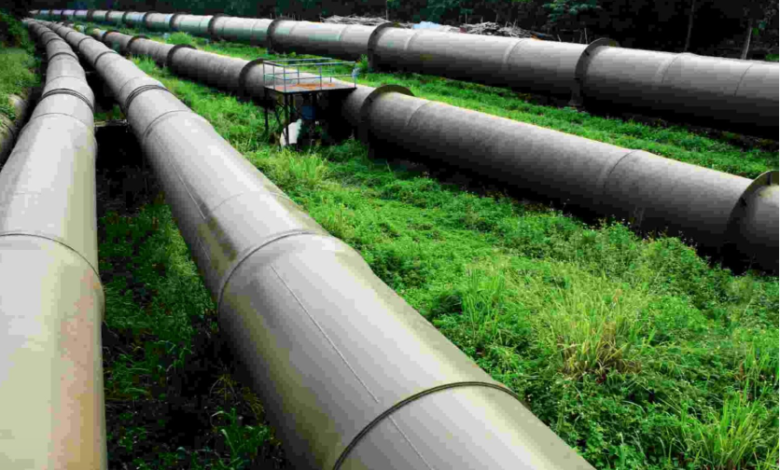
Africa’s drive to unlock the economic potential of its vast oil and gas resources is gaining renewed momentum, as long-delayed pipeline projects begin to overcome financing and execution hurdles that have constrained the sector for decades.
In 2025, several major pipeline developments highlighted both the scale of Africa’s energy ambitions and the persistent structural challenges slowing delivery. These projects are increasingly viewed not just as infrastructure assets, but as strategic tools for industrialisation, regional integration and long-term economic transformation.
The most prominent is the East African Crude Oil Pipeline (EACOP), a 1,400-kilometre conduit linking Uganda’s Lake Albert oilfields to Tanzania’s port of Tanga. Designed to export East Africa’s crude to global markets for the first time, the project has long been dogged by financing uncertainty after several international banks and insurers withdrew support.
That impasse eased in late 2025, when the project secured the full $5 billion required for completion, largely backed by African lenders and development finance institutions. The funding breakthrough restored momentum to construction, which had reached about 60% completion by mid-2025 but risked slowing amid prolonged capital shortages. Even so, EACOP continues to illustrate the delicate balance African energy projects must strike between export-led growth prospects and environmental, social and regulatory scrutiny along cross-border routes.
In West Africa, Nigeria’s Ajaokuta–Kaduna–Kano (AKK) gas pipeline reflects a more domestically focused strategy. The project is central to Nigeria’s efforts to turn its abundant gas reserves into an engine for industrial development, channeling supply from the south to industrial centres in the north. By mid-2025, more than 70% of the mainline had been completed, including complex engineering work such as the River Niger crossing.
Once operational, the AKK pipeline is expected to deliver up to 3.5 billion cubic feet of gas per day, helping to reduce gas flaring, support power generation and stimulate industrial growth. However, the project also underscores non-technical risks facing African pipelines, including insecurity, vandalism and theft, which continue to affect investor confidence and operational planning.
At the continental scale, the proposed African Atlantic Gas Pipeline (AAGP) represents Africa’s most ambitious pipeline vision. Stretching roughly 5,660 kilometres from Nigeria through West Africa to Morocco, with potential onward links to Europe, the project aims to transport billions of cubic metres of gas annually. Advancing toward construction as of August 2025, the pipeline could supply energy to hundreds of millions of people, deepen regional industrialisation and strengthen Africa’s position in global gas markets.
Yet the sheer scope of the AAGP also magnifies the challenges that have historically slowed pipeline development: the need for long-term financing, alignment among multiple governments, complex environmental approvals and security management across vast distances.
Across Africa, these constraints remain consistent. Pipeline projects are capital-intensive and perceived as high-risk due to political and regulatory uncertainty, security concerns and shifting global energy priorities. Technical challenges, from river crossings to fragile ecosystems, add to costs and timelines, while cross-border coordination often complicates decision-making.
Industry leaders argue that overcoming these barriers will require coordinated action rather than isolated projects. African Energy Week (AEW), scheduled to return to Cape Town from October 12–16, 2026, is expected to play a central role by bringing together governments, energy companies and financiers to align policy, financing and execution strategies.
Discussions at AEW in 2025 underscored a growing consensus: Africa’s pipeline ambitions are technically achievable, but turning promise into production will depend on sustained political will, innovative financing and regional cooperation to ensure that energy infrastructure delivers lasting economic value.