
Govt Rolls Out Sweeping Cocoa Sector Reforms to Restore Viability, Protect Farmers
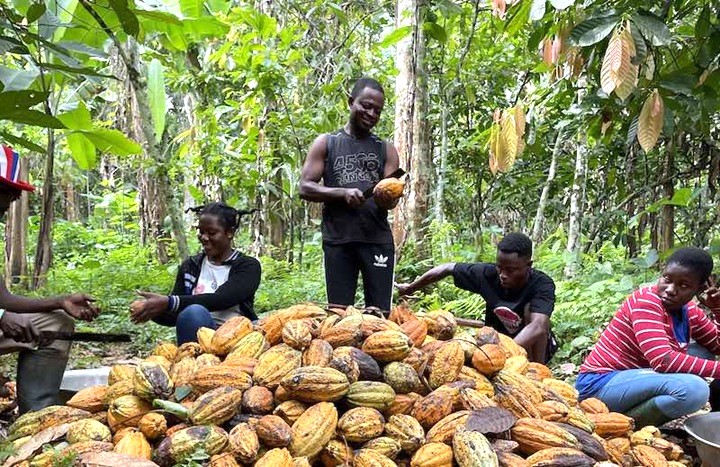
Government has announced far-reaching reforms in Ghana’s cocoa sector, including a revised producer price, a new financing model and a renewed push for large-scale domestic processing, as it moves to stabilise the industry after years of financial strain.
The measures follow an emergency Cabinet meeting held on February 11, 2026, which reviewed what officials described as deep structural and financial weaknesses across the cocoa value chain.
For the remainder of the 2025/26 crop season, the Producer Price Review Committee has approved a new producer price of GH¢41,392 per tonne, equivalent to GH¢2,587 per bag, representing 90 per cent of a revised Gross FOB price of US$4,200. The adjustment takes effect from February 12, 2026, and is intended to inject liquidity into the sector while cushioning farmers from a sharp decline in global cocoa prices.
World cocoa prices have fallen significantly from an average of about US$7,200 per tonne to roughly US$4,100, reducing export revenues and compounding liquidity challenges for COCOBOD. Earlier in the season, government had increased producer prices to prevent smuggling, after price differentials emerged between Ghana and neighbouring Côte d’Ivoire.
Beyond pricing, Cabinet has approved a new cocoa financing model to replace the buyer-prefinancing arrangement introduced after the collapse of the traditional syndicated loan in the 2024/25 season. Under the new framework, COCOBOD will raise funds through domestic cocoa bonds to establish a revolving fund for cocoa purchases, reducing reliance on off-takers and restoring liquidity to the system.
The financing shift is also expected to revive indigenous Licensed Buying Companies and reposition the state-owned Produce Buying Company as a leading player in cocoa purchases. Government believes the approach will allow COCOBOD greater flexibility in marketing decisions while strengthening support for local processors.
In a major policy shift, Cabinet has directed that all remaining cocoa beans for the 2025/26 season be allocated for domestic processing, with a minimum of 50 per cent of national output to be processed locally from the 2026/27 season. The Cocoa Processing Company is to be prioritised for revival, while domestic processors have signalled capacity to absorb more than half of Ghana’s cocoa production.
To clean up COCOBOD’s balance sheet, government plans to seek parliamentary approval to convert about GH¢5 billion in legacy debts owed to the Ministry of Finance and the Bank of Ghana into equity. In addition, GH¢4.35 billion in cocoa road liabilities will be transferred to the Ministry of Roads and Highways, following a rationalisation exercise that sharply reduced COCOBOD’s exposure to road contracts.
Cabinet has also ordered concurrent forensic audits and criminal investigations into COCOBOD’s operations over the past eight years, alongside immediate cost-cutting measures and operational reforms aimed at curbing wasteful expenditure.
Government says the reforms are intended to restore confidence in the cocoa sector, protect farmer incomes and reposition Ghana’s cocoa industry on a more sustainable, value-driven path over the long term.