Africa Shifts from Raw Bauxite Exports to Refining as $67bn Alumina Market Beckons
African bauxite-producing countries are accelerating a strategic shift from exporting raw ore to investing in alumina refineries, as the continent positions itself to capture greater value from a fast-growing global market projected to reach $67 billion by 2032.
Despite holding nearly 30 percent of the world’s bauxite reserves, Africa currently accounts for less than one percent of global alumina production, a gap industry players say represents both a structural weakness and a significant investment opportunity. Governments and private developers are now moving to close that gap by building refining capacity that converts raw bauxite into higher-value alumina, a key input in aluminium production.
The emerging push will take centre stage at African Mining Week 2026, where investors, regulators and project developers are expected to explore financing models, operational challenges and strategies for scaling refinery projects across the continent.
Nigeria bets on gas-powered industrialisation
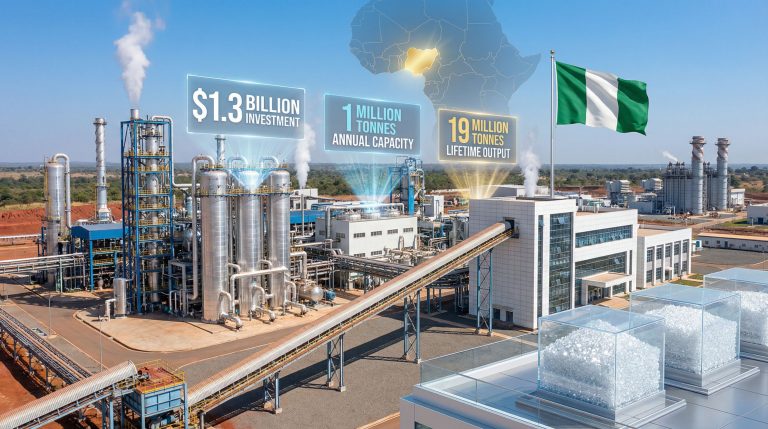
Nigeria is leading the charge with plans for its first large-scale alumina refinery, backed by $1.3 billion in financing from the Africa Finance Corporation and the Solid Minerals Development Fund. The one million-ton-per-annum facility is expected to produce 19 million tons of alumina over 20 years and contribute an estimated $1.2 billion annually to GDP.
The project, powered largely by domestic gas, aligns with Nigeria’s industrialisation agenda and its Decade of Gas strategy, linking energy security with mineral beneficiation. Authorities are targeting an increase in mining’s contribution to GDP from about one percent to 10 percent over the medium term.
Nigeria’s Minister of Solid Minerals, Henry Alake, has emphasised a shift away from export-led extraction toward domestic processing, arguing that local refining will create jobs and deepen industrial capacity.
Guinea, Ghana ramp up refining ambitions
Guinea, Africa’s largest bauxite producer, is targeting six alumina refineries with a combined capacity of seven million tons annually by 2030. Key partnerships have been secured with State Power Investment Corporation, Aluminum Corporation of China Limited, Alteo and Alcoa.
Construction is already underway on a $1.2 billion refinery in Boké, led by the Winning Consortium Alumina Guinea, with a planned capacity of 1.2 million tons per year.
Ghana is also positioning itself within the downstream value chain, targeting between four and six million tons of annual alumina refining capacity through partnerships with Mytilineos SA. The strategy is aimed at strengthening local beneficiation and reducing reliance on raw mineral exports.
Elsewhere, Canyon Resources is advancing feasibility studies for a refinery linked to its Minim Martap bauxite project in Cameroon, with results expected by the third quarter of 2026.
A new industrial frontier
Analysts say the expansion of alumina refining across Africa could have far-reaching economic implications. Beyond boosting export revenues, refinery projects are expected to create high-skilled jobs, stimulate domestic supply chains and attract long-term capital into infrastructure and manufacturing.
The shift also reflects a broader policy realignment across resource-rich economies, where governments are increasingly linking mining to industrial development, energy planning and trade competitiveness.
As stakeholders converge in Cape Town later this year, the focus will be on translating resource wealth into industrial value — a transition that could redefine Africa’s role in the global aluminium supply chain.