PRINPAG Demands Stronger Support for Private Media to Protect Ghana’s Security
The private media needs stronger financial support, effective regulation and institutional partnerships to remain capable of reporting on national security and protecting Ghana’s democracy, President of the Private Newspapers and Online News Publishers Association of Ghana (PRINPAG), David Tamakloe, has said.
Mr Tamakloe said the media had been left to struggle with limited resources despite its importance to democracy and national development.
He called for funding, regulation and partnerships to strengthen the capacity of private media organisations, while urging journalists to protect the credibility of the profession through accuracy and integrity.
“Let us provide the ink through funding, through regulation, and through partnership,” he said.
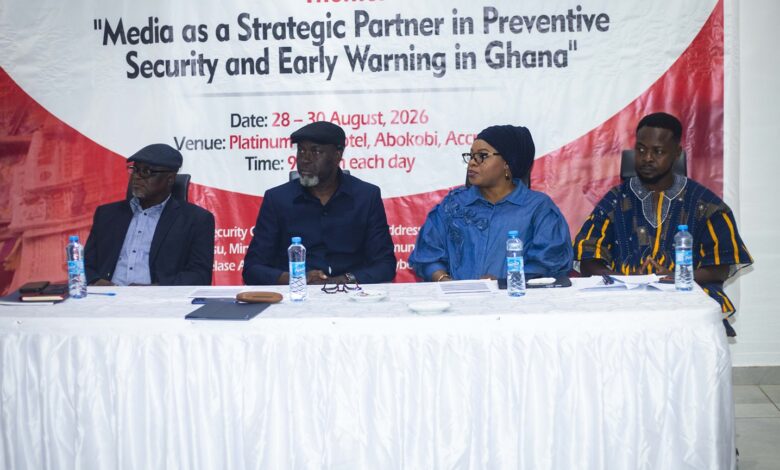
He was speaking at a PRINPAG capacity-building workshop on responsible security reporting in Accra.
The two-day workshop, held under the theme “Media as a Strategic Partner in Preventive Security and Early Warning in Ghana,” brought together media owners, senior editors and journalists to improve their understanding of national security reporting.
Government must close information gaps
Minister for Government Communications, Felix Kwakye Ofosu, also called for closer cooperation between government, security agencies and the private media to strengthen preventive security and early warning.
He said government and security institutions had a responsibility to provide timely and credible information, particularly during situations where misinformation could heighten public anxiety or tension.
“Responsible security reporting is not the media’s burden alone. Government and the security institutions must communicate in a timely, credible and coordinated manner,” he said.
The Minister’s speech was read by Deputy Presidential Spokesperson, Shamima Muslim.
He said delays in releasing accurate information could create an information vacuum that would be filled by rumours, speculation and misinformation.
Where sensitive operational information cannot immediately be disclosed, he said, authorities should explain the limitations and provide verified updates when circumstances permit.
Building trust before a crisis
Mr Kwakye Ofosu warned that conflicting statements from government and security institutions could undermine public confidence.
“Trust cannot be demanded during a crisis if it has not been cultivated before the crisis,” he said.
He called for a change in the relationship between government and the private media, with greater emphasis on prevention and early warning.
He said effective communication could help prevent misinformation, reduce tensions and support national peace.
PRINPAG defends professional journalism
Mr Tamakloe said PRINPAG had played a role in supporting Ghana’s private press since its establishment in 1991.
He rejected the view that the growth of social media meant professional journalism was becoming irrelevant.
He said social media had increased the speed at which information circulates, but that did not make unverified information journalism.
He urged media practitioners to maintain professional standards and put the national interest ahead of narrow interests.
Regulation and resources
Mr Tamakloe also called for regulations that would strengthen the media industry without undermining press freedom.
He said media organisations needed the resources to invest in journalists, technology and professional development.
He also urged journalists to recognise that resources alone would not improve the industry, stressing the importance of integrity, professional standards and responsible reporting.
The workshop is intended to strengthen the ability of journalists to report on security matters accurately and responsibly.
With misinformation increasingly able to spread before official information becomes available, participants were encouraged to recognise the role of credible journalism in helping the public understand security developments without creating unnecessary fear or tension.
The discussions placed responsibility on both government and the media: government must communicate accurately and promptly, while journalists must verify information and report responsibly.