Reimagining HIV Care in a Changing World: A Call to Harness Disruptions for Progress
By Belynda Amankwa,
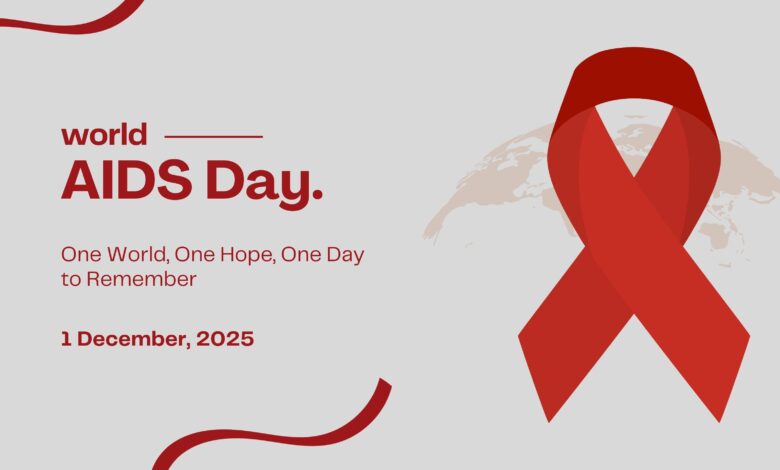
World AIDS Day is commemorated annually on December 1 to spread awareness on HIV and show solidarity for persons living with HIV. This year’s World AIDS Day theme, “Overcoming Disruptions, Transforming the AIDS Response is a poignant reminder that to end AIDS as a public health threat by 2030, we must harness current disruptions to re-imagine, re-engineer, and transform the AIDS response.
Global health funding architecture is undergoing a seismic shift
Global health funding has been on a steady decline. After reaching a peak of approximately $80 billion during the COVID-19 pandemic, funding fell by about 51% to $39 billion in 2025 the steepest drop in nearly two decades.
For HIV, the situation is even more alarming. UNAIDS analysis reveals that since 2010, funding from certain bilateral donors has plummeted by about 77%, driven by a shift in official development assistance (ODA) priorities towards national security and climate resilience.
This sharp decline, compounded by recent funding withdrawals, has deepened the crisis and severely disrupted HIV treatment and prevention programmes worldwide. It comes at a critical moment when, despite progress in reducing new HIV infections, the world remains off track to achieve the goal of ending AIDS by 2030.
Ghana’s current treatment cascade of 68-69-90 falls below the global 95-95-95 testing, treatment and viral suppression targets. To get back on track to end AIDS by 2030, we must turn this moment of disruption into an opportunity to reimagine and transform our HIV response.
Strengthen integration of HIV services
Over the years, significant efforts have been made to integrate HIV services into the broader health system. Reimagining the HIV response would require we deepen and consolidate these efforts by dismantling remaining silos and strengthening cross-sectoral collaboration to achieve fully integrated HIV services that maintain thehighest standards of quality, efficiency, and impact. Such integration will help normalize HIV services, reduce stigma, and build a more resilient and sustainable response. Although some task-sharing is currently being implemented in Ghana, supporting this approach, by fully engaging community health workers in the HIV response would significantly expand access to HIV services, bring services closer to communities, and optimize the use of the existing health workforce.
Leverage domestic resources
According to UNAIDS about 80% of HIV prevention in low- and middle-income countries is supported by donor funding. For over a decade, development partners have been pivotal in Ghana’s HIV response; financing medicines, diagnostics, and other essential commodities, while supporting prevention campaigns and civil society-led initiatives. However, the current disruptions in global health financing requires that we reengineer financing for HIV by mobilizing more domestic resources to sustain interventions. Leveraging existing health taxes on sugar-sweetened beverages, alcohol, and tobacco—combined with strengthened coordination mechanisms—can unlock significant resources for the national HIV response, improve efficiency, reduce duplication, and ensure prudent use of available resources. Promoting and supporting local production of HIV commodities, including antiretroviral medicines, would further enhance sustainability and supply security, ensuring that mobilized resources translate into resilient health systems.
Embrace innovation
During times of crisis, countries must embrace innovative strategies that deliver maximum impact. Digital health solutions and innovative health technologies offer powerful opportunities to close equity gaps by strengthening health worker capacity and expanding access to prevention. The roll out of the UNDP and the Ghana Health Service, e-learning modules on stigma and discrimination reduction nationwide is strengthening capacities of health workers to provide non-discriminatory and inclusive HIV services. Improving access to prevention would also require that we fully utilize digital channels such as mobile platforms, SMS, and social media to expand HIV prevention and improve service access for youth, and underserved communities. Transforming the HIV response also requires embracing emerging health technologies that hold immense promise for improving outcomes.
The recently approved drug lenacapavir, a new pre-exposure prophylaxis (PrEP) medicine administered just twice a year, could be a game changer for HIV prevention. Accelerating the adoption and rollout of this long-acting PrEP, will ensure at-risk populations have access to prevention options that best fit their needs. Enhancing uptake of HIV self-testing kits which has already been rolled out in Ghana could also help to close existing testing gaps and encourage more people to know their HIV status, an essential step toward ending AIDS as a public health threat by 2030.
Empower communities to own the HIV response
Communities have always been a mainstay of the HIV response. From the earliest days of the epidemic, they have served as powerful advocates and agents of change—challenging stigma and discrimination, demanding equitable access to treatment, and championing the protection of human rights. Reengineering the HIV response requires restoring and strengthening the leadership of communities. This means empowering communities of persons living with HIV, traditional and opinion leaders and community members to reduce HIV related stigma and discrimination, set priorities, lead initiatives, mobilize resources, and take actions that are culturally relevant, sustainable and grounded in local realities.
Conclusion
The clock to 2030 is ticking, but even amidst these disruptions we can get back on track if we embrace innovation, empower communities and move beyond traditional approaches to accelerate progress. Let us use this year’s World AIDS Day as a catalyst for a more sustainable and inclusive HIV response that truly leaves no one behind.
The author is a Programme Specialist for Health at UNDP Ghana