Countries Race to Scale Primary Care Systems After Alarming Health Access Findings

A new 2025 Global Monitoring Report, released on December 6 at the Tokyo Universal Health Coverage High-Level Forum, has revealed sobering findings: 4.6 billion people worldwide still lack access to essential health services, while 2.1 billion face financial hardship when seeking care. The report underscores the urgent need for long-term reforms and coordinated action to build stronger, more equitable health systems across low- and middle-income countries.
Despite these challenges, momentum toward the World Bank Group’s 2030 goal—to help deliver affordable, quality health services to 1.5 billion people—continues to grow.
375 Million People Reached So Far
Since the target was set in April 2024, the World Bank Group and its partners have supported countries in reaching 375 million people with essential health services. Work is accelerating with around 45 countries, focusing on proven primary care interventions that improve health outcomes while creating jobs across health workforces, supply chains, local manufacturing, and support industries.
“Strong primary health systems do more than safeguard health—they support jobs and economic opportunity,” said Ajay Banga, President of the World Bank Group. “Countries are stepping forward with clear priorities, and we are working alongside them to deliver practical solutions at scale.”
National Health Compacts: Country-Led Roadmaps for Reform
At the Tokyo forum, 15 countries presented new National Health Compacts, five-year action plans endorsed at the highest levels of government. These compacts align Health and Finance Ministries around measurable targets and guide partner support toward country-led priorities.
The reforms focus on:
-
Expanding primary care quality and reach
-
Strengthening financial protection
-
Building a skilled, digitally enabled health workforce
Countries have committed to mobilizing new financing, expanding insurance coverage, modernizing facilities, and using digital tools to improve service delivery.
Examples of Country Actions
Upgrading Facilities and Digital Connectivity
-
Philippines: Digitally linking health facilities nationwide.
-
Uzbekistan: Digitizing processes to cut workloads by 30%.
-
Sierra Leone: Ensuring every citizen can access primary care within 5 km; building 300 new facilities and equipping 1,800 with solar power and digital systems.
Diversifying Primary Care
-
Bangladesh: Expanding multi-platform care models supported by digital tools.
-
Indonesia: Scaling digital primary care and linking 600 facilities to hospitals through telemedicine.
Strengthening the Workforce
-
Ethiopia: Equipping 40% of primary health centers with digital tools.
-
Saint Lucia: Reforming regulation and training to build a digitally enabled workforce.
Reducing Financial Barriers
-
Kenya: Doubling public health spending to reach 5% of GDP and expanding social health insurance from 26% to 85%, with full subsidies for vulnerable citizens.
-
Morocco: Extending mandatory health insurance to 22 million more people.
Boosting Regional Manufacturing
-
Nigeria: Training 10,000 professionals, creating Centers of Excellence, and offering incentives to grow local production of vaccines, medicines, diagnostics, and health technologies.
Partnerships to Accelerate Progress
Delivering on the 1.5 billion goal relies on deepened collaboration. Key commitments announced include:
-
$2 billion aligned financing from the World Bank Group, Gavi, and the Global Fund.
-
Up to $410 million in philanthropic support mobilized through the Global Financing Facility and the Health Systems Transformation and Resilience Fund.
-
Seed Global Health support for assessment, planning, and advanced workforce development.
-
Technical support from Japan, the United Kingdom, and other partners to help countries implement reforms.
To improve knowledge sharing, Japan, WHO, and the World Bank Group launched the Universal Health Coverage Knowledge Hub, providing evidence-based solutions and peer learning platforms for countries.
Global Momentum Builds
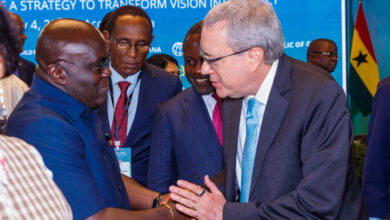
The Universal Health Coverage High-Level Forum—co-hosted by Japan, WHO, and the World Bank Group—brought together ministers, private sector leaders, philanthropies, global health agencies, and civil society to drive coordinated action.
With billions still left behind, the stakes remain high. But the growing adoption of National Health Compacts and the push for stronger primary health systems signal a renewed global commitment to ensuring that affordable, quality health services become a reality for all.