
Conflicting Statements Cloud DVLA Diaspora Licensing Plan
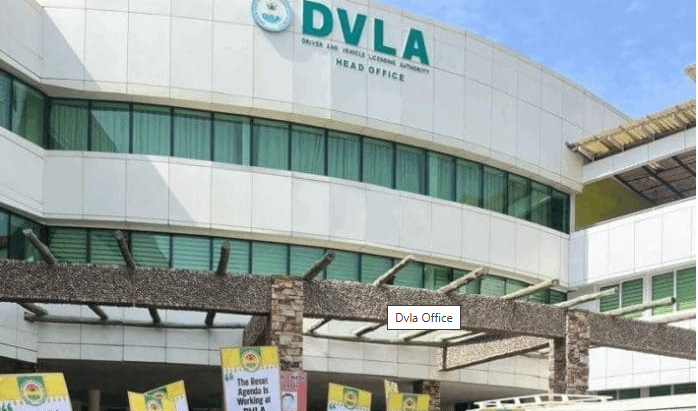
Confusion has emerged over Ghana’s proposed extension of driver licensing services to citizens abroad, following apparently contradictory statements from the Driver and Vehicle Licensing Authority (DVLA) and the Ministry of Foreign Affairs.
While the DVLA announced plans to collaborate with Ghana’s diplomatic missions to provide selected licensing services in some foreign countries, the Ministry of Foreign Affairs has publicly distanced itself from the initiative, stating it has neither approved nor been formally engaged on such an arrangement.
The divergence has raised questions about inter-agency coordination and the clarity of government communication on diaspora-facing services.
DVLA Announces Embassy-Based Pilot
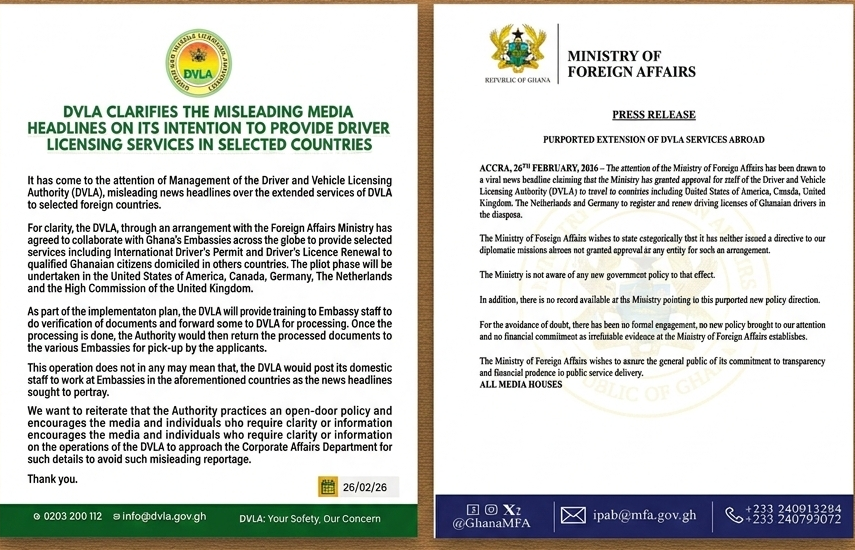
In a statement dated February 26, the Driver and Vehicle Licensing Authority said it had agreed, “through an arrangement with the Foreign Affairs Ministry,” to work with Ghana’s embassies to deliver limited services to qualified Ghanaians living abroad.
According to the DVLA, the proposed pilot would cover countries including the United States, Canada, Germany, the Netherlands and the United Kingdom, and would focus on services such as international driving permits and renewal of Ghanaian driver’s licences.
Under the plan outlined by the Authority, embassy staff would be trained to verify applicants’ documents, forward them to the DVLA in Ghana for processing, and return completed documents to missions for collection. The DVLA stressed that no domestic staff would be posted abroad and that the initiative was intended to improve access, compliance and convenience for Ghanaians in the diaspora.

Foreign Affairs Ministry Pushes Back
However, in a press release issued on February 26, the Ministry of Foreign Affairs categorically rejected claims that it had authorised or approved such an initiative.
The Ministry said it had not issued any directive to Ghana’s diplomatic missions, granted approval to the DVLA, or engaged any entity to implement driver licensing services abroad. It added that it was unaware of any new government policy to that effect and that no records existed at the Ministry pointing to such an arrangement.
“For the avoidance of doubt, there has been no formal engagement, no new policy brought to our attention, and no financial commitment,” the Ministry stated, while reaffirming its commitment to transparency and financial prudence.
Where the Messages Diverge
At the heart of the confusion is the DVLA’s assertion that an “arrangement” exists with the Foreign Affairs Ministry, contrasted with the Ministry’s explicit denial of approval, engagement or policy awareness.
While the DVLA appears to frame the initiative as an operational collaboration using existing diplomatic infrastructure, the Foreign Affairs Ministry’s response suggests that any such discussions, if they occurred, did not mature into formal authorisation or policy endorsement.
The Ministry’s statement effectively undercuts the DVLA’s clarification, leaving unanswered questions about whether preliminary talks were mistaken for approval, or whether communication broke down between technical agencies and political oversight.
Implications for Public Trust and Coordination
The episode highlights persistent challenges in inter-agency coordination, particularly where initiatives touch on foreign missions, public finance and service delivery abroad.
For diaspora Ghanaians, the mixed messaging creates uncertainty over whether driver licensing services will, in fact, become available at embassies. For government, it raises reputational risks, as conflicting official statements can erode public confidence and fuel misinformation.
As of now, the Foreign Affairs Ministry’s position appears decisive: without formal approval, policy backing and documented engagement, no such service extension can proceed through Ghana’s diplomatic missions.
Whether the DVLA will revisit the proposal, seek formal clearance, or withdraw the plan entirely remains unclear. What is evident, however, is that clearer coordination and unified communication will be essential if diaspora-focused reforms are to move from intention to implementation.