
World Bank Approves $46m Food Resilience Programme to Boost Jobs, Climate-Smart Farming in Ghana, Africa
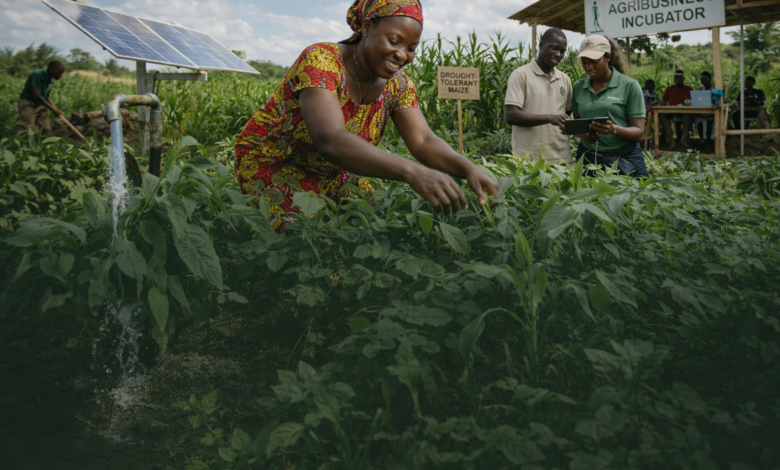
The World Bank Group has approved a $46 million expansion of its flagship food systems programme, targeting stronger agricultural productivity, climate resilience and job creation across six African countries, including Ghana.
The new phase, under the West Africa Food System Resilience Program, will channel funding through the International Centre of Insect Physiology and Ecology to scale proven agricultural innovations and bridge the gap between research and on-the-ground farming.
From Research to Results
The initiative, known as AICCRA–FSRP4, is designed to move beyond pilot projects by accelerating the adoption of climate-smart technologies among farmers.
More than 1.5 million farmers and food system actors are expected to benefit, with at least 250,000 projected to adopt improved practices such as drought-tolerant crop varieties, solar-powered irrigation and digital climate advisory tools.
The approach builds on earlier phases that have already delivered climate-smart services to over 11 million people, reflecting a shift toward scaling solutions that have demonstrated impact.
Jobs at the Centre
Unlike previous interventions focused primarily on productivity, the new phase places job creation at the core of its design.
Agriculture accounts for more than half of Africa’s workforce, and the programme aims to unlock employment opportunities by supporting 150 agribusiness ventures and strengthening 25 incubators and accelerators.
It is also expected to mobilise about $16.5 million in private capital, using instruments such as challenge funds and matching grants to crowd in investment and expand opportunities in agribusiness and agri-tech.
“Job creation is a core pillar of this initiative,” said Chakib Jenane, the World Bank’s Regional Director for Planet, noting that the programme is structured to improve productivity while creating pathways for youth and women to enter and scale within the agricultural economy.
Regional Approach to a Shared Problem
The programme’s design reflects the cross-border nature of food security challenges, from climate shocks to pest outbreaks and market access constraints.
By working through regional institutions such as CORAF and AGRHYMET, the initiative aims to accelerate the spread of innovations across countries while reducing duplication.
This coordinated approach is intended to strengthen data systems, improve soil management and enhance climate-informed decision-making at both national and regional levels.
Private Sector and Skills Push
A notable shift in the new phase is its stronger emphasis on private sector participation and skills development.
Partnerships with institutions such as University Mohammed VI Polytechnic are expected to support entrepreneurship and innovation, while targeted training programmes aim to equip farmers and agribusiness operators with the skills needed to compete in modern value chains.
The focus is not just on increasing output, but on building commercially viable enterprises that can drive sustained growth.
Building on Measurable Gains
The broader food resilience programme has already reached nearly 3 million beneficiaries and contributed to a 30 percent reduction in food insecurity in targeted areas.
The latest phase seeks to deepen these gains by scaling high-impact innovations and strengthening institutional capacity to respond to climate risks.
Outlook
For Ghana and participating countries, the programme offers a pathway to address two pressing challenges simultaneously: food security and job creation.
For policymakers, the emphasis on scaling proven solutions, mobilising private capital and strengthening regional coordination reflects a more pragmatic approach to agricultural transformation one that prioritises impact, not just intervention.
The success of the initiative will depend on how effectively these innovations move from research labs into farmers’ fields—and whether they translate into higher incomes, stronger value chains and more resilient food systems.