
Africa’s Recovery Under Pressure as Global Shocks Test Growth Momentum
Sub-Saharan Africa’s economic rebound is showing signs of strain, with fresh global disruptions threatening to derail progress and expose persistent structural weaknesses across the region.
According to the latest Africa Economic Update from the World Bank Group, growth in the region is projected to remain at 4.1% in 2026 unchanged from 2025 but weaker than earlier expectations. The outlook has been revised downward, reflecting a more volatile global environment and mounting economic pressures.
External Shocks Ripple Through Economies
A key driver of the slowdown is the ongoing conflict in the Middle East, which is pushing up global prices for fuel, food and agricultural inputs. For many African economies that depend on imports, these increases are feeding directly into higher costs of living and doing business.
The report warns that these shocks are transmitting faster and more intensely than in previous crises, leaving governments with limited time to respond. Inflation is expected to edge up to 4.8% in 2026, driven largely by rising commodity prices.
For households, particularly in low-income segments, the impact is immediate. Higher food and energy prices are eroding purchasing power, deepening vulnerability and increasing the risk of poverty.
Fiscal Constraints Tighten
At the same time, governments are facing shrinking fiscal space. Rising debt service obligations are consuming a growing share of public revenues, limiting the ability to invest in critical sectors.
The report notes that external debt service has climbed sharply, now accounting for 18% of government revenue in 2025, compared to 9% just eight years earlier. Meanwhile, public investment in infrastructure remains significantly below past levels, slowing economic expansion and job creation.
With external financing also becoming more constrained, many countries are being forced to make difficult trade-offs between supporting growth and maintaining fiscal discipline.
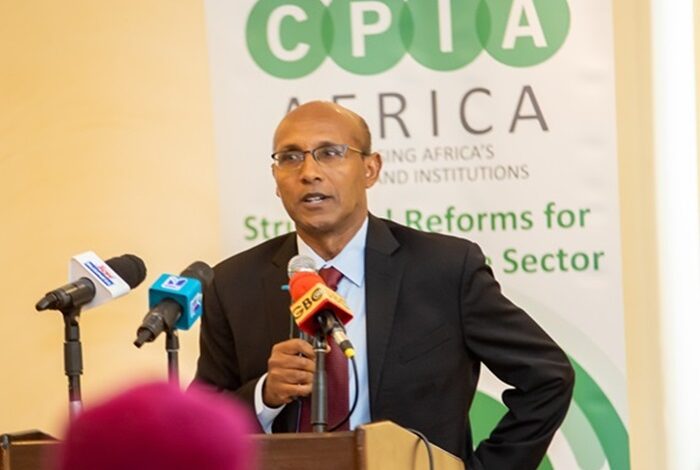
Andrew Dabalen, Chief Economist for the Africa Region at the World Bank, stressed the importance of balancing short-term relief with long-term stability.
“Governments must prioritise support for vulnerable households while maintaining macroeconomic stability through prudent fiscal management and inflation control,” he said.
Jobs and Growth Challenge Deepens
The pressure on growth is coming at a time when Africa faces a rapidly expanding workforce. With hundreds of millions expected to enter the labour market in the coming decades, the need for stronger, job-rich growth has become more urgent.
Yet current economic conditions are not generating sufficient employment opportunities, particularly in higher-productivity sectors. The report argues that without a shift in growth patterns, unemployment and underemployment risks will persist.
Rethinking Industrial Strategy
To address these challenges, the report highlights industrial policy as a key lever for transformation. African countries are being encouraged to target sectors with strong growth potential, including manufacturing, value-added agriculture and critical minerals linked to global energy transitions.
However, the World Bank Group cautions that such policies must be grounded in realistic assessments and supported by strong institutions. Poorly designed interventions risk inefficiency and wasted resources.
Success, the report suggests, will depend on broader reforms improving infrastructure, strengthening skills development, expanding access to finance and leveraging regional trade frameworks such as the African Continental Free Trade Area.
Navigating an Uncertain Path
Overall, the outlook points to a region navigating a complex and uncertain path. Growth remains positive, but increasingly fragile, as external shocks combine with domestic constraints.
For policymakers, the task ahead is clear: manage immediate risks while building more resilient economies capable of withstanding future disruptions.
Failure to act decisively could see the region’s recovery lose further momentum undermining efforts to create jobs, reduce poverty and sustain long-term development.