Nestlé for Good Campaign Reframes Corporate Impact Beyond Profit
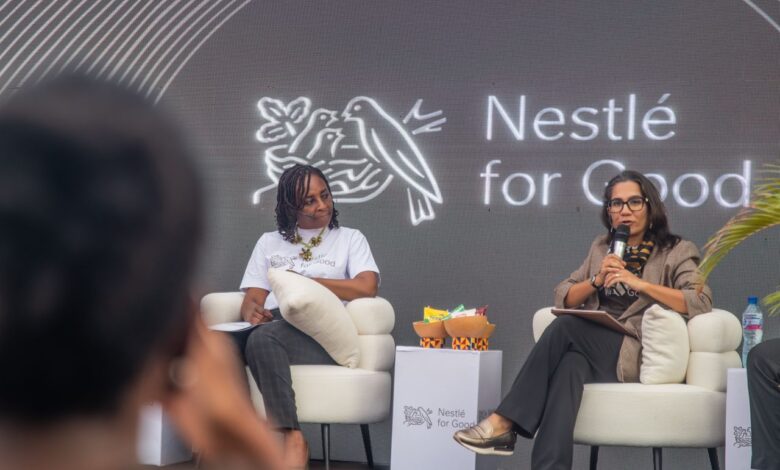
The conversation around corporate responsibility in Ghana is shifting, and at the centre of that shift is the newly launched Nestlé for Good Campaign, which is positioning sustainability and social impact as core business priorities rather than add-ons.
Speaking at the launch in Accra, Chief Executive Officer of the Association of Ghana Industries (AGI), Mr Seth Twum Akwaboah, argued that the traditional metrics of business success—job creation, tax payments and supply chain linkages are no longer sufficient to define a company’s contribution to society.
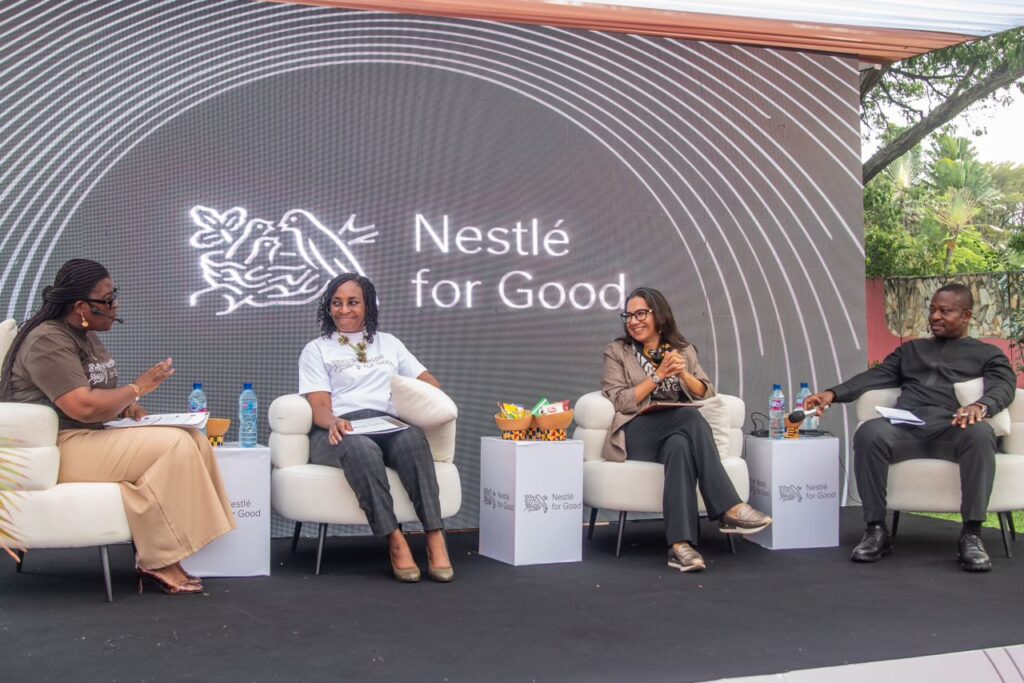
“Every company contributes by its very existence,” he said. “But today, the real measure goes beyond that. It is about the impact you deliberately make on people, communities and the environment.”
He pointed to Nestlé’s growing focus on plastic recycling, waste management, youth empowerment and nutrition as evidence of a broader shift toward responsible business practices. According to him, consistent recognition through sustainability awards reflects not just corporate branding, but measurable impact that has been independently assessed.
“What may look like simple recognition carries significant weight. It shows that there is substance behind the work being done,” he added, urging other companies to embed similar principles into their operations.
For Nestlé Ghana, the campaign is designed to make that impact more visible and more structured. Managing Director, Salome Azevedo, explained that the initiative brings together a range of interventions across agriculture, education and workforce development under a single, coherent framework.
At the production level, the company is working directly with cocoa farmers to improve yields, incomes and sustainability practices. Through its income accelerator programme, Nestlé provides financial incentives to farmers who adopt responsible behaviours such as enrolling children in school, practising sustainable farming and building savings.
“We are not just buying cocoa,” she said. “We are supporting families to make better long-term decisions. When farmers do the right thing, we reward that behaviour directly.”
The approach also extends to community development. Nestlé is investing in school infrastructure in cocoa-growing areas while running scholarship schemes that support dozens of children each year. These interventions are aimed at tackling systemic issues such as child labour and limited access to education.
Beyond rural communities, the company is strengthening its contribution to skills development through partnerships with institutions such as the University of Ghana. These programmes provide students, particularly in engineering and manufacturing, with hands-on industry experience to improve employability.
“We are building talent not just for Nestlé, but for the wider industry,” Azevedo noted, adding that trained individuals often go on to work across the sector.

Central to the campaign is also a transparency agenda. Nestlé is seeking to connect its products directly to the broader ecosystem in which they are produced, giving consumers greater insight into the social and environmental footprint behind what they purchase.
“In today’s world, people want to know what is behind the products they choose,” she said. “This campaign helps them understand that every product is part of a larger system that is working to create value responsibly.”
For industry watchers, the Nestlé for Good Campaign signals a deeper evolution in Ghana’s corporate landscape—one where profitability and purpose are increasingly intertwined, and where businesses are expected to play a more deliberate role in national development.
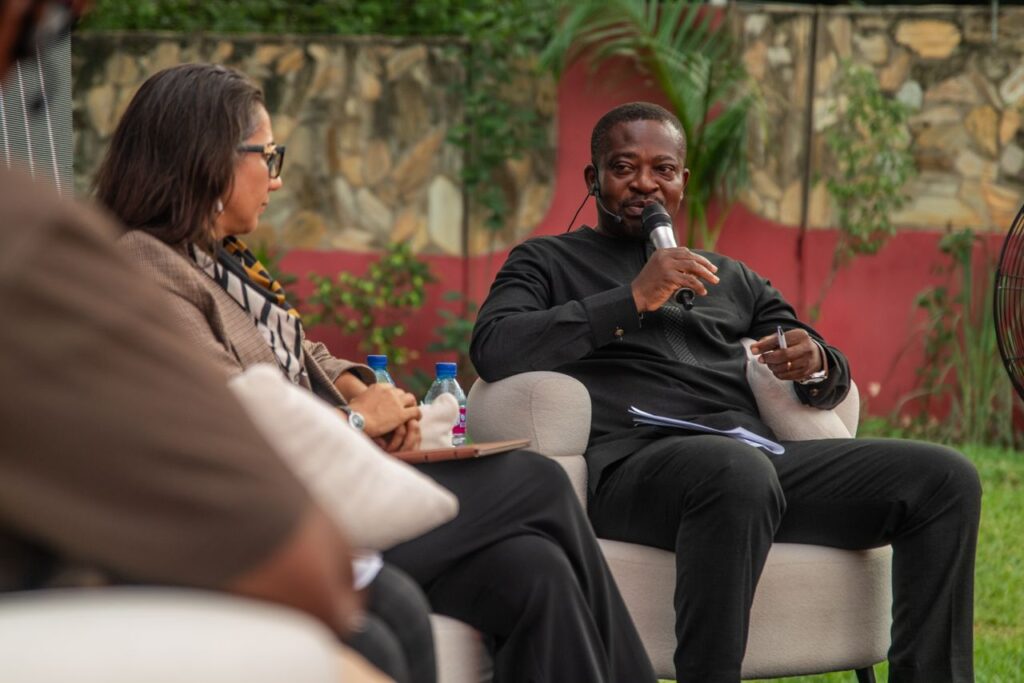
Mr Akwaboah summed it up succinctly: “We cannot build society in isolation. Every company must make it a point to contribute meaningfully. That is the future of business.”