
Afrobarometer establishes Ghana headquarters, boosting research investment and policy influence
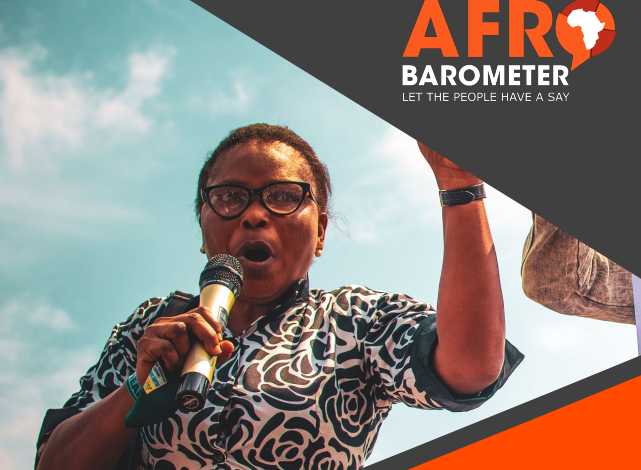
Ghana has strengthened its position as a regional hub for research and policy innovation following the formal establishment of Afrobarometer’s headquarters in the country, a move expected to deepen foreign inflows, create high-value jobs, and enhance evidence-based governance.
The agreement, approved by Parliament in December 2025 and formalised at a ceremony in Accra, provides a structured framework for the organisation’s operations while ensuring compliance with Ghanaian laws. It cements Ghana’s role as the nerve centre of one of Africa’s most influential data and research networks, which operates in over 40 countries.
Economic and policy dividends
Beyond its governance significance, the decision carries notable business and economic implications. Since setting up its secretariat in Ghana in 2019, Afrobarometer has channelled grant funding through local financial institutions, contributing to foreign exchange inflows and supporting the services economy.
Its presence has also stimulated demand across hospitality, logistics, and professional services, while building local capacity in data analytics, survey research, and policy communication—skills increasingly critical in today’s data-driven economy.
Officials say the headquarters agreement will provide long-term operational certainty, enabling the organisation to scale its activities and attract additional international partnerships and funding into Ghana.
Reinforcing Ghana’s governance credentials
Chief Director at the Ministry of Foreign Affairs, Khadija Iddrisu, described the agreement as a reflection of Ghana’s commitment to democratic governance and evidence-based policymaking.
She noted that Afrobarometer’s work—capturing citizen perspectives on democracy, governance, and quality of life—has become essential to shaping public policy and strengthening accountability.
Afrobarometer Board Chair Amina Oyagbola said the parliamentary endorsement signals strong national backing for the organisation’s mission.
“This agreement is far more than a legal instrument; it is a vote of confidence in our work and a recognition that amplifying African voices is worthy of national support,” she stated.
Strengthening Ghana’s research ecosystem
A key pillar of Afrobarometer’s operations in Ghana has been its long-standing partnership with Ghana Center for Democratic Development, which has implemented all survey rounds in the country since 1999 and coordinates research activities across parts of Africa.
Over the past two decades, the collaboration has trained a generation of Ghanaian researchers and analysts, strengthening the country’s capacity in data collection and policy analysis.
Afrobarometer’s pre-election surveys, conducted with CDD-Ghana, have also become integral to Ghana’s electoral process, providing credible data that supports transparency and public trust.
Positioning Ghana as a knowledge hub
Analysts say the formalisation of Afrobarometer’s headquarters aligns with Ghana’s broader ambition to position itself as a centre for knowledge, governance, and international development organisations in West Africa.
The move enhances the country’s global visibility and reinforces its attractiveness as a base for international NGOs, think tanks, and research institutions seeking stable operating environments.
With sustained inflows, skills transfer, and increased global engagement, the headquarters agreement is expected to deliver both economic and institutional dividends—further embedding Ghana within Africa’s evolving knowledge economy.