“We Will Not Give Up”: Guterres Vows to Press On as Global Chaos Tests Multilateralism
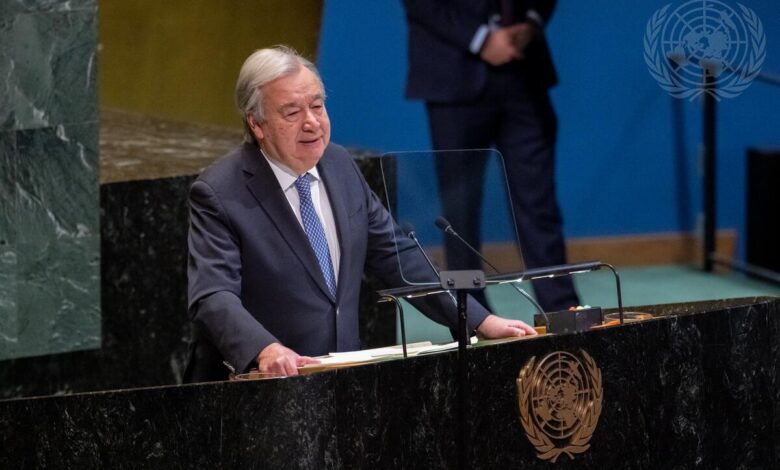
United Nations Secretary-General António Guterres has vowed to press on with his mission despite what he describes as a world overwhelmed by conflict, impunity, inequality and deepening uncertainty, insisting that global turbulence will not weaken the resolve of the United Nations or its commitment to multilateralism.
Addressing the General Assembly in New York on January 15, 2026, as he presented his priorities for the year ahead for the final time, Mr. Guterres said he was determined to “make every day of 2026 count,” pledging to keep working and fighting for a better world even as the international system faces unprecedented strain.
He warned that the global context is increasingly chaotic, marked by self-defeating geopolitical divides, blatant violations of international law and sweeping cuts to development and humanitarian aid. These pressures, he said, are shaking the foundations of global cooperation at a time when international solidarity is most urgently needed.
“The paradox of our era is that at the moment we need international cooperation the most, we are the least inclined to invest in it,” he said, cautioning that some actors appear ready to abandon multilateralism altogether. “I can assure you: we will not give up.”
Despite the turbulence, the Secretary-General said the United Nations has continued to assert relevance and leadership. He cited UN engagement in shaping global discussions on artificial intelligence to ensure technology serves humanity, advocacy for fair and sustainable financing for development, persistent calls for urgent climate action, and relentless efforts to pursue peace and deliver humanitarian assistance in conflicts ranging from Gaza and Ukraine to Sudan and beyond.
Looking ahead, he said the organisation would maintain “full steam ahead” in 2026, with initiatives including the launch of an Independent Scientific Panel on Artificial Intelligence, proposals for new ways of measuring progress beyond GDP, reforms under the UN80 initiative to strengthen effectiveness amid shrinking resources, and reviews of peace operations to make them more responsive to modern security challenges.
At the core of his message was a refusal to accept paralysis in the face of disorder. Mr. Guterres argued that disruption does not have to be destructive, but can be a force for renewal if institutions adapt to present realities rather than rely on outdated post-World War II frameworks. He warned that structures which fail to reflect today’s world risk losing legitimacy and relevance.
He was particularly critical of the erosion of international law, the concentration of wealth and power, and the unchecked influence of technology and private interests, describing these trends as morally indefensible and dangerous to the principles of the UN Charter. Yet he insisted that these very threats make perseverance essential, not optional.
“We cannot be bystanders to injustice, indifference or impunity,” he said, stressing that retreat would amount to abandoning the promise of equal rights and dignity for all.
As his tenure enters its final year, Mr. Guterres framed his pledge not to give up as both a personal commitment and a call to member states to act with urgency and courage. In a world battered by crises but still capable of solidarity, he urged governments to recommit to cooperation and shared responsibility.
“Even in the rough seas of today, we can anchor our action in peace, dignity and hope,” he said. “Let’s never give up. The stakes could not be higher, and the time could not be shorter.”