Mahama says Ghana ‘rising again’ as he maps aggressive reform drive for 2026
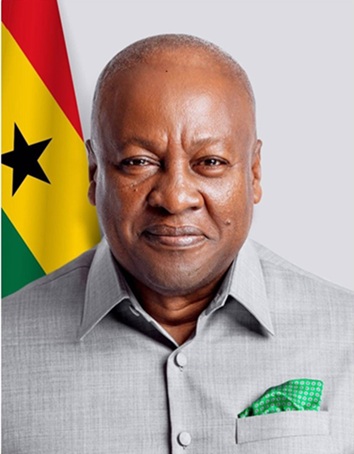
President John Dramani Mahama has declared that Ghana’s economy is emerging from crisis, citing falling inflation, currency stability and renewed investor confidence, as he outlined an ambitious agenda to accelerate reforms in 2026 under his Reset Agenda.
In his New Year address to the nation, marking nearly one year in office, Mahama said the country had moved from distress to recovery through “difficult but necessary reforms,” rejecting claims that Ghana’s turnaround would take a generation.
“At the dawn of the New Year, I stand before you to say our beloved nation, Ghana, is rising again,” he said.
Mahama said inflation, which stood above 23% at the end of 2024, had fallen sharply and was expected to end 2025 in single digits, just above 5%. He added that the cedi had stabilised and was on track to rank among the world’s best-performing currencies in 2025, while business confidence and both domestic and foreign investment had improved.
He said Ghana had restored credibility with international partners after successfully renegotiating its debt obligations on terms that preserved sovereignty, and was beginning the process of exiting the IMF programme “with dignity, not as supplicants, but as partners.”
The president pointed to growth across construction, manufacturing, agriculture and services, which he said was creating new employment opportunities for young people. He also highlighted infrastructure gains, including the rehabilitation of more than 2,000 kilometres of roads nationwide, the restoration of stable electricity supply and the extension of rural electrification to over 1,000 additional communities.
Looking ahead, Mahama said 2026 would be a year of expansion, with major investments planned across education, health, agriculture, energy and housing.
He pledged to continue the digitalisation of schools to equip classrooms for 21st-century learning, and to operationalise Universal Health Coverage through a Free Primary Health Care Programme to ensure access regardless of ability to pay. A new Ghana Medical Trust Fund will be rolled out to support people living with non-communicable diseases, which he described as a growing burden on households.
Agriculture, he said, would be transformed from subsistence farming into a commercial, value-driven sector through mechanisation, value addition and improved market access, with the goal of achieving food self-sufficiency and raising rural incomes.
Mahama also reaffirmed plans to shift Ghana’s energy mix, targeting a 30% share of renewable energy to cut costs and reduce environmental impact, while social housing projects would be delivered through public-private partnerships.
Governance reforms featured prominently. The president pledged to intensify the fight against corruption, declaring there would be “no sacred cows,” and committed to implementing the recommendations of the Constitution Review Committee to strengthen Ghana’s democratic framework.
Beyond policy, Mahama appealed for broad national participation in the Reset Agenda, urging young people to take leadership roles, entrepreneurs to invest and create jobs, civil society and the media to hold government accountable, and the diaspora to bring skills and capital back home.
Striking a unifying tone, he rejected partisan divisions, saying Ghana’s future transcends political affiliation. “There is only one Ghana,” he said, calling on citizens to replace divisive politics with what he described as the patriotism of nation-building.
As Ghana enters 2026, Mahama said the progress made so far was only the foundation, urging confidence, determination and collective effort to translate recovery into shared prosperity.