Sissala East, North Gonja trained to maintain peace
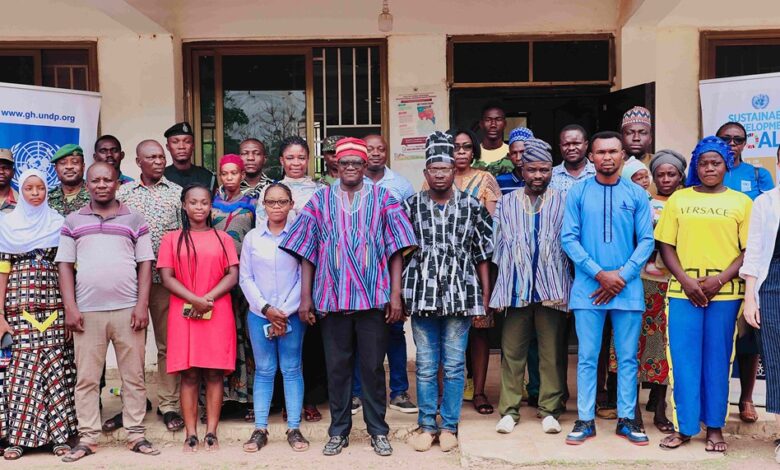
Residents in neighbouring communities within Sissala East and North Gonja have been trained on the need to maintain peace by improving the collaboration between civilians and security agencies. This is aimed at enhancing the effectiveness of identifying and swiftly responding to potential threats of violent extremism.
The community dialogues were funded by the Government of Norway to support the United Nations Development Programme’s (UNDP) efforts to preventing and responding to violent extremism in the Atlantic Corridor. The community engagements form part of the broader Atlantic Corridor project with funding from Denmark, Norway, Germany, and Australia.
The Atlantic Corridor project seeks to prevent and address the immediate localized drivers of radicalization, leading to violent extremism in target communities in Benin, Côte d’Ivoire, Ghana and Togo, by supporting mechanisms for early warning, and early response at the local level.
In her remarks, the Peace and Programme Analyst, Melody Azinim, noted that, “amidst the escalating threat of violent extremism, UNDP remains committed to addressing early warning signs, fostering dialogue, and strengthening community resilience to promote peace, sustain social cohesion, and prevent the spread of violent extremism”.
In a speech delivered on behalf of Fuseini Yakubu Batong, the Municipal Chief Executive for Sissala East Municipality at the community engagement in Tumu, he emphasized the role of collaboration between security agencies and communities in preventing violent extremism.
“Recent rise in violent extremism in neighbouring countries are reasons we must improve collaboration between our communities and security agencies. This will play a crucial role in preventing violent extremism and preserve Ghana’s peace”, noted Honourable Fuseini.
The Assembly Member for Lukula Electoral Area, Honourable Boassah Osman also noted, “Residents of Lukula continue to suffer from the effects of conflicts. Lives and properties have been lost and urgent action is needed to bring a stop to this. The engagement has allowed us to learn a lot about how to co-exist which will go a long way for us to enjoy peace”.
Stakeholders who took part in the training expressed their joy with the engagement and called for more support in the fight against violent extremism.
Kapio Awuyigavei Ali Maria I, the Paramount Queen Mother for the Bano Traditional Area, noted “We are a farming community and just a walking distance from the Ghana-Burkina Faso border. This engagement has been an eye-opener for me because it has taught me why it is important to inform the security agencies when we see anything suspicious”.
Tierku Gorden, the Municipal Fire Officer in Tumu also expressed satisfaction with the program and the willingness of the community members to help the security agencies in the discharge of their duties.
“I am excited because the programme clearly outlined the role community members and security agencies must play to safeguard the peace of the community. It also emphasized working together as the surest way to prevent violent extremism”, he reiterated.
Participants were taken through topics including Conflict Resolution Strategies, Communication and Transparency, Cultural Sensitivity Training, Community Dialogue and Community Policing Initiatives all aimed at fostering collaboration between civilians and security agencies.
The community engagement brought key stakeholders ranging from security personnel, traditional leaders, faith-based organizations, civil society organizations, women and youth groups and tribes within the Sissala East and North Gonja Districts with the primary aim of fostering community cohesion through dialogues to prevent violent extremism.