Scouting Re-Emerges as a Human Capital Tool for Ghana’s Future Workforce
As Ghana searches for sustainable ways to equip its young population for an increasingly competitive economy, attention is expanding beyond classrooms and technical training to institutions that build leadership, discipline and civic responsibility.
The Ghana Scout Association (GSA), one of the country’s oldest youth organisations, is seeking to reclaim a central role in that national conversation after President John Dramani Mahama pledged support for its activities, signalling renewed recognition of scouting as a contributor to Ghana’s human capital development agenda.
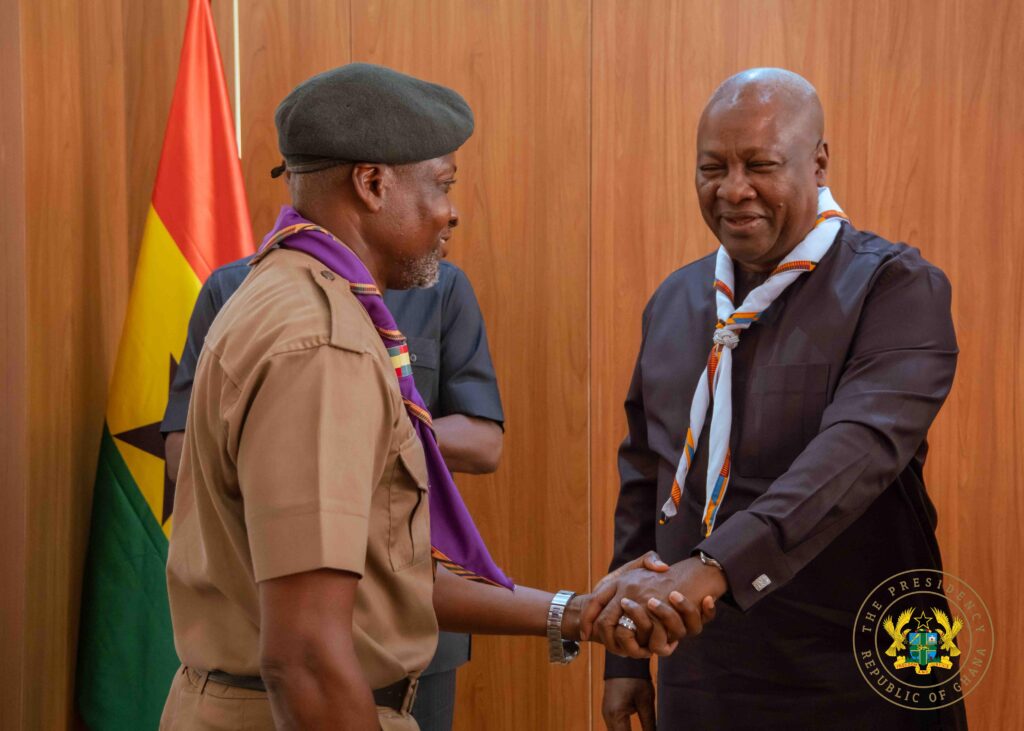
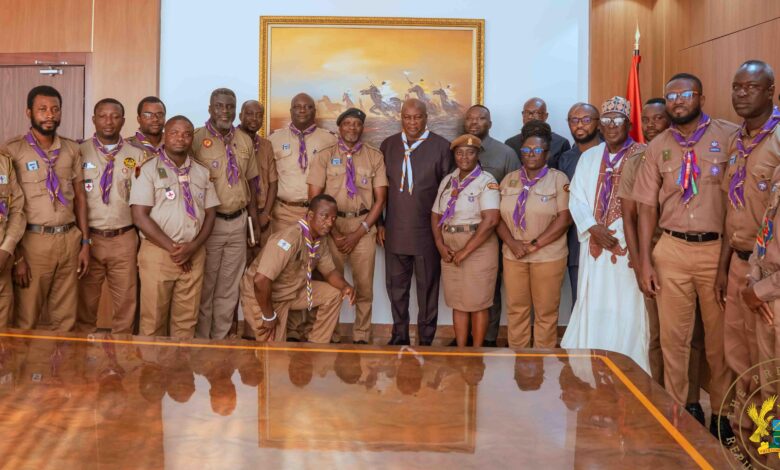
The commitment came when the Association’s National Board and National Executive Committee paid a courtesy call on the President at the Jubilee House, where he was formally inducted as the Life Patron of the Ghana Scout Association (GSA).
The delegation was led by Chief Commissioner Hilary Yaw Awusie and National Board Chairman William Pitt, and was accompanied by Minister for Youth Development and Empowerment George Opare Addo as well as the Chief Executive Officer of the National Youth Authority (NYA), Osman Ayariga.
Although the induction was largely ceremonial, the engagement reflects a broader policy direction in which structured youth development programmes are increasingly viewed as strategic investments in Ghana’s future workforce.
Developing Skills Beyond Academic Qualifications
The GSA promotes the development of young people through outdoor education, leadership training, community service and practical life skills.
Its programmes are designed to build character, teamwork, integrity, resilience, patriotism and self-reliance—qualities that employers increasingly regard as essential alongside academic qualifications.
Globally, scouting has evolved into a recognised platform for developing leadership capacity, problem-solving skills and social responsibility, producing young people who are better prepared for both employment and active citizenship.
For Ghana, where a large proportion of the population is below the age of 35, strengthening such institutions could complement government efforts to address youth unemployment by producing graduates with stronger workplace competencies and leadership potential.
Human Capital as an Economic Asset
Accepting the role of Life Patron, President Mahama reaffirmed his commitment to supporting the Association in its mission of developing responsible and patriotic young citizens.
He pledged to assist the movement in strengthening scouting activities across the country as part of efforts to expand opportunities for young people.
His support comes as Ghana places growing emphasis on human capital as a critical driver of productivity, innovation and long-term economic growth.
While discussions on youth development often focus on entrepreneurship, technical skills and job creation, economists increasingly argue that leadership, discipline, communication, teamwork and civic responsibility are equally important components of a productive labour force.
These soft skills improve employability, strengthen institutions and contribute to stronger communities through volunteerism and responsible citizenship.
Building Leaders for National Development
Chief Commissioner Hilary Yaw Awusie described the engagement as the beginning of a new chapter for Scouting in Ghana.
He said the Association remains committed to nurturing young people through leadership development, service and character formation while expanding its contribution to national development.
The participation of both the Ministry for Youth Development and Empowerment and the National Youth Authority also points to growing institutional interest in strengthening organised youth movements as partners in preparing Ghana’s next generation of leaders.
As Ghana pursues economic transformation through innovation, industrialisation and skills development, investment in institutions that shape character and leadership may prove just as important as investment in physical infrastructure.
The renewed partnership between government and the GSA therefore represents more than a ceremonial relationship. It reflects an acknowledgement that building Ghana’s future workforce requires developing not only educated young people, but also confident, disciplined and socially responsible citizens capable of leading communities, businesses and public institutions.