GhISP, CIB Ghana Target Lending Barriers Holding Back SMEs
Financial institutions in Kumasi explore cash-flow-based lending and new approaches to financing underserved businesses
The difficulty many small businesses face in securing loans is prompting renewed calls for financial institutions to reconsider how they assess credit applications, particularly their reliance on collateral as a major lending requirement.
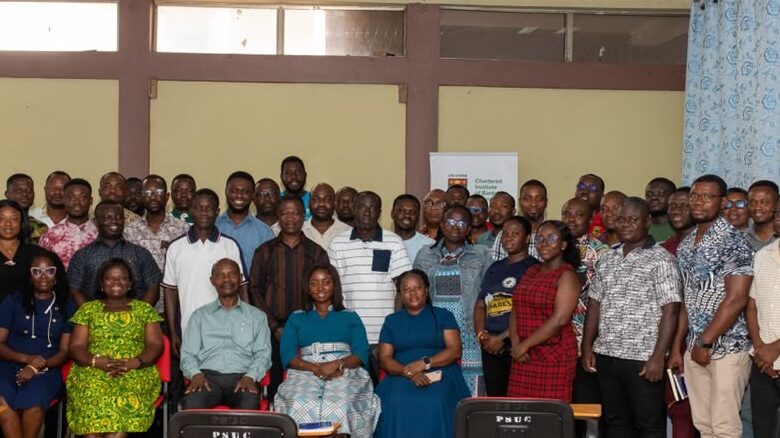
The issue came into focus at a workshop in Kumasi organised by the Ghana Investment Support Programme (GhISP) and the Chartered Institute of Bankers, Ghana (CIB Ghana), where banking professionals examined ways to make financing more responsive to the realities of small and medium-sized enterprises (SMEs).
The two-day engagement, held on November 5 and 6, 2026, brought together representatives of banks, financial non-governmental organisations and community banks to explore practical approaches to SME lending, financial inclusion and sustainable finance.
A major area of discussion was cash-flow-based lending, which allows financial institutions to assess businesses by examining their income, operating activities and capacity to repay loans, rather than placing excessive weight on the assets they can provide as security.
The approach is particularly relevant to businesses with viable operations but limited physical assets, which may struggle to meet the collateral requirements of conventional lending.
British International Investment (BII) Country Director, Kwabena Asante-Poku, said the workshop represented an expansion of GhISP’s work to strengthen the SME financing ecosystem, moving beyond support for individual businesses to building the capacity of institutions that provide capital.
He said the programme was applying lessons from its work to improve the investment readiness of SMEs, alongside BII’s experience supporting financial institutions in other African markets.
“GhISP has already demonstrated its ability to strengthen SME investment readiness through company-level technical assistance. Now, we are taking lessons from this work, combined with insights from BII’s technical assistance partnerships with financial institutions in the region and our wider ecosystem work, and applying this to tailoring support to Ghanaian financial institutions,” he said.
He described the collaboration with CIB Ghana as an important step towards providing more targeted technical support to financial institutions.
In a message delivered on his behalf, CIB Ghana Chief Executive Officer, Robert Dzato, said banking professionals needed the right skills to respond to the financing requirements of SMEs.
He highlighted the importance of strengthening credit assessment, inclusive lending and sustainable finance, urging participants to apply the knowledge gained to improve lending practices and support business growth.
Broadening access to finance
The workshop also examined how financial institutions could design financing products around the different business models, cash-flow patterns and growth prospects of SMEs.
Participants considered climate-responsive financing and gender-smart lending, recognising that businesses have different financing requirements and may face barriers that conventional products do not adequately address.
The discussions centred on how lenders could improve their understanding of businesses and the risks associated with their operations to make better-informed credit decisions.
For participating institutions, the challenge is to balance responsible lending with the need to extend credit to businesses that have the potential to grow but remain underserved by formal financial services.
One participant said the training had encouraged a closer examination of the financial realities of SME customers, particularly their cash flows and ability to repay loans.
Another observed that financial inclusion went beyond making credit available, arguing that financing products must reflect the different needs of businesses if they are to support sustainable growth.
Turning capacity building into results
Beyond the training, the organisers encouraged participating institutions to develop action points for implementing the lessons within their organisations.
The initiative also provided a platform for financial institutions serving different regional markets to exchange experiences and discuss common challenges affecting SME lending.
The Kumasi workshop was the second of two national ecosystem engagements under the partnership between GhISP and CIB Ghana.
GhISP, powered by British International Investment and supported by SECO and Norfund, aims to increase investment flows to underserved SMEs in Ghana, with particular attention to gender inclusion and climate investment.
Through pre- and post-investment technical assistance, the programme helps businesses improve their investment readiness and connect with capital from Growth Investment Partners (GIP) Ghana and other relevant funds.
CIB Ghana, established under the Chartered Institute of Bankers, Ghana Act, 2019 (Act 991), is the professional body responsible for promoting banking education and regulating the practice of banking in the country.