World Bank Targets US$245m Investment to Boost Ghanaian Businesses
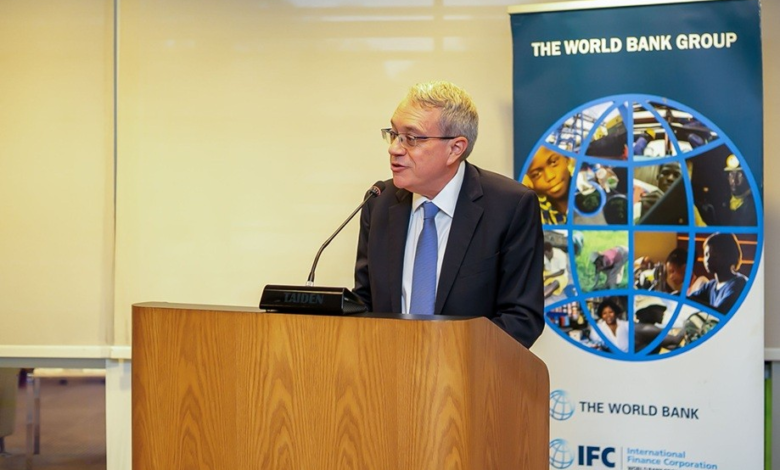
The World Bank Group is targeting about US$245 million in private investment through a new programme aimed at addressing the challenges that prevent Ghanaian businesses from expanding, accessing export markets and creating jobs.
The Compact with Africa 2.0 (CwA 2.0) Ghana Pilot, launched by the World Bank Group, the Government of Ghana and development partners, will support policy reforms in trade, investment, logistics and manufacturing.
Ghana is one of four countries selected for the pilot, alongside Angola, Egypt and Zambia.
The initiative comes at a time when job creation remains a major challenge for the economy. Preliminary findings from the World Bank Group’s forthcoming Country Growth and Jobs Diagnostic show that Ghana’s working-age population increased by 3.7 million between 2012 and 2024, while the economy created only 435,000 net jobs.
The report identifies difficulties in expanding businesses as a major constraint, pointing to regulatory uncertainty, high trade and logistics costs, limited access to finance and challenges in meeting international market standards.
Under the programme, the World Bank will support government policy reforms, while the International Finance Corporation (IFC) will bring its private sector expertise and investment capabilities to help businesses become more competitive.
Rob Taliercio, Division Director at the World Bank, said the success of the initiative would depend on whether the reforms translated into investment opportunities, business expansion and jobs.
He said the focus would be on practical results rather than the number of policy reports produced.
Reducing trade and investment barriers
Two of the programme’s four work streams will focus on improving Ghana’s trade policy and investment environment.
The World Bank Group will support the Ministry of Trade, Agribusiness and Industry to revise the National Trade Policy to address issues relating to the African Continental Free Trade Area (AfCFTA), digital trade, export standards and logistics.
The need for reform is reflected in the reported average of 23 days required to clear imports, while trade costs account for about 24 per cent of export value.
The programme will also support the implementation of Ghana’s new investment framework through secondary regulations, improved investor services, a strengthened one-stop shop and a central repository of investment rules, fees and timelines.
Together, the trade and investment reforms are expected to unlock about US$200 million in additional private investment.
Leonardo Iacovone, Practice Manager for Finance, Competition and Investment at the World Bank, said the programme would be assessed on the investment it enables, the jobs it creates and the reductions it delivers in the time and cost of moving goods across borders.
TransVolta corridor in focus
The proposed 762-kilometre TransVolta Logistics Network is another investment opportunity under the programme.
The project is designed to connect Tema Port through Lake Volta to northern Ghana and markets in the Sahel. The World Bank Group will support technical, commercial, environmental, regulatory and financial studies to prepare the project for investment.
Studies indicate that the corridor could reduce transit times by 25 to 30 per cent. The initiative expects this work stream to attract about US$30 million in private investment.
The proposed network could also improve the movement of agricultural produce from farming communities to processing centres and regional markets.
Garment industry targets export growth
The fourth work stream will focus on improving the productivity and competitiveness of Ghana’s textile and garment manufacturers.
Through the IFC’s Better Work approach, managers and supervisors in garment and light-manufacturing firms will receive training in productivity, workplace practices and labour standards. The programme will also connect businesses with potential buyers and investors.
The World Bank Group estimates that Ghana’s garment exports could grow up to 43-fold, potentially adding US$1.5 billion in export earnings.
However, manufacturers have identified access to affordable long-term finance, high utility costs, dependence on imported raw materials and the need for larger, more consistent orders as challenges to expansion.
Industry representatives also highlighted the potential for sourcing production inputs from neighbouring countries under the AfCFTA to ease supply constraints.
Government seeks stronger business environment
Minister for Trade, Agribusiness and Industry, Elizabeth Ofosu-Adjare, said the initiative supported the government’s industrialisation and export expansion agenda.
She cited non-traditional export earnings of US$5 billion in 2025 and the government’s target of increasing the figure to at least US$10 billion by 2030.
She also pointed to the Ghana Investment Promotion Authority Act, 2026, and the proposed Business Regulatory Reform Bill as part of efforts to improve the investment environment.
She said the partnership should help businesses deal with more consistent regulatory processes and reduce the difficulties investors face when navigating multiple institutions.
Germany’s Deputy Minister for Economic Cooperation and Development, Dr Bärbel Kofler, said the first phase of the Compact with Africa had delivered more than 100 reforms, but the next phase must demonstrate how those reforms translate into investment and economic benefits.
She also called for greater investment in women, arguing that economic development should not leave half of the population behind.
The Compact with Africa was launched in 2017 under Germany’s G20 Presidency to promote private investment in participating African countries. Ghana has been a member since its establishment.
The second phase, launched in 2025, is supported by a multi-donor trust fund expected to operate until 2033. Germany is the principal contributor, while South Africa has contributed US$5 million.
For Ghana, the test will be whether the programme can turn policy changes into actual investment, lower the cost of doing business and help local firms expand their operations and create jobs.