Nigeria’s Debt Woes Are Home-Made, Not Global — Bright Simons
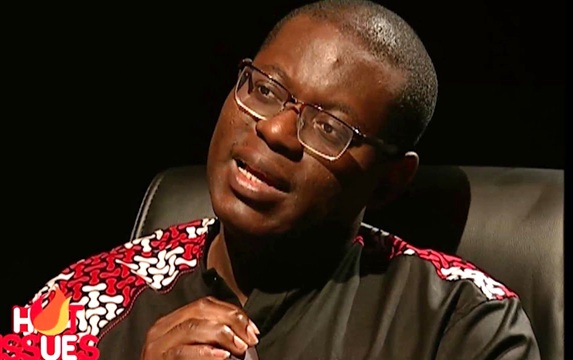
Policy analyst and Vice President of IMANI Africa, Bright Simons, has challenged the popular narrative of a sweeping “African debt crisis,” arguing that Nigeria’s chronic fiscal stress is largely self-inflicted rather than the result of an unfair global financial system.
Using Nigeria as a case study, Simons said while many African countries face high borrowing costs that constrain development, this reality should not be confused with the idea that most countries were pushed into debt distress by external forces. Instead, he identifies a smaller group of what he terms “distress-dynamos” — high-potential African economies with vibrant private sectors but persistent fiscal instability driven mainly by domestic policy failures.
Nigeria, alongside countries such as Ghana, Egypt and Malawi, falls squarely into this category.
According to Simons, one of the clearest illustrations of Nigeria’s debt problem is the way government budgets are built around volatile oil price assumptions rather than realistic production volumes. He pointed to the ongoing dispute between Nigeria’s Senate and the House of Representatives over whether to benchmark oil prices at around US$60 or US$65 per barrel for the 2026 budget.
“This debate misses the real problem,” Simons argued, noting that oil revenue volatility has been a central trigger of Nigeria’s repeated fiscal crises.
When oil revenues underperform, the entire budget framework unravels. Government spending commitments remain fixed, forcing the state to resort to central bank financing. In 2021 alone, interest payments on the Central Bank of Nigeria’s “Ways and Means” advances reached approximately US$3 billion, a level Simons described as fiscally alarming.
Data cited by the policy analyst show that Nigeria was effectively cash-flow insolvent by 2020, with debt servicing consuming over 80 per cent of federally retained revenue. In parts of 2022, this figure exceeded 90 per cent, leaving the government to fund virtually all other spending through fresh borrowing — what Simons described as “borrowing to exist.”
Crucially, Nigeria’s challenges persisted even during periods of high global oil prices. In 2022, when crude prices surged to about US$100 per barrel, Nigeria should have recorded a fiscal windfall. Instead, oil production collapsed to multi-decade lows of around 1.3 to 1.4 million barrels per day, driven by infrastructure decay, oil theft and the withdrawal of multinational producers.
Simons noted that the problem has been compounded by chronic over-optimism in official production forecasts. In 2018, the government projected output of 2.3 million barrels per day despite clear structural constraints. Although oil prices exceeded the budget benchmark that year, actual production averaged just 1.9 million barrels per day, wiping out expected revenue gains.
A similar pattern played out in 2024, when the budget assumed production of 1.78 million barrels per day, but actual output fell closer to 1.5 million.
“The fixation on oil price benchmarks, when volume assumptions are consistently unrealistic, shows how deeply the problem is underestimated,” Simons said.
Looking ahead, he argued that Nigeria and other distress-dynamo economies must abandon static budgeting tools such as the Medium-Term Expenditure Framework and adopt full scenario-based fiscal planning. This approach, he said, would allow governments to plan discretionary spending around best-case, base-case and worst-case revenue outcomes from the outset.
Simons also questioned the effectiveness of the recalibration strategies often promoted by the International Monetary Fund, arguing that political economy constraints make them difficult to sustain.
“Without scenario-based budgeting, these countries will continue to lurch from one fiscal crisis to another, regardless of oil prices or external conditions,” he warned.