What Ghanaian Mothers Pack for Delivery Day Reveals a Health System in Crisis
As women across 13 countries open their maternity bags for WaterAid's Time to Deliver campaign, Ghana's own numbers demand urgent action
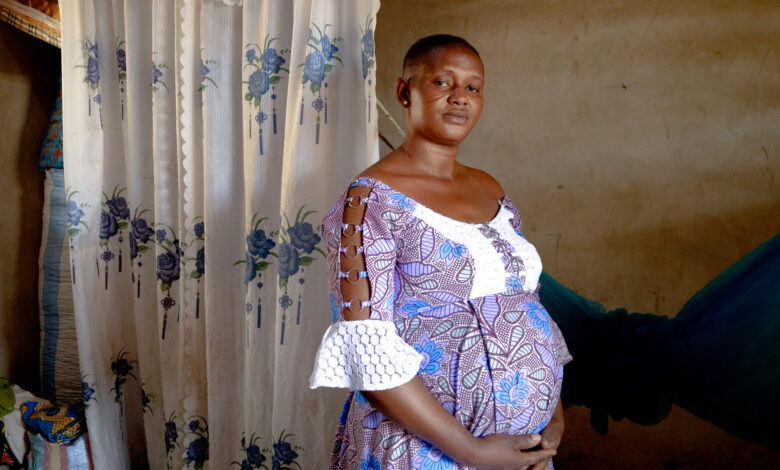
When Alahire, 29, from Namoo Boko in the Bongo District of Ghana’s Upper East Region, prepared her bag for the birth of her fourth child, she packed six yards of cloth, a delivery pad, an antiseptic and a mosquito net. Not because they are comforts, but because she has learned not to rely on what should already be waiting at the health facility. Not water. Not a clean toilet. Not a functioning bathroom.
In Accra, 34-year-old Francesca packed very differently for her second delivery: a breast pump, baby wipes, nappies, moisturising cream and talcum powder. Two women. One country. Two entirely different realities of what it means to give birth in Ghana today.
Their bags tell a story that women in Ethiopia, Japan, Canada, Malawi, the United Kingdom and nine other countries are also telling through WaterAid’s Time to Deliver campaign, a global call to action demanding that every government, partner and private sector actor invest urgently in water, sanitation and hygiene in healthcare facilities. Through striking photography and filmed testimonies, women across 13 countries open their maternity bags and expose a deep inequality shaping who lives and who dies in childbirth.
The evidence is devastating. WaterAid’s new “Born Without Water “report finds that across 10 Sub-Saharan African countries, 3 in 4 births occur in delivery rooms without basic protections: 65% of facilities have no proper cleaning, 66% have no handwashing facilities and soap, and 78% have no decent toilets. Mothers give birth in blood-stained conditions, forced to walk to unclean rivers to wash with open wounds, while midwives deliver babies with unclean hands and equipment. The consequence is maternal sepsis in 1 in 9 births across Africa, killing around 13,000 women every year in Sub-Saharan Africa, 36 mothers every single day, and making women in the region 144 times more likely to die from sepsis than women in Western Europe and North America.
Ghana is not a bystander to this crisis. It is inside it. WaterAid’s 2025 figures show that 98% of health centre births in Ghana took place without basic sanitation. 1 in 3 births occurred without any basic water service. 43% of facilities lacked handwashing access, 59% had no environmental cleaning, and 69% lacked safe waste management. These are not figures from a country yet to make commitments on maternal health. Ghana has signed them. These are figures from a country that has not yet made those commitments real for the women who need them most.
For Alahire, this gap is not policy language. It is what she lives every time she walks through a health facility gate.
“There is always a bathroom issue after women deliver and we have to go behind the facility to urinate. I would like them to provide a bath and toilet for us. It is really not nice to go out into the open where people will see you. Changes should be made so we do not struggle in this way.”
Francesca, speaking from Accra, knows the same truth from a different vantage point.
“There 100% needs to be clean water at the hospital because bringing new life into the world without clean water, you do not know what diseases they may pick up when they are born. Clean water, good hygiene from both hospital staff and cleaners, people who regularly clean the maternity wards, and teaching mothers the importance of personal hygiene are all very important. Health care facilities definitely need to have good hygiene and sanitation.”
Ewurabena Yanyi-Akofur, Country Director of WaterAid Ghana, said the data closes the door on any argument that this is too costly or complex to solve.
“Ghana is failing its mothers at the very moment they need the health system most. The solution is known, affordable, and achievable. Investing in clean water and sanitation in every healthcare facility could cut maternal deaths by at least half, for less than $1 per person. The time to act is now.”
Globally, universal WASH in healthcare facilities could prevent 10 million cases of maternal sepsis and 8,580 deaths every year, at a cost far lower than treating sepsis once it takes hold. With global aid cuts already stalling progress, governments have a closing window to make measurable commitments ahead of the UN Water Conference in December.
What a woman packs when she goes to give birth should reflect her hopes for her child, not the failures of the facility she is about to enter. In Ghana, and across the world, too many women are still packing for a system that is not ready for them. That must change.