Gabon Moves to Accelerate AfCFTA Implementation as Mene Pushes Market Access Agenda
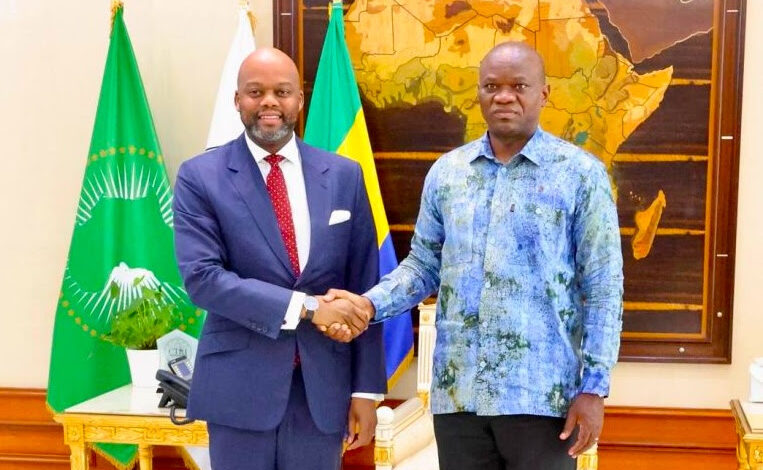
Gabon has pledged to accelerate implementation of the African Continental Free Trade Area (AfCFTA) following high-level discussions with the Secretary-General of the AfCFTA Secretariat, Wamkele Mene, during a two-day official visit to Libreville.
The visit, which brought together senior government officials, regional institutions and private sector representatives, focused on translating Gabon’s industrial potential into increased participation in continental trade under Africa’s single market framework.
Mr. Mene held meetings with Gabonese President Brice Clotaire Oligui Nguema, Vice-President of the Government Hermann Immongault, Vice-President of the Republic Hugues Alexandre Barro Chambrier and the Minister of Trade, SMEs and Youth Entrepreneurship, Zenaba Gninga Channing.
At the centre of the discussions was the need to move beyond AfCFTA ratification towards practical implementation that enables businesses to access markets across the continent.
According to the AfCFTA Secretariat, President Oligui Nguema reaffirmed Gabon’s commitment to fully implementing the agreement and positioning the country as a key player in Central Africa’s economic integration efforts.
“The Gabonese private sector can take full advantage of the market of 1.4 billion consumers that the AfCFTA offers, and diversify its production and its exports,” Mr. Mene said.
Focus on Industrialisation and Exports
The discussions highlighted Gabon’s ambition to leverage its industrial base and natural resources to increase exports under the AfCFTA framework.
Particular attention was given to the strategic role of the Nkok Special Economic Zone, which has emerged as one of Central Africa’s leading industrial hubs, especially in timber processing and manufacturing.
AfCFTA officials indicated that Gabon is well positioned to expand exports beyond its traditional Central African markets into West, East and North Africa, provided businesses are equipped to navigate the rules and opportunities created by the continental agreement.
During a public-private dialogue involving business leaders and AfCFTA experts, discussions focused on barriers that continue to limit cross-border trade, including access to finance, logistics constraints, competitiveness challenges and limited understanding of rules of origin requirements.
The Secretariat used the engagement to introduce several AfCFTA trade-support instruments, including the Rules of Origin Manual, the e-Tariff Book, the Pan-African Payment and Settlement System (PAPSS) and the AfCFTA Adjustment Fund.
Trade Minister Zenaba Gninga Channing urged local businesses to move beyond the export of raw materials and take advantage of opportunities to process and export higher-value products to markets across Africa.
Border Infrastructure Takes Centre Stage
One of the most significant outcomes of the visit was renewed support for the proposed one-stop border post at Kye-Ossi, located at the intersection of Gabon, Cameroon and Equatorial Guinea.
The project is expected to incorporate digital trade-facilitation systems aimed at reducing border delays, lowering transaction costs and increasing commercial activity within Central Africa.
Mr. Mene described the initiative as an important step toward improving regional connectivity and facilitating the movement of goods across borders.
The Secretary-General also welcomed a cooperation agreement signed by the Chambers of Commerce of the three countries and encouraged their participation in the AfCFTA Secretariat’s Private Sector Dialogue platform.
Regional Integration Agenda
The visit also reinforced cooperation between the AfCFTA Secretariat and the Economic Community of Central African States (ECCAS).
During discussions with ECCAS officials, both institutions agreed to develop a joint action plan to accelerate implementation of the continental trade agreement across the region.
ECCAS noted that all member states have ratified the AfCFTA Agreement and its protocols, a milestone viewed as critical to advancing regional economic integration.
The development strengthens Central Africa’s position within the broader AfCFTA framework at a time when policymakers are increasingly focused on turning political commitments into measurable trade outcomes.
Turning Potential into Trade
While AfCFTA has generated considerable optimism since trading officially commenced in 2021, implementation remains uneven across many African countries.
The Gabon mission reflects a growing emphasis by the Secretariat on helping member states move from policy adoption to practical market participation.
For Gabon, the challenge will be translating industrial capacity, strategic geographic positioning and natural resource advantages into increased exports and stronger participation in regional value chains.
With the Intra-African Trade Fair scheduled to take place in Lagos, Nigeria, in November 2027, Gabonese businesses are expected to gain another platform to connect with buyers, investors and partners from across the continent.
For the AfCFTA Secretariat, the broader objective remains clear: ensuring that the promise of a US$3 trillion African market translates into real opportunities for businesses, investors and consumers across the continent.