
DACF Transfers Face Fresh Scrutiny as Research Questions Impact on Local Development
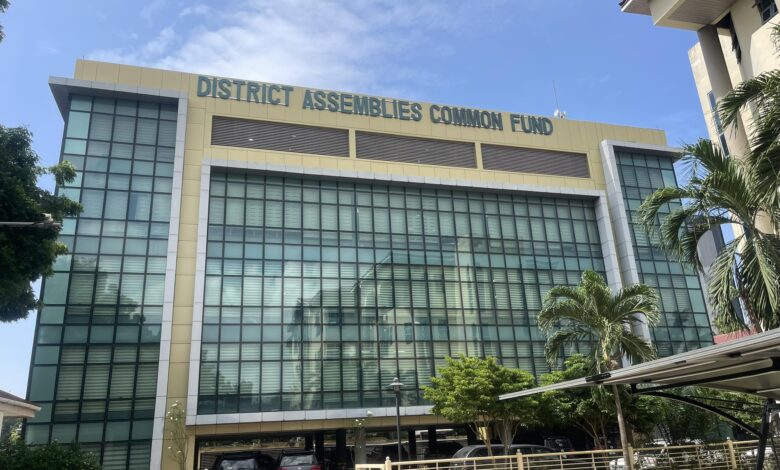
The effectiveness of Ghana’s District Assemblies Common Fund (DACF) is coming under renewed scrutiny after fresh academic research raised concerns that increasing fiscal transfers to local authorities may not be delivering commensurate improvements in service delivery, infrastructure development or local revenue mobilisation.
The concerns emerged during the maiden University of Ghana–World Bank PhD Students Research Colloquium, where doctoral researchers presented policy-focused studies aimed at influencing national development conversations.
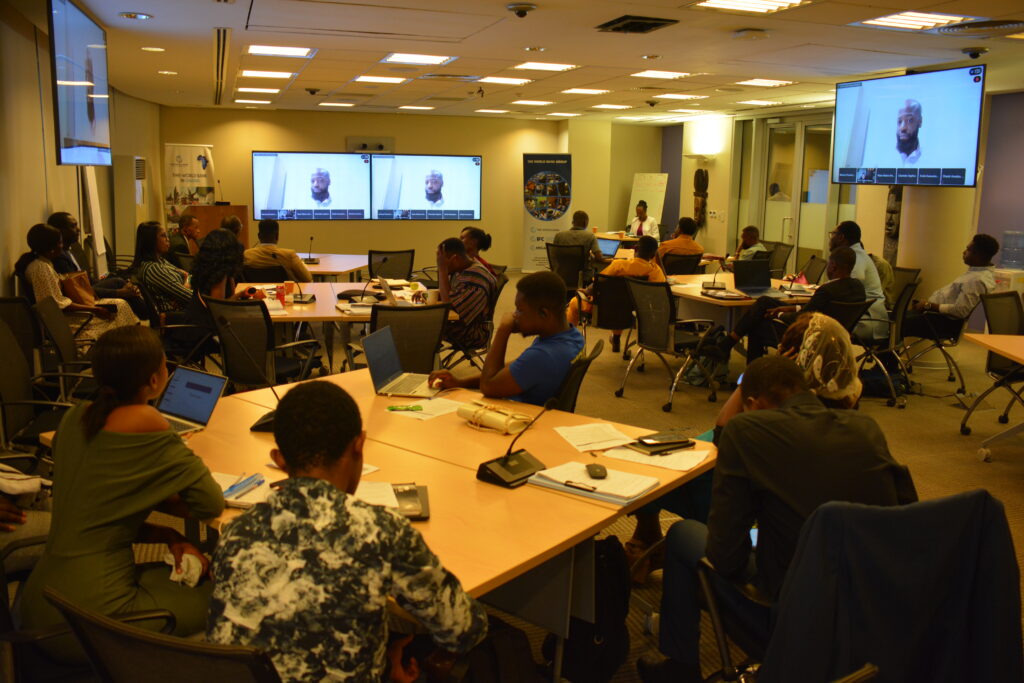
Among the presentations drawing significant attention was research by Michael Hanson, a PhD student at the University of Ghana, titled “Strengthening the State’s Effectiveness Through Fiscal Decentralisation: Insights from Ghana’s District Assembly Common Fund.”
Hanson’s findings suggest that while government allocations to district assemblies have increased over the years, many local authorities may be growing increasingly dependent on central government transfers instead of strengthening their internally generated funds (IGF).
For many citizens, he argued, the frustration is reflected in the continued poor state of basic public services despite the steady flow of public funds to local assemblies.
“People wake up every morning and still struggle with untarred roads, poor healthcare access and weak social infrastructure, yet they continue paying property rates, taxes and levies to local authorities,” Hanson told The High Street Journal after his presentation.
“On top of that, central government also transfers resources through the DACF. Naturally, citizens expect to see visible improvements in their communities.”
According to Hanson, the growing disconnect between rising fiscal allocations and visible development outcomes risks weakening public trust in local governance while also discouraging tax compliance.
Growing Dependence on Central Transfers
Hanson argued that some district assemblies appear to have become overly reliant on DACF inflows, reducing the urgency to improve local revenue collection systems.
“The findings show that assemblies receiving larger DACF transfers tend to become relaxed in mobilising their own revenues,” he explained.
“They assume the funds will continue to come, so the incentive to aggressively improve internally generated funds weakens.”
That trend, he said, creates a cycle in which poor service delivery further erodes citizens’ willingness to pay taxes and levies.
“If streetlights are not functioning and residents do not see improvements in their communities, you cannot expect enthusiasm toward paying property rates,” he noted.
The research also raised questions about expenditure efficiency at the local government level.
“We are finding situations where expenditure patterns do not correspond with the level of resources received,” Hanson stated. “In some cases, assemblies are spending less than what they receive. The obvious question then becomes: where are the remaining funds going?”
Calls for Structural Reform
Hanson believes the DACF model itself may require restructuring to improve accountability and performance.
One of the key recommendations emerging from his ongoing doctoral research is the introduction of performance-based fiscal transfers tied directly to measurable development outcomes.
“We should not continue treating DACF allocations as blanket disbursements,” he argued.
“Transfers should increasingly be linked to how effectively assemblies deliver on the core objectives the DACF was created to support, including healthcare, education, roads and infrastructure.”
Under such a framework, assemblies demonstrating stronger performance in service delivery and infrastructure development could potentially qualify for greater fiscal support.
According to Hanson, such an approach could create stronger incentives for local authorities to improve governance standards and project execution.
“If assemblies are compelled to deliver more visible services, citizens are more likely to believe their resources are being utilised properly, which can also improve IGF mobilisation,” he added.
World Bank Pushes Research-Driven Policymaking
The broader significance of the colloquium extended beyond Hanson’s research alone.
Speaking at the event, World Bank Division Director Robert Taliercio O’Brien stressed the increasing importance of linking academic research directly to policymaking and institutional reform.
“The World Bank is placing renewed emphasis on knowledge as a core part of how we support development,” he said.
According to him, development challenges require evidence-based policymaking grounded in practical realities rather than assumptions or anecdotal evidence.
“Good research sharpens our understanding of what works, for whom, under what conditions, and at what cost,” O’Brien noted.
He said Ghana’s evolving policy priorities, including jobs, skills development, fiscal resilience, service delivery and private-sector growth, make rigorous policy-oriented research increasingly important.
O’Brien also challenged researchers to focus on ensuring their findings influence real-world policymaking and institutional decision-making.
“As you present your research, ask not only whether the argument is strong, but whether the insight can travel beyond the dissertation into institutions, programmes and public action,” he stated.
Strengthening the Research–Policy Link
The colloquium forms part of a broader collaboration between the World Bank and the University of Ghana aimed at strengthening engagement between academia, policymakers and development institutions.
O’Brien described the University of Ghana as an increasingly important knowledge partner for the World Bank through ongoing collaborations involving institutions such as the Institute of Statistical, Social and Economic Research (ISSER) and the African Center for Economic Transformation (ACET).
“The real opportunity before us is not simply to hold a successful event today,” he said, “but to build a sustained platform for collaboration between research and policy, between universities and development institutions, and between ideas and implementation.”
For Ghana, where fiscal decentralisation remains central to local governance and development planning, Hanson’s research is likely to intensify ongoing debates around transparency, accountability and whether public resources transferred to local authorities are generating the development outcomes citizens expect.