The Church of Jesus Christ of Latter-day Saints is expanding its role as a development partner in West Africa, combining investments in healthcare, education and humanitarian programmes with initiatives aimed at strengthening families and empowering young people.
That commitment was on display in Liberia, where the Church hosted the eighth annual Strengthening Families Conference, while simultaneously breaking ground for a new 116-bed maternity hospital expected to improve maternal and neonatal healthcare for thousands of families.
Held in Monrovia under the theme “Strengthening Families, Empowering Youth, and Building Resilient Communities,” the conference brought together thousands of participants, including government officials, traditional leaders, educators, faith organisations, youth advocates and development partners from across Africa.
The two-day event represented the first time the pan-African conference had been held in Liberia and formed part of a broader week of humanitarian activities that underscored the Church’s growing development footprint on the continent.
Investing Beyond Worship
Rather than limiting its work to religious activities, the Church is increasingly positioning itself as a long-term partner in community development across Africa.
Speaking at the conference, First Counselor in the Africa West Area Presidency, Elder Adeyinka A. Ojediran, said building stronger societies begins with stronger families.
“The strength of every nation begins with the strength of its families. When families are supported, when parents are empowered, and when young people are given the values, skills and opportunities they need, communities become stronger and more resilient,” he said.
He stressed that Africa’s youthful population represents one of its greatest assets but said young people require education, mentorship, skills and opportunities if they are to drive sustainable development.
“Africa’s young people represent one of the continent’s greatest strengths. But potential must be matched with opportunity,” Elder Ojediran said.
He cited initiatives such as BYU–Pathway Worldwide, alongside humanitarian programmes, healthcare support and educational investments, as examples of how the Church is helping individuals become more self-reliant.
Nobel Laureate Calls for Greater Investment in Children
Nobel Peace Prize laureate Leymah Gbowee urged African societies to place children, particularly girls, at the centre of national development strategies.
Drawing on her years of advocacy, she said families should create environments where children have “voice, choice and space” to realise their full potential.
“When we protect our girls, educate our children and invest in their future, we are investing in the future of our nation,” she said.
She argued that investment in children should be viewed not merely as a social obligation but as an economic investment capable of shaping future national prosperity.
Interfaith Support
Ahead of the conference, the Inter-Religious Council of Liberia formally endorsed the gathering after concluding that it focused on shared social values rather than religious instruction or proselytisation.
Representatives of Christian and Muslim organisations described the initiative as timely, noting that years of civil conflict and economic hardship have weakened family structures in Liberia.
The Council identified poverty, teenage pregnancy, gender-based violence, maternal mortality and substance abuse among the major pressures confronting families and called for stronger collaboration between government, faith organisations and civil society.
New Maternity Hospital
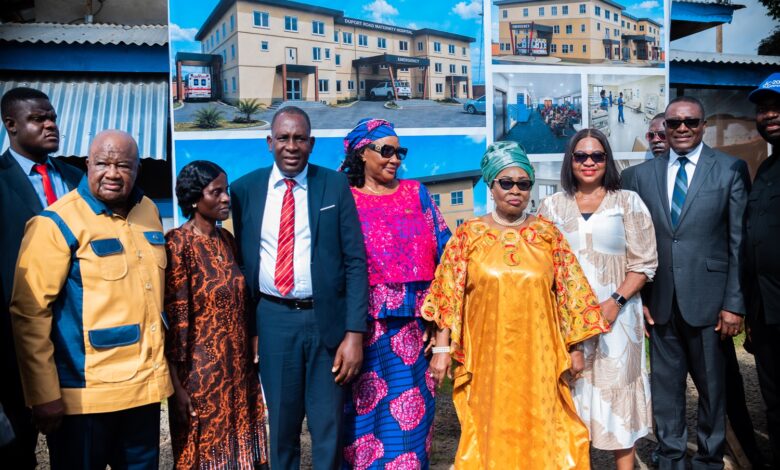
One of the week’s most significant announcements was the groundbreaking ceremony for a 116-bed maternity hospital in Paynesville, undertaken by the Church in partnership with Liberia’s Ministry of Health.
The facility will transform the existing Duport Road Health Center into a modern specialist maternity hospital equipped with delivery suites, operating theatres, laboratories and a neonatal intensive care unit.
Liberia’s First Lady, Kartumu Y. Boakai, described the project as a transformational investment in maternal healthcare.
“Today transcends a groundbreaking ceremony. What once represented hope is now becoming a symbol of transformation,” she said.
“True faith gives. True faith builds. True faith transforms.”
Health Minister Dr. Louise M. Kpoto said the hospital aligns with Liberia’s efforts to reduce preventable maternal and neonatal deaths.
“If there is one project that I could complete before my tenure is over, this Duport Road Maternal Center should be that project,” she said.
Representing President Joseph Nyuma Boakai, Senior Presidential Advisor Prof. Augustine Konneh said protecting mothers and newborns was “a governance imperative and a moral duty.”
Partnerships for Community Development
Government officials used the conference to emphasise that strengthening families requires broad partnerships rather than isolated interventions.
Deputy Minister for Children and Social Protection Gahme Tokpa said many of Liberia’s social challenges stem from economic pressures facing households.
“The challenges facing Liberia’s children cannot be addressed by the government alone,” he said.
Former Vice President Jewel Howard-Taylor, Archbishop Gabriel Jubwe, youth advocate Abigail Freeman and other speakers also contributed perspectives on education, youth employment, migration and community leadership.
Growing Across West Africa
Organisers said the Strengthening Families Conference has evolved into a pan-African platform for dialogue on family wellbeing and youth empowerment.
Previous editions have been held in Ghana, Nigeria, Côte d’Ivoire and Sierra Leone, with the 2027 conference scheduled for Cotonou, Benin, extending the initiative into francophone West Africa.
The Church says the conference complements its broader humanitarian work across the region.
Headquartered in Accra, its Africa West Area oversees activities in 16 countries, including Ghana, Nigeria, Liberia, Sierra Leone, Côte d’Ivoire, Togo, Benin, Senegal and Guinea.
Beyond worship services, the Church supports maternal and child healthcare, education, clean-water projects, vocational training, emergency relief and family development programmes, often in partnership with governments and local organisations.
Elder Ojediran said sustainable development requires collaboration across sectors.
“Strengthening families is not the responsibility of one institution alone. It requires governments, faith communities, civil society, families and individuals working together. When we unite around shared values and practical solutions, we can build communities where every person has the opportunity to flourish.”