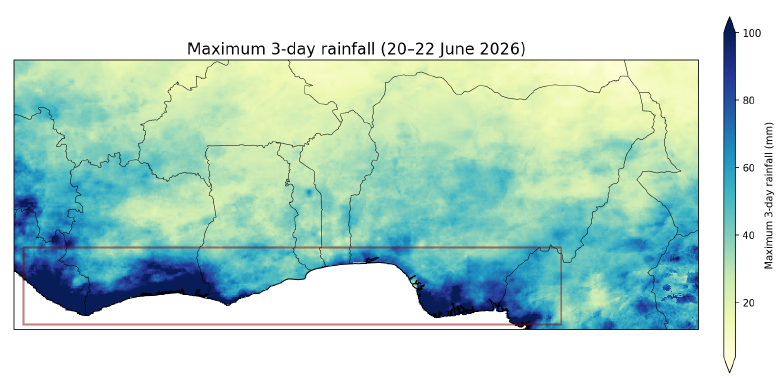
Human-induced climate change significantly intensified the extreme rainfall that triggered the deadly floods across Ghana and other parts of coastal West Africa in June, with scientists warning that similar disasters are now likely to occur far more frequently unless countries accelerate climate adaptation and cut global greenhouse gas emissions.
A new scientific assessment by World Weather Attribution (WWA) found that climate change increased the intensity of the three-day rainfall event by as much as 23 percent based on historical observations, while climate models estimate at least a four percent increase. The study also concludes that such extreme rainfall events are now about five times more likely than they were before the industrial era.
The findings come after floods swept through parts of Ghana, Togo and Côte d’Ivoire, claiming nearly 100 lives, destroying homes, disrupting businesses and exposing the growing economic cost of climate-related disasters across West Africa.
Scientists say what was once considered a rare weather event is rapidly becoming a recurring threat, with rainfall episodes of similar magnitude now expected every two to four years.
The assessment underscores the increasing vulnerability of West African economies, where rapid urbanisation, inadequate drainage infrastructure and expanding settlements in flood-prone areas continue to amplify the impact of extreme weather.
According to the report, climate change is no longer simply altering long-term weather patterns but is directly increasing the frequency and severity of rainfall events that overwhelm infrastructure and place lives and livelihoods at risk.
In a statement accompanying the report, the scientists said the June rainfall event illustrates how global warming is reshaping weather extremes across the region.
“The intense three-day rainfall event is now about five times more likely to occur today compared to a pre-industrial climate,” the World Weather Attribution report stated.
The findings also raise fresh concerns about the growing financial burden of climate change on governments already facing pressure to invest in infrastructure, disaster response and economic recovery.
Floods in recent years have repeatedly damaged roads, bridges, homes, farmlands and businesses across Ghana, disrupting supply chains and increasing public expenditure on reconstruction.
The Executive Secretary of UN Climate Change, Simon Stiell, said the floods demonstrate the direct consequences of continued reliance on fossil fuels.
“There is nothing normal about these devastating floods. The climate crisis has made them more likely, driven by humanity burning vast amounts of oil, coal and gas,” he said.
“What was once rare is becoming increasingly frequent, severe and deadly because of global heating.”
Mr. Stiell called for faster global action to reduce emissions while increasing investments in climate resilience.
He said the transition from fossil fuels to cleaner energy, stronger protection of forests and increased climate adaptation investments remain critical to reducing future disaster risks.
He also urged developed countries to honour their climate finance commitments to support vulnerable nations that contribute little to global emissions but suffer disproportionately from climate impacts.
“Many nations need support to speed up this shift, especially vulnerable countries that have done so little to cause the global climate crisis. All climate finance commitments must therefore be delivered in full,” he added.
The report adds to growing scientific evidence linking climate change to increasingly destructive weather events and reinforces calls for Ghana and other West African countries to strengthen flood management systems, climate-resilient infrastructure and early warning mechanisms as extreme rainfall becomes a more regular feature of the region’s climate.