OmniBSIC Bank Turns Plastic Waste into Industrial Opportunity Through School Recycling Initiative
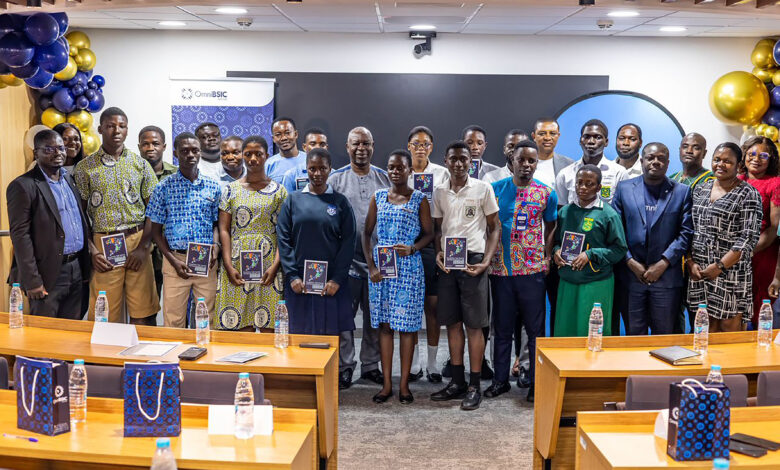
OmniBSIC Bank has launched a partnership with the Council for Scientific and Industrial Research’s Institute of Industrial Research (CSIR-IIR) and Ocean Tribe Foundation to transform plastic waste generated in schools into industrial raw materials, positioning the initiative as a practical contribution to Ghana’s emerging circular economy and sustainable manufacturing agenda.
The project, dubbed “Recovering Plastics for Industry and Sustainable Environment,” seeks to tackle two pressing challenges simultaneously: growing plastic pollution and the need for sustainable industrial feedstock for local manufacturers.
Under the pilot programme, five senior high schools in the Greater Accra Region will collect and recover plastic waste generated on their campuses, with the materials subsequently channelled into local production chains where they will be converted into products such as roofing tiles, floor tiles and composite construction materials.
The initiative highlights a growing trend among financial institutions to expand their role beyond traditional banking and support sustainable development projects that create measurable economic and environmental value.
Waste as an Economic Resource
While plastic pollution is often viewed primarily as an environmental problem, project partners argue that it also represents a significant untapped economic opportunity.
The five participating schools collectively generate approximately 44,000 pieces of plastic waste daily, with plastics accounting for nearly 60 percent of total waste produced on the campuses.
Nationally, Ghana produces an estimated 800,000 tonnes of plastic waste annually, much of which remains uncollected and ultimately finds its way into drains, waterways and the ocean.
According to CSIR-IIR, recovered plastics can serve as valuable industrial inputs capable of supporting local manufacturing while reducing reliance on virgin raw materials.
Speaking at the launch, Deputy Director of CSIR-IIR, Dr. Richard Bayitse, described plastic waste as a misplaced economic asset rather than a disposal problem.
“It is not waste. It is a misplaced industrial resource. CSIR has spent decades researching how to efficiently recover plastics and transform them into floor tiles, roofing tiles and composite materials for our local industry,” he said.
Industry analysts note that improving plastic recovery rates could strengthen local supply chains for manufacturers while contributing to import substitution and resource efficiency.
Banking Sector Expands Sustainability Agenda
For OmniBSIC Bank, the initiative forms part of a broader sustainability strategy aligned with Ghana’s Sustainable Banking Principles and international environmental goals.
The bank is fully funding the project, including the provision of collection infrastructure, logistics support, educational materials, awareness campaigns and student incentive programmes.
George Tetteh Ocansey, Divisional Head and Executive Committee Member of OmniBSIC Bank, said the project demonstrates how financial institutions can contribute to solving environmental challenges while supporting economic development.
“This partnership aligns with Ghana’s Sustainable Banking Principle 6 and supports Sustainable Development Goals 4 and 17. It reinforces the bank’s commitment to sustainable financing by investing in education, fostering innovation in plastic waste management, and building strategic partnerships that address pressing environmental challenges,” he said.
The initiative also reflects the increasing importance of Environmental, Social and Governance (ESG) considerations within Ghana’s banking industry as financial institutions seek to support sustainable economic growth.
Building Future Green Entrepreneurs
Beyond waste recovery, the programme incorporates an educational component aimed at equipping students with practical knowledge about environmental stewardship, recycling and entrepreneurship.
Students will participate in awareness campaigns, waste segregation exercises and innovation challenges designed to encourage creative solutions for plastic reuse.
A Plastic Innovation Challenge scheduled for October will invite students to develop products from recovered plastics, with awards planned for the most innovative projects and highest-performing schools.
The programme will also introduce financial literacy training through OmniBSIC Bank’s youth banking initiatives, linking environmental responsibility with entrepreneurship and personal financial management.
Ocean Tribe Foundation Programme Manager, Saviour Agyei, said educating young people remains critical to achieving long-term environmental sustainability.
“Lasting change begins with education, empowering our students to become champions of environmental stewardship who will inspire generations to come,” she said.
Supporting Ghana’s Circular Economy
The initiative comes as Ghana intensifies efforts to build a circular economy where waste materials are reused, recycled and reintegrated into productive economic activity.
By creating a direct link between waste recovery and manufacturing, the programme demonstrates how environmental management can support industrial development, job creation and sustainable production.
If successful, the pilot could provide a model for wider adoption across schools and communities nationwide, creating new streams of recyclable materials for industry while helping to reduce the environmental and economic costs associated with plastic pollution.
For Ghana’s manufacturing sector, the initiative offers a glimpse into how locally sourced recycled materials can become part of industrial value chains, supporting both sustainability objectives and long-term economic competitiveness.