Ghana’s Nuclear Power Plans Take Centre Stage as US-Africa Summit Opens
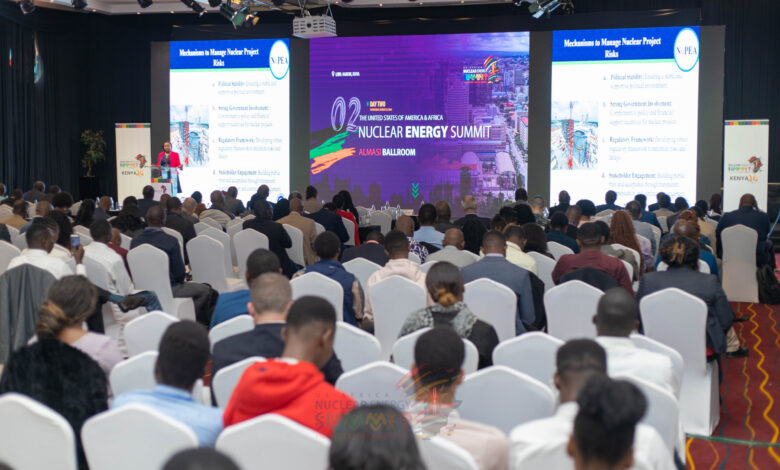
Ghana’s plans to add nuclear power to its electricity mix come under the international spotlight today as Accra hosts the third U.S.-Africa Nuclear Energy Summit.
The three-day meeting, running from August 19 to 21, brings together government officials, nuclear industry executives, regulators, researchers and energy experts to discuss how Africa can build the skills and institutions needed to develop civilian nuclear power.
For Ghana, the summit arrives at a particularly important moment.
The country is now in Phase Two of the International Atomic Energy Agency’s (IAEA) Milestone Approach, where decisions on the technology, financing, regulatory framework and human resources needed for a nuclear power programme become increasingly important.
Dr. Archibold Buah-Kwofie, Director of the Nuclear Power Institute at the Ghana Atomic Energy Commission (GAEC), said having the technology alone would not guarantee a successful nuclear programme.
“You can have every technology available, but if you don’t have the human resource that can adequately use that technology, then it is as good as having nothing,” he said.
Building the workforce before the plant
Ghana began developing its nuclear power infrastructure in 2015 and is targeting the commissioning of its first nuclear power plant around 2030.
But building a nuclear plant is only part of the challenge.
The country will need engineers, scientists, technicians, regulators and policymakers with the expertise to design, operate and supervise the programme over its lifetime.
That is why workforce development is central to this year’s summit theme, “Building and Sustaining Africa’s Nuclear Workforce.”
The meeting is expected to attract senior officials from the IAEA, representatives of the U.S. Department of Energy and nuclear industry, African energy ministries, regulators, universities and research institutions.
Ghana wants to share its experience
The summit also builds on Ghana’s partnership with the United States through the Regional Energy Training Centre, which was established to support nuclear capacity development across Africa.
Although the centre is located in Ghana, its mandate extends beyond the country as more African nations consider nuclear power as a way to improve electricity supply and support economic growth.
Dr. Buah-Kwofie said Ghana sees an opportunity to share the experience it has gained while developing its own nuclear infrastructure, while learning from countries that have already operated nuclear plants for decades.
“We are at a critical stage of our nuclear infrastructure. Decisions need to be made, and policymakers must have access to the right information to make those decisions,” he said.
More than an electricity project
For Ghana, the nuclear programme is also tied to the country’s industrial ambitions.
A reliable source of baseload electricity could support industries such as manufacturing, mining and mineral processing, particularly businesses that require large amounts of power and cannot easily absorb disruptions.
That makes the decisions being considered now important not only for Ghana’s future electricity supply, but also for the country’s plans to expand industrial production and add more value to its natural resources.
Decisions are getting closer
Ghana’s nuclear programme is moving from broad planning towards decisions that will shape the project for decades.
The country must eventually settle questions around technology selection, financing, regulation, infrastructure and the development of the workforce required to operate the plant safely.
The Accra summit gives Ghana access to international expertise at a time when those choices are becoming more pressing.
It also strengthens the country’s bid to become a regional centre for nuclear education, technical training and policy development as interest in nuclear energy grows across Africa.
For Ghana, therefore, the summit is not simply another international conference. It comes as the country moves closer to deciding what kind of nuclear programme it wants, how it will build it and, ultimately, how it will use it to support the economy.