COP31 Opens in Türkiye as Climate Costs Mount
World leaders meet in Türkiye with the 1.5°C target under pressure, climate finance demands unresolved and energy security increasingly shaping the transition to cleaner energy.
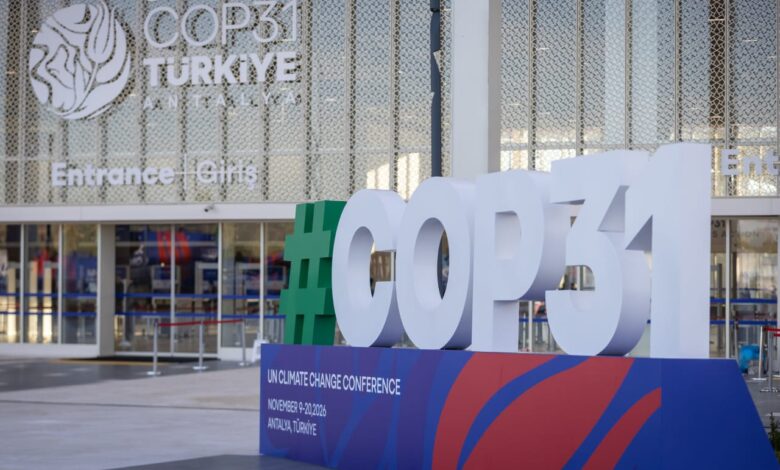
The growing economic cost of climate change is putting renewed pressure on governments to deliver on their climate commitments as the 31st United Nations Climate Change Conference (COP31) opens today, Monday, November 9, in Antalya, Türkiye.
The November 9-20 conference comes at a difficult point for international climate policy. Countries have made successive commitments to reduce emissions, strengthen resilience and support vulnerable populations, but the pace of implementation remains inadequate to keep global warming within the 1.5°C limit this century.
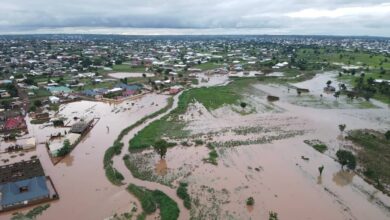
The consequences are increasingly extending into the wider economy. Climate-related damage is disrupting livelihoods, threatening jobs, weakening infrastructure and affecting the supply chains on which businesses and governments depend.
For delegates gathering in Antalya, the immediate challenge is to find ways of turning national climate targets into funded programmes and measurable action, particularly in countries where financial and technical constraints continue to hold back progress.
Implementation becomes the central test
Türkiye is hosting COP31, while Australia is leading the negotiations, with both countries seeking to make implementation the defining issue of the conference.
In their fourth joint letter, COP31 President Designate Murat Kurum, Türkiye’s Minister of Environment, Urbanisation and Climate Change, and Australia’s Minister for Climate Change and Energy, Chris Bowen, who will lead the negotiations, described their vision as a COP of “implementation and acceleration”.
The agenda is intended to deliver practical progress through both the formal negotiations and the Global Climate Action Agenda.
The emphasis reflects a growing concern within the international climate process: commitments alone will not deliver the required changes unless governments can mobilise investment, strengthen institutions and remove barriers to implementation.
This is particularly relevant to developing economies, which must balance climate action with demands for energy access, employment, industrial growth and improved living standards.
UN assessment exposes the delivery gap
The UN Climate Change Quarterly Update for the third quarter of 2026 provides a detailed picture of the challenges confronting governments ahead of the conference.
In the update, Simon Stiell, Executive Secretary of UN Climate Change, acknowledged progress in international cooperation but warned that current efforts remain far below what is required to keep the 1.5°C warming limit within reach.
“Climate multilateralism is delivering important progress, and Parties are increasingly taking whole-of-economy, whole-of-society approaches to climate policymaking,” he wrote.
“However, collective progress remains substantially insufficient, based on science, to keep the 1.5°C warming limit within reach for this century.”
Three reports published on October 27 provide further evidence of the implementation challenge.
The 2026 Nationally Determined Contributions (NDC) Synthesis Report assesses countries’ climate targets, while the 2026 Biennial Transparency Reports (BTR) Synthesis Report examines their reporting of progress. The 2026 National Adaptation Plans (NAPs) Progress Report focuses on national efforts to prepare for climate impacts.
Mr Stiell said some governments and other climate stakeholders were finding opportunities to accelerate their commitments, but significant barriers continued to prevent many from moving at the required pace.
The findings put the focus on whether countries can translate their stated ambitions into policies, investments and programmes that deliver measurable outcomes.
Financing remains a critical constraint
The ability of developing countries to implement climate commitments will depend heavily on the availability of finance.
Two assessments published by the UN Standing Committee on Finance on October 27 are expected to inform discussions on this issue.
The Seventh Biennial Assessment and Overview of Climate Finance Flows examines the direction and scale of global climate finance, while the Third Report on Progress towards Achieving the Goal of the US$100 Billion reviews progress towards the annual US$100 billion climate finance commitment.
For developing economies, the financing question goes beyond meeting emissions targets. Governments also need resources to protect agriculture, strengthen infrastructure, improve water security and prepare communities for more severe weather events.
The difficulty is that these investments must compete with other public spending priorities, often in countries facing limited fiscal space and high borrowing costs.
The availability, accessibility and predictability of international climate finance will therefore remain important measures of progress at COP31.
Energy markets expose the cost of dependence
Developments in global energy markets have added another dimension to the climate negotiations.
According to the UN quarterly update, fossil fuel price volatility persisted through the third quarter and into the fourth quarter of 2026, raising costs for households, businesses and governments, including sovereign borrowing costs.
Countries that have advanced further in renewable energy have been better protected from some of these price and energy security pressures.
Mr Stiell described the global transition towards affordable and secure clean energy as irreversible, although he warned that its benefits remain unevenly distributed.
For African economies, the transition presents a difficult policy balance. Governments must expand reliable and affordable electricity to support industrialisation while attracting investment into cleaner energy systems.
The pace of this transition will depend on financing, technology and the ability of countries to develop energy systems suited to their economic circumstances.
The issue is not simply how quickly countries can move away from fossil fuels, but how they can maintain energy security and economic competitiveness during that process.
Vulnerable nations demand greater attention
The experience of Pacific island countries featured prominently at the pre-COP meeting held in Fiji in early October, in partnership with Australia.
Tuvalu hosted a leaders’ event alongside other Pacific island nations, drawing attention to the severe consequences of climate change for countries particularly exposed to rising sea levels and extreme weather.
The meeting also highlighted practical climate solutions and the importance of cooperation between countries.
Mr Stiell said the discussions demonstrated the solidarity required to accelerate climate action across international, regional, national and local levels.
The concerns raised by Pacific nations are also relevant to other developing economies, including those in Africa, where climate impacts threaten agriculture, infrastructure, water resources and the livelihoods of vulnerable communities.
What COP31 must deliver
The UN Climate Change Secretariat says it will continue supporting governments through technical work, data, reporting and international meetings aimed at bridging the gap between climate ambition and implementation.
Mr Stiell said the secretariat had worked closely with its Türkiye and Australia counterparts in preparation for the conference and stood ready to support countries in delivering a strong and balanced set of outcomes.
For Ghana and other African economies, the negotiations carry implications for access to climate finance, renewable energy investment and support for climate adaptation.
Agriculture, in particular, remains exposed to changing weather patterns, making investment in resilient farming systems and support for smallholder farmers important parts of the climate response.
But the broader issue is whether international commitments will translate into resources and policies that address the pressures facing developing economies.
COP31 opens with governments facing a difficult combination of climate risks, financing constraints and energy market uncertainty. Its significance will rest on whether the negotiations produce practical progress on these issues, rather than another round of commitments without the means to deliver them.