Ghana Moves to Turn the Ocean Into a Bigger Economic Engine
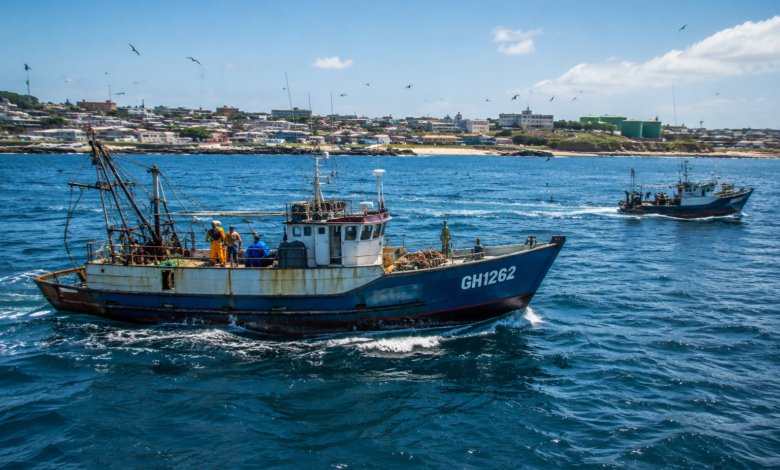
Ghana is moving to put its growing ambitions for the blue economy on a stronger legal footing, as the government begins work on legislation designed to coordinate how the country uses its marine and aquatic resources for jobs, investment and economic growth.
The Ministry of Fisheries and Aquaculture Development, with support from the United Nations Development Programme (UNDP) and the African Union Commission (AUC), has begun developing a Blue Economy Commission (Enabling) Bill that could reshape how Ghana manages and develops economic activities linked to its oceans, rivers, lakes and other aquatic resources.
The initiative matters because Ghana’s waters are not only an environmental asset. They support fishing communities, transport, ports, tourism, aquaculture and other economic activities, while offering opportunities in emerging areas such as marine biotechnology, renewable energy and other ocean-based industries.
Yet these activities are spread across different institutions and sectors, making coordination a major challenge.
From the sea to the wider economy
The proposed law is intended to address that fragmentation by creating a coordinated legal and institutional framework for the country’s blue economy.
Opening the inception meeting for the Bill, Fred Antwi, Executive Director of the Ministry of Fisheries and Aquaculture Development, said the legislation would provide the legal foundation needed to strengthen coordination and improve governance of Ghana’s marine and aquatic resources.
“Developing the Blue Economy Commission Bill is more than drafting legislation,” he said. “It is about creating the legal foundation needed to coordinate Ghana’s blue economy and ensure that our marine and aquatic resources contribute to sustainable national development.”
That distinction is important.
For years, Ghana’s relationship with its waters has been viewed largely through the lens of fisheries. The blue economy takes a broader view, treating the ocean and aquatic resources as potential drivers of economic activity, employment, investment and innovation, while recognising that these resources must be protected if they are to continue generating value.
A larger economic opportunity
Ghana’s coastal economy already supports thousands of livelihoods.
Fishing communities depend on the sea for income and food. The country’s ports connect businesses to international markets. Coastal tourism creates jobs for hotels, restaurants, transport operators and other businesses.
Aquaculture also offers room for expansion as pressure on wild fish stocks increases.
A stronger blue economy framework could help bring these activities into a more coherent national strategy while creating room for new industries.
The opportunity extends beyond traditional fishing.
Marine transport and logistics, coastal tourism, aquaculture, marine research, ocean-based renewable energy and technologies that support sustainable management of aquatic resources could all form part of a broader blue economy.
The challenge is ensuring that investment in these areas does not come at the expense of the ecosystems on which the industries depend.
Why the law matters
According to Dr. Godwin Djokoto, Ocean Governance and Maritime Law Expert, Senior Lecturer at the University of Ghana and consultant working on the Bill, the process will begin with a review of Ghana’s existing laws alongside regional and international frameworks.
The exercise will identify gaps in the country’s legal and institutional arrangements before a draft Bill is prepared.
An initial draft is expected within 30 days, after which consultations will be held with government institutions, civil society, academia, traditional authorities, the private sector and youth groups.
That broad consultation will be critical.
The blue economy cuts across sectors, meaning a fisheries policy alone cannot determine how Ghana’s marine resources should be developed. Transport, energy, tourism, environment, trade, finance and local government interests are also involved.
A law that brings these interests together could make it easier for government to identify investment opportunities, reduce institutional overlaps and set clearer rules for businesses operating in the sector.
Jobs must be part of the equation
For Ghana, the strongest argument for developing the blue economy is ultimately economic.
The country needs sectors capable of creating jobs and generating income without exhausting its natural resource base.
The ocean provides an opportunity to do that, but only if Ghana moves from simply extracting resources to building businesses and value chains around them.
That could mean supporting fish processing rather than exporting raw fish, developing modern aquaculture, expanding coastal tourism, improving maritime services and encouraging local businesses to provide technology and services to ocean-related industries.
It could also create opportunities for young people in areas that are not traditionally associated with the sea, including data analysis, marine science, engineering, environmental management, logistics and technology.
Protecting the asset while growing the economy
There is, however, a fundamental condition.
The blue economy cannot succeed if Ghana depletes the very resources it hopes to commercialise.
Declining fish stocks, marine pollution, coastal erosion and poorly managed coastal development can destroy economic opportunities as quickly as they emerge.
This is why the proposed framework is being developed around both economic growth and environmental protection.
Dr. Abdul-Razak Saeed, Head of Environment and Climate at UNDP Ghana, said strong partnerships would be necessary to build an effective framework.
He said UNDP was supporting the government with technical expertise and policy advice to help develop an inclusive framework for Ghana’s blue economy.
The UNDP and AUC support is being provided under UNDP’s Regional Bureau for Africa Blue Economy Project, funded by the European Union.
Ghana’s next step
The proposed Blue Economy Commission Bill does not by itself create a blue economy. It creates the institutional foundation from which one can be built.
The real test will be what follows the legislation: whether Ghana can attract investment, develop local businesses, create jobs, improve marine governance and ensure that communities dependent on aquatic resources share in the benefits.
That makes the current process more than a legal exercise.
Ghana is effectively deciding how it wants to treat one of its most valuable natural assets: not simply as a source of fish and maritime activity, but as an economic platform capable of supporting businesses, jobs, innovation and sustainable development.
If the new framework succeeds, the sea could become a much bigger part of Ghana’s economic story than it has been in the past.