Ghana’s Private Sector Challenge: Turning Capital into Productive Jobs
Ghana’s push to attract more private investment is running into a more fundamental question: can the country turn new capital into businesses that produce more, employ more people and retain more value in the economy?
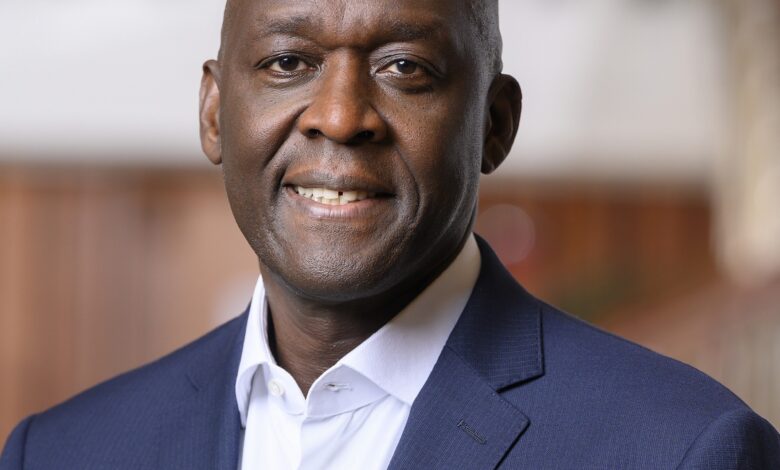
The question comes as International Finance Corporation (IFC) Managing Director Makhtar Diop prepares to visit Ghana from September 15 to 17 for discussions with government, businesses and other stakeholders on private investment and the country’s development priorities.
The discussions will cover access to finance, business competitiveness, agribusiness, industrial development, renewable energy, education, youth employment and skills development, as well as the creative economy.
But for Ghana, the bigger issue goes beyond attracting investment.
It is whether the money going into the economy can help local businesses expand, strengthen domestic supply chains and create the kind of jobs needed to support economic growth.
More money, but where does it go?
The IFC says its work in Ghana has included support for businesses, domestic value chains and access to finance for farmers, entrepreneurs, women-owned businesses and other groups that often struggle to secure funding.
Its recent investments include financing for the cocoa value chain, manufacturing, recycling, renewable energy and industrial infrastructure.
In the 2026 financial year, the IFC committed US$670 million through its own account and mobilisation in Ghana, compared with US$61 million in 2021.
The increase is significant, but the size of investment alone does not tell the full story.
For Ghana, what matters is whether capital is going into activities that increase production and productivity.
Investment in a factory, food-processing plant, logistics business, renewable energy project or technology company can have a wider effect when it creates demand for local suppliers and provides markets for smaller businesses.
That is where the impact of private investment can extend beyond the original project.
The financing problem
For many Ghanaian businesses, particularly smaller enterprises, access to finance remains a major constraint to expansion.
Businesses need money to buy equipment, increase production, hire workers, develop new products and reach new markets. Farmers and agribusinesses have additional financing needs because production and income are often tied to seasonal cycles.
When financing is difficult to obtain, businesses tend to remain small.
That limits their ability to invest in technology, employ more workers or supply larger markets.
The issue is therefore not simply getting more money into Ghana. It is making finance available to businesses with the potential to grow and ensuring that the financing is suited to the needs of those businesses.
Keeping more value in Ghana
The development of stronger domestic value chains is another part of the challenge.
Ghana produces cocoa, agricultural commodities and other raw materials, but the economic benefit can be much greater when more of the processing, packaging, distribution and marketing takes place locally.
The same principle applies to manufacturing and other productive sectors.
A stronger value chain creates opportunities for several businesses rather than concentrating the benefits in one company.
A farmer can supply a processor. The processor can buy packaging from another local business. Transporters, warehouses, distributors and retailers can also benefit.
That is the type of economic activity that can spread the impact of investment through different parts of the economy.
Jobs and skills must meet
Youth employment is also on the agenda for the IFC’s visit.
The planned discussions include education, youth employment and skills development, reflecting a problem that cannot be solved by training programmes alone.
Businesses need workers with the skills required to operate machinery, use digital systems, manage production and provide specialised services.
At the same time, young people need businesses that are growing and able to absorb those skills.
If the economy produces trained young people without enough expanding businesses, unemployment remains a problem. If businesses receive investment but cannot find the skills they need, productivity suffers.
The two sides therefore have to move together.
The cost of doing business
The ability of private businesses to expand also depends on the environment in which they operate.
Investment can provide a company with capital, but it does not remove the other costs and risks associated with running a business.
Energy, infrastructure, access to finance, digital connectivity and the wider business environment all affect whether an enterprise can compete.
For domestic companies, these conditions can determine whether they remain small or grow into significant employers.
For international investors, they can influence whether Ghana is attractive for long-term investment.
This makes the policy environment just as important as the money itself.
Agriculture and industry
Agribusiness and industrial development are among the areas being highlighted during Diop’s visit.
Both have the potential to connect investment directly to jobs and local businesses.
Investment in agriculture, for example, can generate activity beyond the farm through processing, storage, transport, packaging and marketing.
Industrial investment can have a similar effect when factories buy inputs and services from Ghanaian businesses.
The wider economic benefit therefore depends partly on how closely new investments are connected to local suppliers and workers.
Renewable energy as a business issue
Renewable energy is another area on the agenda.
While the environmental case for renewable energy is clear, it also has an economic dimension.
Businesses need dependable energy to produce goods and services, and the cost and reliability of power affect their ability to compete.
Investment in renewable energy could therefore support businesses while also helping to address environmental concerns.
The challenge is to develop projects that are commercially viable and capable of providing reliable energy to the businesses and communities that need it.
Beyond investment announcements
Ghana’s engagement with the IFC comes as the country looks to the private sector to play a larger role in economic development.
The IFC’s increased commitments show that there is capital available for projects in Ghana.
The harder task is making sure that the capital produces results that can be felt across the economy.
That means more competitive local businesses, stronger domestic supply chains, greater value addition, higher productivity and jobs.
For Ghana, the measure of successful private investment should therefore not be limited to the amount committed or the number of projects announced.
The real test is whether the investment helps businesses grow and creates economic opportunities that remain in country.