
Port Delays Put Ghana’s Trade Competitiveness at Risk
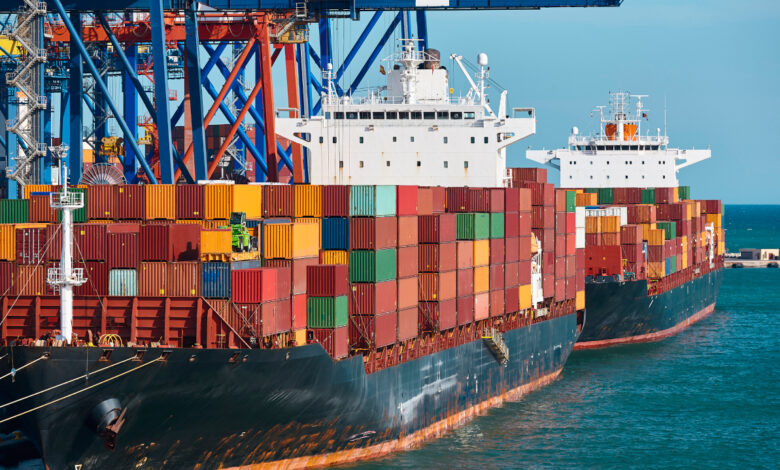
For an importer, a container sitting at the port for days or weeks is more than a delay. It can mean rising storage and demurrage bills, working capital tied up in unsold goods, disrupted deliveries and higher operating costs.
But as congestion and uncertainty persist at Ghana’s ports, the bigger risk is moving beyond the immediate cost to importers.
If businesses begin deciding that Ghana is too costly or unpredictable a gateway for their cargo, the country could lose more than revenue from delayed shipments. It could lose cargo, logistics business and the confidence of companies that have built their supply chains around its ports.
That warning is becoming more tangible, with the Importers and Exporters Association of Ghana (IEAG) saying some importers are exploring the possibility of routing cargo through the Port of Abidjan in Côte d’Ivoire because of delays and uncertainty associated with clearing goods through Ghana’s ports.
The association has warned that once businesses establish reliable alternative supply chains through another regional gateway, winning that business back could become difficult.
For Ghana, that raises a question that goes beyond the immediate congestion: what happens if the problem is allowed to persist?
The cost starts with the importer
The immediate impact is being felt by businesses whose goods remain within the port system longer than expected.
Longer cargo dwell times can increase storage and demurrage liabilities, while truck queues and delays in cargo evacuation add to operating costs.
The IEAG says the problem cuts across customs valuation and examination, inspection protocols, regulatory charges, terminal operations, truck turnaround times and coordination among agencies involved in cargo clearance.
It has also raised concerns about containers being routed for physical and intrusive examination after scanning, as well as what it describes as a breakdown in coordinated inspections involving Customs and other regulatory agencies.
The association says where several agencies have a legitimate regulatory interest in the same cargo, their interventions should be coordinated and conducted within a clearly defined inspection window rather than subjecting importers to successive and unpredictable examinations.
For businesses, the consequence is not simply more paperwork. It is uncertainty over when goods will be released and when the money tied up in those goods can begin generating a return.
When port delays reach the wider economy
The effects can extend beyond importers and clearing agents.
Manufacturers that depend on imported raw materials can face delays in replenishing inputs, while distributors and retailers may have to wait longer for inventory to reach their warehouses and shops.
Businesses then face a difficult choice: absorb additional logistics costs and accept lower margins, or pass some of those costs through their supply chains.
The Ghana Ports and Harbours Authority (GPHA), however, has cautioned against attributing specific price increases solely to port congestion. In response to claims that congestion was responsible for recent increases in cement prices, the Authority said several operational and commercial factors influence the cost of bringing clinker and cement into Ghana.
The broader issue, therefore, is not that every price increase can be attributed to port congestion. It is that prolonged delays create another layer of cost and uncertainty for businesses already operating under pressure.
Ghana’s competitiveness at stake
The stakes are particularly high because Ghana’s ports are central to the country’s trade system.
GPHA says about 85% of Ghana’s trade is handled through the ports of Tema and Takoradi. The Tema port ecosystem also supports Inland Clearance Depots, warehouses, transport and haulage companies, freight forwarders, factories and other related businesses.
That means sustained disruption at the ports can have consequences across a much wider business network.
A port’s competitiveness is not determined only by its physical infrastructure or the number of containers it can handle. Businesses also need predictability: they need to know how long cargo will take to clear, what procedures they will face and how much the process is likely to cost.
This is where prolonged congestion could become more damaging.
If importers conclude that another regional gateway offers a more predictable route, the decision to divert cargo may become part of their normal supply-chain planning rather than a temporary response to a backlog.
The IEAG has specifically warned that this is already a concern, saying some importers are considering Abidjan and that Ghana could struggle to recover cargo once alternative supply chains become established.
The risk of losing more than cargo
A sustained shift in cargo volumes would potentially affect a much wider group of businesses.
Port operators, freight forwarders, trucking companies, warehouses, inland container depots and other logistics providers all depend on the movement of cargo through Ghana’s gateways.
GPHA itself describes the Tema port area as a logistics ecosystem serving multiple categories of businesses connected to trade.
This means that if cargo begins moving elsewhere, the potential loss is not limited to the value of individual shipments.
It could affect activity across the logistics chain and, depending on the scale and duration of any diversion, reduce business for companies whose operations depend on cargo moving through Ghana.
Government revenue could also come under pressure if import activity is diverted, although the extent of any revenue effect would depend on the volume and nature of cargo that actually leaves Ghana’s ports.
Congestion could become self-reinforcing
The longer the problem persists, the harder it can become to resolve.
Containers that remain in the system occupy space that could otherwise be used for new cargo. Delays in evacuation can contribute to yard pressure, while truck queues and operational bottlenecks can further slow the movement of containers.
GPHA identified a combination of rising import traffic, increased volumes of empty containers awaiting export and road traffic challenges as contributors to landside congestion at Tema. In August, it introduced measures including increased truck deployment, faster evacuation of empty containers and improved yard and traffic management.
The Ghana Shippers’ Authority has also intervened, with its leadership examining operational pressures and measures to ease cargo clearance and vessel turnaround.
The Transport Ministry has separately engaged Meridian Port Services on accelerating inspection and clearance and improving coordination among agencies involved in cargo processing.
These interventions show that authorities are responding to the pressure.
The challenge, however, is whether the measures can address the underlying causes quickly enough to prevent congestion from becoming a recurring feature of Ghana’s trading environment.
The December test
Timing adds another layer of concern.
The IEAG has warned that the situation could worsen as the country approaches the December peak trading period, with increased cargo dwell time, storage and demurrage liabilities, truck queues and operating costs if bottlenecks remain unresolved.
That would put additional pressure on businesses that depend on timely delivery of goods during one of the country’s busiest trading periods.
It also raises the cost of getting the problem wrong.
If congestion is temporary and effectively resolved, businesses can adjust and return to normal operations.
If delays become prolonged and predictable, however, businesses have a stronger incentive to redesign their supply chains.
That is the point at which a port congestion problem becomes a trade competitiveness problem.
The real measure of success
The immediate task is to clear containers and restore smoother cargo movement.
But the longer-term test is whether Ghana can make the clearance process sufficiently predictable for businesses to continue choosing its ports.
The IEAG is calling for a high-level government intervention involving the relevant ministries, port authorities and regulatory agencies to identify the causes of the bottlenecks and establish an immediate action plan. It has also called for measurable targets around examination, valuation disputes, regulatory inspections, truck processing and cargo release.
That focus on measurable turnaround times is significant because businesses ultimately need more than assurances that congestion is being addressed.
They need to know how long it will take to clear cargo, what it will cost and whether those conditions can be relied upon.
For Ghana, the immediate cost of congestion may be measured in demurrage, storage charges and truck delays.
The longer-term cost could be harder to recover: the cargo and supply chains that decide to use another gateway.