UN Support Could Help Mineral-Rich Countries Build More Value at Home
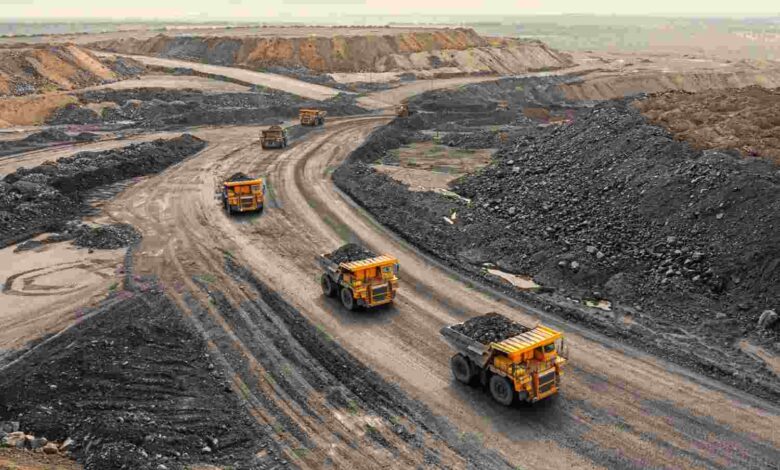
The growing global demand for minerals used in clean energy technologies could give Guinea, Indonesia, Madagascar, Nigeria, Zambia and Zimbabwe a chance to attract more investment, expand local processing and create jobs, provided they can strengthen the systems needed to capture more value from their resources.
The six countries will receive dedicated support under a new United Nations Country Support Mechanism on Critical Energy Transition Minerals, which is designed to help resource-rich developing countries build stronger mineral value chains.
The support will focus on practical areas including governance, value addition, industrial development, investment, environmental protection and human rights.
For the four African countries among the first beneficiaries, the initiative comes as governments face growing pressure to ensure that rising mineral exports translate into wider economic benefits at home.
Demand for copper, lithium, nickel, cobalt and rare earth elements is expected to increase sharply as countries expand renewable energy, electric vehicles and battery storage. The UN estimates that demand for critical minerals could nearly triple by 2030.
The increase creates an opportunity for producing countries to move beyond the export of raw materials and develop processing and other industries around their mineral resources.
But doing so requires more than mineral deposits.
Countries need investment, infrastructure, skilled workers, effective regulation and commercial frameworks capable of supporting businesses further along the value chain.
The UN mechanism will work with each participating country to identify its needs and coordinate technical assistance from across the UN system.
Zambia seeks more value from copper
For Zambia, the support comes as the country looks to build more economic activity around its long-established copper industry.
Copper is important to electricity networks, renewable energy infrastructure and other technologies linked to the energy transition, putting major producers in a position to benefit from rising demand.
Zambia’s Minister of Foreign Affairs and International Cooperation, Mulambo Haimbe, said the country’s ambition was not simply to produce more copper but to increase value addition, industrialisation and jobs.
“We want Zambians to be full participants in, not simply suppliers to, the global clean energy and technology transition,” he said.
The UN support could help Zambia address some of the policy, investment and industrial requirements involved in moving further up the value chain.
Zimbabwe’s lithium opportunity
Zimbabwe is approaching the energy transition from a different mineral base.
The country is one of Africa’s major lithium producers, and the mineral has become increasingly important to the battery industry.
Zimbabwe’s Minister of Foreign Affairs and International Trade, Amon Murwira, said the country wanted greater value addition and participation in critical mineral value chains.
The new support mechanism could provide technical assistance as Zimbabwe considers how to build more activity around its lithium resources rather than relying mainly on mineral exports.
Different resources, similar challenge
Guinea, Madagascar and Nigeria bring different mineral profiles and economic circumstances to the initiative.
Guinea has a major mining industry, particularly in bauxite, while Madagascar has deposits of nickel and cobalt. Nigeria, meanwhile, has been seeking to expand its mining industry as part of efforts to diversify its economy.
The UN says the support will be tailored to the circumstances of each country rather than applying a single approach.
The United Nations Development Programme (UNDP) will lead the mechanism with the UN Development Coordination Office, working through UN Resident Offices in the participating countries.
Environmental safeguards
Greater mineral production also brings environmental and social risks.
The UN has warned that poorly managed extraction can leave resource-rich communities bearing environmental and human costs without receiving sufficient economic benefits.
Environmental protection and human rights are therefore included among the areas covered by the mechanism.
The UN Environment Programme (UNEP) will contribute expertise on environmental protection, circularity and resilient livelihoods.
For communities in mining areas, the value of the initiative will ultimately depend on whether stronger safeguards are reflected in mining operations and whether the economic benefits extend beyond government and mining companies.
A bigger role in the energy transition
The six countries are entering the initiative at a time when critical minerals have become strategically important to the global energy transition.
The opportunity is not simply to sell more minerals. Higher demand could also encourage investment in processing, manufacturing, supporting infrastructure and skills.
That is the larger test facing the beneficiaries.
If the necessary policies, investment and institutions are put in place, the mineral boom could support broader economic diversification and employment.
For countries such as Zambia and Zimbabwe, the immediate question is therefore not only how much copper or lithium they can produce, but how much of the economic activity surrounding those minerals can be developed within their own economies.