Newmont’s GH₵12.8bn Payment Positions Mining at the Heart of Ghana’s Revenue Drive
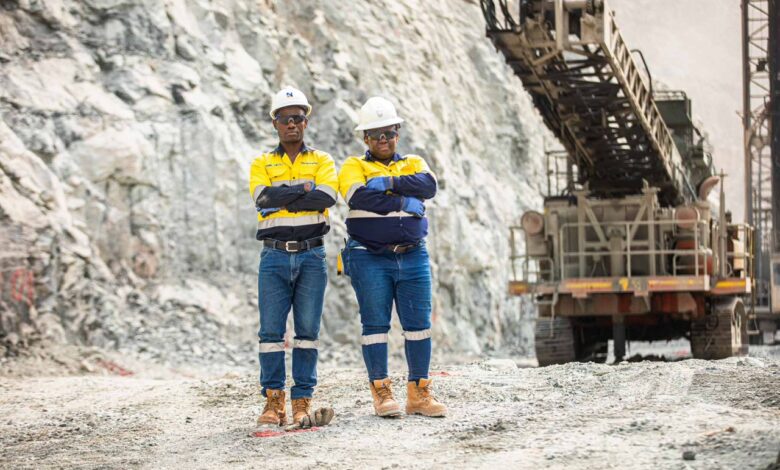
Ghana’s revenue recovery drive is increasingly leaning on the mining sector, as Newmont Corporation delivered a record GH₵12.8 billion in fiscal payments in 2025, one of the largest corporate contributions in the country’s history.

The mix of corporate taxes, royalties and capital gains highlights the growing weight of large-scale extractive firms in supporting government efforts to expand the tax base, rebuild fiscal buffers and ease dependence on borrowing.
Broad-Based Fiscal Contribution
A breakdown of the payments highlights the depth of mining’s contribution to public finances. Newmont’s Corporate income tax accounted for GH₵5.38 billion, forming the largest component of the total, followed by GH₵3.03 billion in capital gains tax linked to the divestment of the Akyem mine.
Mineral royalties contributed GH₵1.63 billion, alongside additional inflows from carried interest, PAYE, withholding taxes and other statutory levies.
The structure of the payments illustrates how mining revenues feed into government coffers through both ongoing production and one-off transactions, offering a mix of predictable and episodic fiscal inflows.

Anchoring Revenue Mobilisation
The contribution comes at a critical point in Ghana’s fiscal consolidation efforts. As authorities work to strengthen domestic revenue collection, mining stands out for its scale, formalisation and traceability.
At the same time, the figures highlight a structural feature of extractive revenues. While operational taxes such as royalties and corporate income tax provide relatively stable inflows, capital gains tied to asset transactions can significantly boost revenues in specific periods.
That dynamic underscores the importance of prudent fiscal management to smooth volatility and avoid overreliance on windfall gains.
Policy Signal and Investor Implications
It is important to note that the scale and transparency of the payments are being closely watched by investors when they assess Ghana’s extractive sector. Clear disclosure of fiscal contributions, alongside an established regulatory framework, reinforces the country’s position as a viable mining destination, thanks to Newmont Corporation.
Payments were channelled through state institutions including the Ghana Revenue Authority (GRA) and the Ministry of Finance, reflecting the structured nature of the fiscal regime.
Rising contributions from large operators like Newmont are also expected to shape ongoing policy discussions around taxation, local content and value addition, as the government seeks to maximise returns without undermining investor confidence.
Beyond Fiscal Flows
Newmont’s economic footprint extends beyond tax payments. Ongoing investments in infrastructure and community development, including work on the Sunyani–Ntotroso–Akyerensua road corridor, are supporting connectivity and economic activity in mining areas.
Such projects, while not always captured in fiscal data, contribute to broader economic outcomes by improving logistics, supporting local enterprises and strengthening regional integration.
Balancing Dependence and Transformation
The scale of the contribution reinforces a long-standing policy challenge: how to leverage extractive revenues while reducing dependence on them.
Mining is expected to remain a key pillar of Ghana’s fiscal framework in the near term. The longer-term objective is to channel these revenues into productive investments that support industrialisation, expand the economic base and reduce vulnerability to external shocks.
Outlook
For investors, Ghana’s extractive sector continues to present compelling prospects, with Newmont Corporation’s scale, transparency and regulatory compliance strengthening confidence in the country’s fiscal framework and investment climate.
For policymakers, the challenge is to translate resource inflows into lasting economic value. While the GH₵12.8 billion payment provides immediate fiscal relief, its long-term impact will depend on how effectively such revenues are channelled into productive investments and broader economic transformation.