
Conflict, Climate Shocks Threaten to Reverse Global Poverty Gains
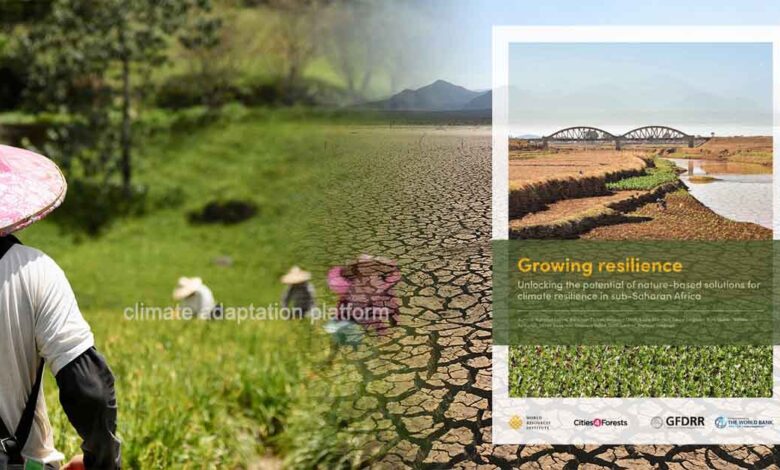
Decades of progress in reducing extreme poverty could be undone by 2030 as conflict, violence, climate disasters and economic shocks increasingly converge to threaten vulnerable populations around the world.
That warning is expected to dominate discussions at the Fragility Forum 2026, which opens this week from June 8 to 10, bringing together governments, development institutions, donors and policy experts to examine emerging global risks and identify practical solutions for building resilience.
The forum comes at a time when the geography of poverty is rapidly changing, with conflict and insecurity increasingly concentrating the world’s poorest populations in fragile and violence-affected regions.
Participants will assess how rising instability is undermining development gains while exploring lessons from countries that have successfully strengthened resilience through targeted investments and policy reforms.
One area of growing concern is the Caribbean, where climate-related disasters continue to pose significant threats to economic stability.
According to the World Bank Group, Caribbean nations spend nearly half the year exposed to hurricane risks capable of wiping out years of economic progress, infrastructure investments and job creation.
To mitigate these risks, approximately US$235 million in resilience financing is already supporting 11 Caribbean countries, helping them rebuild stronger infrastructure, improve disaster preparedness and protect critical public assets.
The forum is also expected to spotlight less visible but equally devastating threats.
Air pollution, for instance, now causes an estimated 5.7 million deaths annually and imposes economic costs equivalent to nearly 5 percent of global GDP, highlighting the growing link between environmental challenges and economic performance.
Health systems will also feature prominently in discussions, particularly as an estimated 4.5 billion people worldwide continue to lack access to essential health services. Development experts argue that strengthening healthcare delivery remains central to reducing poverty and improving economic resilience.
Emerging technologies such as artificial intelligence are expected to play an increasingly important role in addressing these challenges. Policymakers and development institutions are exploring how AI can support frontline health workers, improve disease diagnosis, identify treatment options and expand healthcare access in underserved communities where medical resources remain scarce.
Despite advances in technology and increased development financing, the overall message emerging ahead of the forum is one of caution.
Across regions and sectors, risks are intensifying faster than many countries can respond. Climate change is increasing the frequency and severity of extreme weather events. Conflict continues to displace millions of people. Public health systems remain under strain, while environmental degradation and pollution continue to impose heavy economic and social costs.
Development experts warn that without coordinated action, the cumulative effect of these pressures could significantly slow global growth, deepen inequality and reverse hard-won development gains achieved over the past several decades.
The discussions at Fragility Forum 2026 are therefore expected to focus not only on managing crises after they occur but also on building stronger institutions, improving preparedness and investing in long-term resilience.
The forum’s outcomes will also feed into broader discussions on the global economic outlook, with the World Bank expected to release its latest Global Economic Prospects Report next week. The report is anticipated to provide fresh insights into how rising geopolitical tensions, climate risks and structural vulnerabilities are shaping growth prospects across developed and developing economies.
For policymakers, the message is becoming increasingly clear: in a world defined by growing uncertainty, resilience is no longer simply a development objective, it is an economic necessity.
As governments grapple with mounting pressures from conflict, climate change, public health challenges and economic volatility, the ability to anticipate, absorb and recover from shocks may determine whether global poverty continues to decline or begins to rise again over the coming decade.