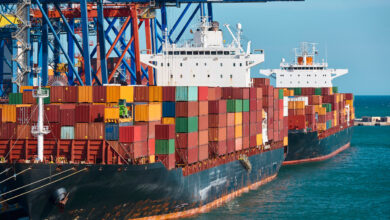
From Farm to Factory: How More Predictable Trade is Connecting Ghanaian Businesses to Global Markets
For businesses seeking to compete in global markets, success is often determined long before products reach store shelves.
It begins with the ability to source raw materials efficiently, move goods across borders without costly delays and operate within a trading system that is transparent and predictable.
In Ghana, efforts to improve trade facilitation are helping to strengthen those foundations, creating conditions that allow businesses to expand production, integrate into international value chains and access new market opportunities.
From pineapple processors in the Central Region to garment manufacturers serving global brands, companies are increasingly benefiting from reforms designed to reduce uncertainty and improve the movement of goods across borders.
As the country pursues industrialisation and export-led growth, predictable trade is emerging as an important competitive advantage.
From Local Production to Global Markets
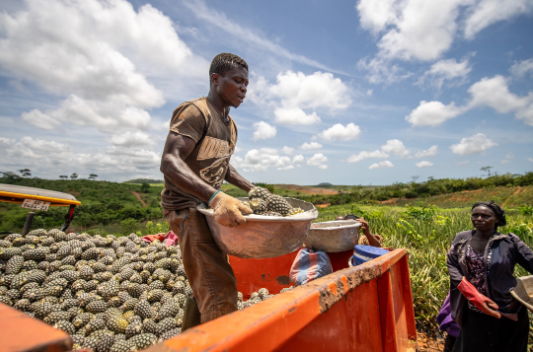
In Ekumfi, a coastal district in Ghana’s Central Region renowned for pineapple cultivation, the day’s work begins before sunrise.
Farmers move through fields harvesting fruit destined for processing plants, supermarkets and export markets.
At the heart of this agricultural value chain is Ekumfi Juices, a company that transforms locally grown pineapples into finished products sold across Ghana and abroad, including in the United States.
The operation supports employment across farming, processing, transportation and distribution while creating a reliable market for local producers.
Yet producing a quality export product is only one part of the equation.
The business also depends on the timely arrival of imported machinery, packaging materials and other essential inputs needed to keep production lines running efficiently.
“For us, it is important to have a system that is predictable and supports our operations,” says Frederick Kobbyna Acquaa of Ekumfi Juices.
A similar dynamic is playing out within Ghana’s expanding manufacturing sector.
At Ethical Apparel Africa, more than 1,000 workers produce garments for international markets, connecting Ghanaian manufacturing to global apparel supply chains.
About 80 percent of the workforce are women, making the company an important source of employment and economic empowerment.
The company is preparing for its next phase of growth.
“We now have over 1,000 employees, and we expect to grow to about 2,000, around 80 percent women,” says Esther Agyemang of Ethical Apparel Africa.
The planned expansion reflects growing confidence in Ghana’s manufacturing potential.
But it also highlights a reality shared by many export-oriented businesses: competitiveness depends heavily on reliable access to imported fabrics, machinery, accessories and other production inputs.
When delays occur at the border, production schedules can be disrupted, costs can rise and export commitments can become more difficult to meet.
The Cost of Uncertainty
For many businesses, the greatest challenge is not the cost of trade itself but the uncertainty surrounding it.
Importers can face unexpected changes in customs classification and valuation decisions after documentation has already been submitted, creating delays and increasing costs.
According to freight forwarders, such unpredictability makes business planning more difficult.
“Sometimes values are increased at customs after we’ve submitted our documents. Then we have to go back and appeal. It delays the process,” says Richard Ackah of the Ghana Institute of Freight Forwarders.
For manufacturers operating on strict production schedules, such delays can affect entire supply chains.
Raw materials arrive later than expected. Production timelines shift. Delivery commitments come under pressure. Costs increase.
Over time, these inefficiencies can affect investment decisions and undermine competitiveness in regional and international markets.
Creating Greater Certainty for Traders
To address these challenges, the Ghana Revenue Authority is introducing an Advance Rulings system aimed at increasing certainty and transparency in the trading environment.
The system allows businesses to obtain binding decisions on the classification and treatment of goods before they arrive in the country.
By resolving potential disputes ahead of time, traders gain greater clarity on duties, requirements and customs procedures.
“At the time of importation, a decision has already been made on the product. This reduces disputes and helps goods clear more quickly,” says Ernest Nyarkoh of the Ghana Revenue Authority.
For businesses, the value of the reform lies in predictability.
Knowing in advance how goods will be treated at the border enables firms to estimate costs more accurately, manage inventories more effectively and make investment decisions with greater confidence.
For companies integrated into global value chains, certainty around imported inputs can be just as important as access to export markets.
Why Predictability Matters
Across the world, trade predictability has become an increasingly important factor in determining where businesses invest and expand.
Manufacturers evaluating potential production locations look beyond labour costs and market size. They also consider how efficiently goods move through ports, border posts and customs systems.
When procedures are transparent and consistent, businesses can lower costs, improve delivery times and strengthen relationships with customers.
The Advance Rulings framework also aligns Ghana with international best practice under the World Trade Organization’s Trade Facilitation Agreement, which promotes transparency and the reduction of unnecessary barriers to trade.
For investors, such reforms send a powerful signal that Ghana is committed to building a business environment capable of supporting globally competitive enterprises.
Building a Stronger Trade Ecosystem
The reforms form part of a broader effort to modernise Ghana’s trading environment.
With support from the World Bank through the Trade Facilitation Support Program and the Ghana Economic Transformation Project, government institutions have been implementing measures since 2024 aimed at improving border efficiency, reducing administrative bottlenecks and increasing transparency.
The goal extends beyond faster customs clearance.
It is about creating an ecosystem in which businesses can operate more efficiently, connect to regional and international supply chains and expand with confidence.
For companies such as Ekumfi Juices and Ethical Apparel Africa, the benefits are already becoming visible.
Improved predictability allows manufacturers to secure inputs on time, meet customer expectations and respond more effectively to market opportunities.
For investors, it reduces operational risk.
For workers, it supports business expansion and job creation.
And for local communities, it strengthens the economic linkages that connect farms, factories and service providers to opportunities in global markets.
The Bigger Economic Opportunity
As Ghana seeks to deepen industrialisation and increase exports, the efficiency of its trade systems is becoming a strategic economic issue.
Trade facilitation may not command the same attention as major infrastructure projects or headline investment announcements, but its impact can be equally transformative.
Every improvement in transparency, consistency and efficiency reduces friction within the economy and strengthens the competitiveness of Ghanaian businesses.
From pineapple farms in Ekumfi to garment factories serving international retailers, the benefits of a more predictable trading environment are being felt across sectors.
By strengthening the systems that underpin commerce, Ghana is helping businesses connect more effectively to regional and global markets, creating the conditions for investment, expansion and job creation.
Ultimately, trade facilitation is about more than moving goods faster across borders.
It is about creating an environment where businesses can grow, workers can prosper and Ghana can secure a stronger position within the global economy.