
World Bank’s $500m Road Bet Targets Food Inflation and Rural Economic Growth
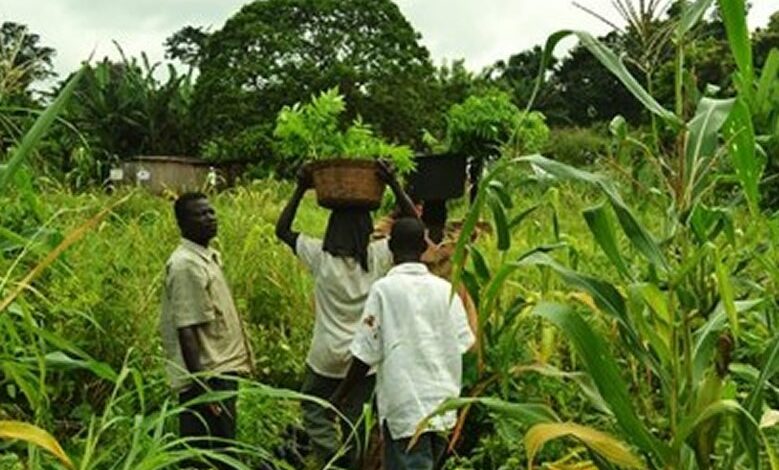
A $500 million financing package approved by the World Bank is set to tackle one of the biggest obstacles to Ghana’s agricultural growth and food security agenda: the poor road networks that continue to isolate farming communities from major markets.
The funding, approved under the Ghana Market Access and Connectivity Project (GMACP), will support the rehabilitation and maintenance of more than 1,000 kilometres of feeder roads across some of the country’s most productive agricultural zones, with the objective of improving market access, reducing post-harvest losses and creating jobs in rural areas.
For many farming communities, the challenge has never been solely about producing food. Getting produce to market efficiently has remained an equally significant hurdle. During the rainy season, deteriorated feeder roads often become impassable, delaying the movement of crops, increasing transportation costs and causing substantial losses for farmers.
The World Bank believes addressing these infrastructure gaps could strengthen agricultural value chains while easing pressure on food prices.
“This project will improve access to markets and opportunities for rural communities while strengthening Ghana’s agricultural competitiveness and resilience,” said Robert Taliercio, World Bank Division Director for Ghana, Liberia and Sierra Leone.
According to the Bank, the project is expected to benefit more than 550,000 people directly, including about 350,000 farmers, 250,000 women and 310,000 young people. It is also projected to create over 5,000 direct jobs and more than 25,000 indirect employment opportunities through road construction and maintenance activities.
Linking Farms to Markets
The intervention comes at a time when food affordability remains a major concern for households despite improvements in overall inflation trends.
Agricultural economists have long argued that one of the hidden drivers of food inflation in Ghana is the cost and inefficiency of transporting produce from rural production centres to urban markets.
Significant volumes of maize, rice, cassava and yam are produced annually across Ghana’s agricultural belt. However, poor road infrastructure often limits the speed and reliability with which these crops reach consumers.
Under the project, road improvements will be concentrated in key agricultural corridors covering the Upper West, Northern, Savannah, Oti, Volta, Eastern, Ashanti, Bono and Western regions.
These regions form a critical component of Ghana’s food production system, supplying staple crops that support both domestic consumption and agro-processing activities.
By improving year-round access to markets, officials expect farmers to reduce transportation costs, attract more buyers, minimise spoilage and expand production.
Beyond Roads
While the project is centred on road infrastructure, policymakers increasingly view it as a broader economic development intervention.
Over the years, Ghana has invested heavily in programmes aimed at boosting agricultural productivity. Yet inadequate logistics infrastructure has continued to limit the full benefits of those investments.
Poor roads frequently discourage traders from purchasing directly from farming communities, forcing many farmers to sell through intermediaries at lower prices. Perishable produce is particularly vulnerable, with delays in transportation often resulting in substantial post-harvest losses.
Improved connectivity is expected to stimulate growth beyond agriculture itself by supporting transport operators, agro-processors, warehouse operators, traders and small businesses operating along rural economic corridors.
The project therefore seeks to strengthen entire agricultural value chains rather than simply improve transportation infrastructure.
Building Resilience
A recurring challenge for infrastructure projects in Ghana has been maintenance after completion. To address this concern, the GMACP incorporates climate-resilient engineering designs intended to withstand flooding, erosion and other climate-related risks.
The programme will also support the operationalisation of the Road Maintenance Trust Fund and introduce performance-based maintenance contracts designed to improve the long-term sustainability of rehabilitated roads.
In addition, technical assistance will be provided to strengthen institutional capacity and ensure that road assets remain functional well beyond the life of the project.
The Ministry of Roads and Highways will oversee implementation.
A Rural Economic Opportunity
Beyond the physical infrastructure, the financing package signals renewed focus on rural development as Ghana confronts challenges including youth unemployment, regional disparities and rural-to-urban migration.
For many communities, road access determines much more than transport. It influences access to schools, healthcare, agricultural inputs, financial services and employment opportunities.
The success of the project will therefore be measured not only by the kilometres of roads rehabilitated, but by whether it helps create more connected, productive and economically resilient rural communities.
With agriculture continuing to employ a large share of Ghana’s workforce, improving the movement of goods from farms to markets could prove pivotal in strengthening food security, supporting economic growth and improving livelihoods across the country.