China’s Zero-Tariff Offer Opens Market Access Without Political Strings
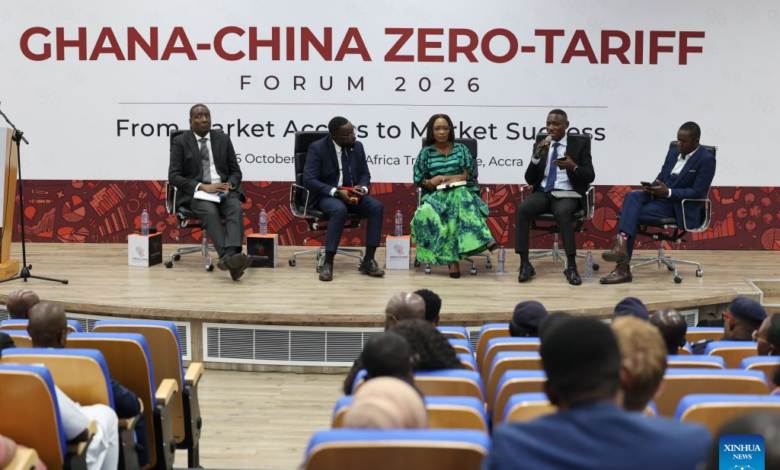
China’s zero-tariff policy offers Ghana and other African countries an opportunity to expand exports to the Chinese market without reciprocal trade concessions or political conditions, Chinese Ambassador to Ghana Cong Song has said.
Speaking at the Ghana-China Zero-Tariff Forum 2026 in Accra, Cong said the policy was intended to expand market access for African products and support shared economic development.
He said the arrangement allowed eligible African exports to enter China without tariffs, did not require African countries to open their own markets in return and imposed no quotas on export volumes.
“The zero-tariff policy features distinct characteristics. First, it is offered unilaterally, with no requirement for African countries to open their markets reciprocally. Second, there are no quota restrictions, meaning there is no ceiling on the volume of African exports to China. Third, it comes with no political strings attached,” he said.
Cong said removing tariffs could reduce the cost of exporting African goods to China and make them more competitive. He added that the policy could encourage investment in African manufacturing and provide exporters with more predictable access to the Chinese market.
However, the extent to which Ghana benefits will depend on its ability to identify export opportunities and supply products that can compete in the Chinese market.
Paul Frimpong, Executive Director of the Africa-China Center for Policy and Advisory (ACCPA), one of the forum’s organisers, said Ghana needed to draw on its experience in trade and business to make the most of the arrangement.
“I believe we will be able to get the best things from China’s zero-tariff policy,” he said.
The Ghana-China Zero-Tariff Forum 2026 sought to move the discussion from the policy’s potential benefits to how businesses and institutions could put the opportunity to use.
Co-hosted by ACCPA and China Europe International Business School Africa, the forum brought together policymakers, exporters, businesses, financial institutions, trade-support agencies, development partners, researchers and media representatives.