Northern Ghana’s Peace Test: Stakeholders Demand Action on Land, Jobs and Local Governance
Stakeholders working to sustain peace in Northern Ghana have called for urgent action on land disputes, chieftaincy tensions, youth unemployment and competition over natural resources, warning that dialogue alone cannot address the region’s persistent conflicts.
They want stronger traditional dispute-resolution systems, improved land administration, greater investment in agriculture and job creation, and more meaningful participation of women, young people and persons with disabilities in local decision-making.
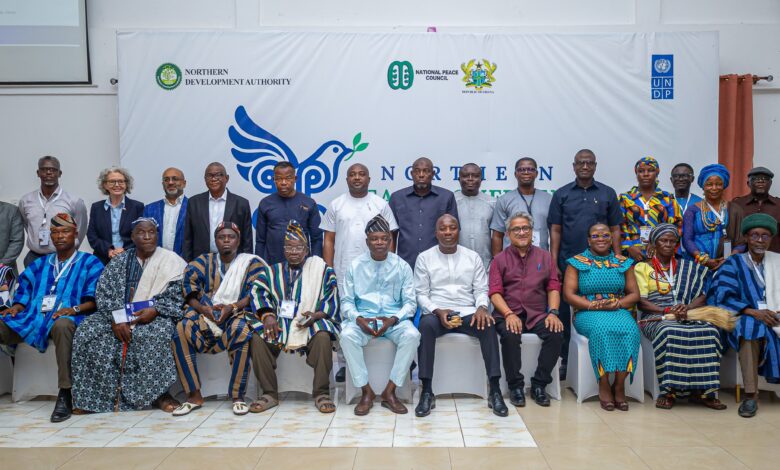
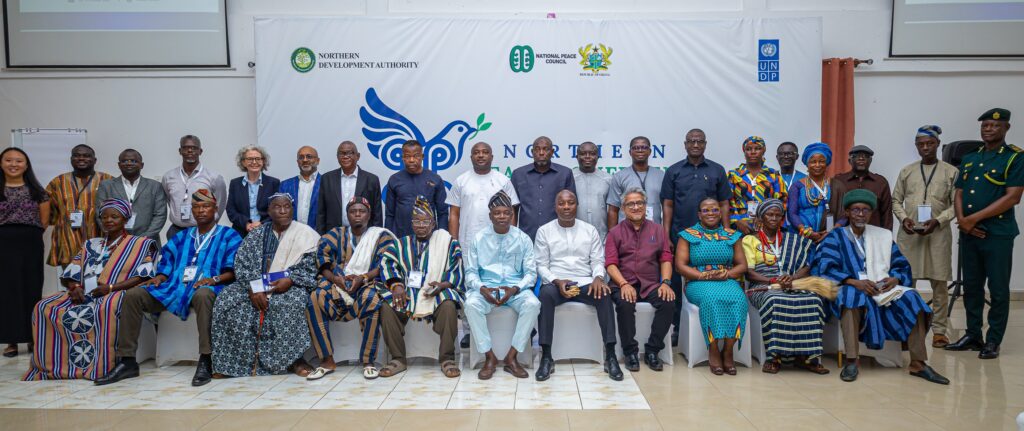
The calls were made at a two-day Northern Peace Conference in Tamale, which brought together government officials, traditional authorities, parliamentarians, development partners, civil society organisations and community representatives to examine the causes of conflict and identify practical responses.
Economic pressures and weak governance
Minister for Local Government, Chieftaincy and Religious Affairs, Mahama Ayariga, identified agriculture, agro-processing and irrigation as priority areas for investment to improve livelihoods and reduce economic pressures that can fuel conflict.
He also called for stronger traditional dispute-resolution mechanisms and better management of land and chieftaincy affairs, which remain sources of tension in parts of the region.
Northern Regional Minister, Ali Adolf John, said local authorities must respond more effectively to community grievances before they escalate into violence.
He stressed that women and young people must have a meaningful voice in decisions affecting their communities.
Deputy National Security Coordinator in charge of Operations, Major General (Rtd.) William Ayamdo, said local disputes, competition over natural resources, economic vulnerabilities and emerging security threats were interconnected challenges requiring coordinated responses.
He called for security interventions to be supported by mediation, inclusive development and stronger community resilience.
“Peace is not merely the absence of violence; it is the presence of justice, opportunity and trust. That is the peace we must build together,” he said.
Turning conference recommendations into action
A major concern was whether the discussions would translate into concrete interventions.
UNDP Ghana Resident Representative, Niloy Banerjee, said peacebuilding efforts needed clear priorities, defined responsibilities and mechanisms for tracking implementation.
“Dialogue is valuable, but dialogue without implementation can deepen frustration. This conference should therefore conclude with priorities that are specific, owned and capable of being tracked,” he said.
Director-General of the National Development Planning Commission, Dr Audrey Smock Amoah, called for peacebuilding priorities to be integrated into national development planning, linking recommendations to government policies, investments and monitoring systems.
The conference was jointly organised by the United Nations Development Programme (UNDP) in Ghana, the National Peace Council, the Northern Development Authority and the Parliamentary Northern Caucus.
Land disputes and livelihoods
Participants identified land administration and traditional governance as critical areas for reform.
Their recommendations included clearer documentation of chieftaincy succession procedures, stronger traditional mediation systems and community-based approaches to resolving farmer-herder disputes.
They also called for sustained investment in agriculture, entrepreneurship, vocational training and access to finance, particularly for young people and vulnerable communities.
UNDP Ghana has supported peacebuilding and resilience initiatives in Northern Ghana through programmes including the Atlantic Corridor Project, the Peacebuilding Fund and the Gulf of Guinea Prevention Facility. The interventions have combined community dialogue and conflict prevention with livelihood training, start-up support and income-generating opportunities.
Women and young people seek greater influence
Participants also called for women, young people and persons with disabilities to have a stronger role in peacebuilding and local governance.
Hajia Lamnatu Adam, Executive Director of Songtaba, said institutional and cultural barriers that limit the participation of women and young people needed to be addressed.
Felicia Agamboka, Queen Mother of Bogofiu in the Upper East Region, said women could play a greater role in promoting peaceful coexistence within their communities.
” I realised that we women even have the power to spread peace to our various communities,” she said.
Muhammad Azuma Kama of the Ghana Federation of Disability Organisations called for persons with disabilities to be included in peace education, economic programmes and community decision-making.
Participants recommended stronger implementation of the Affirmative Action Act, a National Action Plan on Youth, Peace and Security, and more accessible conflict-reporting and early warning systems.
Partners call for sustained coordination
UK Development Director at the Foreign, Commonwealth and Development Office, Terri Sarch, urged stakeholders to build on existing partnerships rather than duplicate peacebuilding initiatives.
She recalled a UK-convened conference in Tamale three years earlier, which helped lay the groundwork for the Northern Ghana Parliamentary Caucus. She urged participants to identify interventions that could begin immediately while setting longer-term priorities requiring institutional reforms and sustained investment.
Minta Acheampomaa Constance of the Upper West Regional Youth Parliament said young people could help sustain the initiative through peace education in schools and community sensitisation.
“Peace is not an event but a process and this conference has given us a solid foundation to build upon,” she said.
The conference ended with calls for stronger traditional governance, improved land management, more economic opportunities and better coordination among institutions responsible for peace and development.
The challenge now is to turn those recommendations into practical interventions, with clear responsibilities and measurable results.