
GSE Targets More Businesses for Capital Market Financing with 2027 Academy
The Ghana Stock Exchange (GSE) is preparing to widen access to long-term business financing with plans to establish an academy in 2027 to equip companies with the governance, financial reporting and institutional capacity needed to raise funds from the capital market.
The initiative is part of a broader effort to increase the number of businesses able to access equity and debt financing, as the Exchange seeks to build on renewed investor interest following three successful initial public offerings (IPOs) that raised more than GH¢2.1 billion in six months.
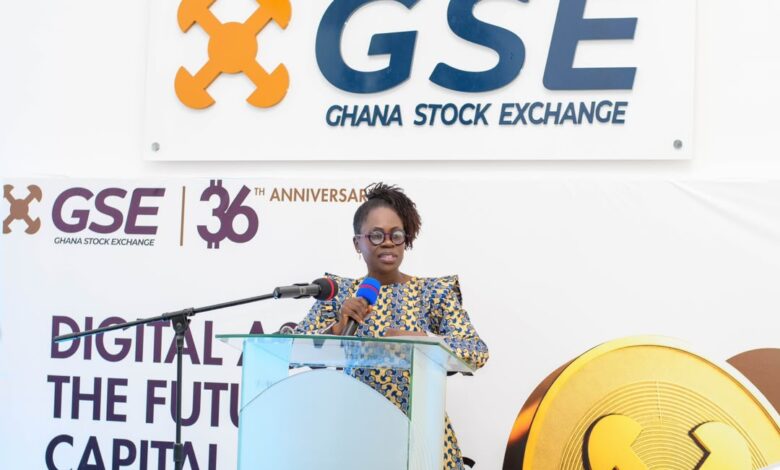
Managing Director of the GSE, Ms Abena Amoah, said the proposed academy would help address some of the capacity gaps that prevent businesses from meeting the requirements for raising funds through the capital market.
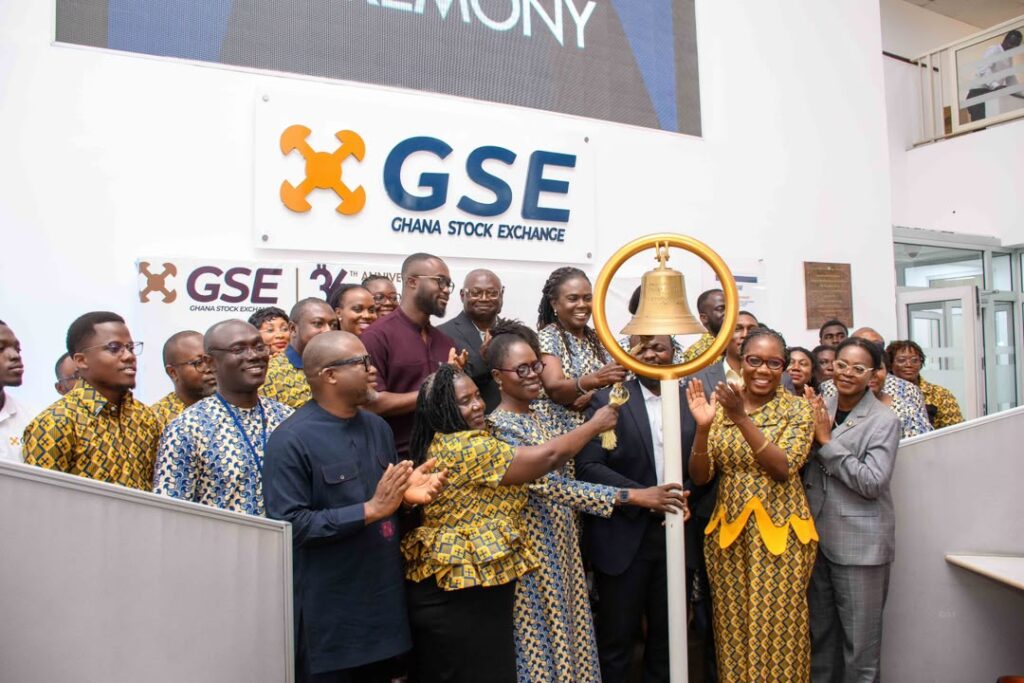
Speaking at the Exchange’s 36th anniversary celebration in Accra on Thursday, November 12, she said the GSE wanted to create an environment where more companies could prepare themselves to attract investment and finance their growth.
The academy is expected to support businesses in strengthening corporate governance, improving financial reporting systems and developing the institutional structures required to engage investors.
The move comes against the backdrop of a long-standing challenge in Ghana’s capital market: attracting a consistent pipeline of companies willing and prepared to list and raise equity.
Three companies have recently demonstrated the market’s capacity to mobilise substantial domestic capital. First Atlantic Bank PLC raised GH¢786 million in December 2025, ZEN Petroleum Holdings PLC secured GH¢640 million in April 2026, while Kasapreko PLC raised GH¢700 million in June 2026.
All three offers were oversubscribed, ending a seven-year drought in new main-board listings.
Ms Amoah said the successful offers demonstrated that domestic investors were prepared to commit funds to businesses with credible prospects and sound governance.
The Exchange also mobilised GH¢6.79 billion through its debt and equity markets between 2025 and October 2026, underscoring its role in financing businesses and other capital-raising activities.
Digital securities to expand financing options
Alongside efforts to prepare more companies for listing, the GSE is exploring digital securities as another avenue for broadening access to capital.
Ms Amoah said the Exchange was developing a digital strategy to guide its participation in the issuance and trading of tokenised securities and determine how these instruments could operate within its existing market infrastructure.
Tokenisation involves representing ownership of financial assets digitally, potentially allowing investments to be divided into smaller units and making certain investment opportunities more accessible.
For businesses, the technology could provide additional ways to raise funds, while investors could gain access to a wider range of financial products.
However, she cautioned that tokenisation would not automatically guarantee liquidity, returns or security, making regulation, investor education and appropriate safeguards essential.
The GSE is examining how tokenised securities could be integrated into existing clearing, settlement and depository arrangements.
Ms Amoah identified the Virtual Asset Service Providers Act, 2025 (Act 1154), and the Securities and Exchange Commission’s regulatory sandbox as important foundations for developing the digital asset market.
The sandbox is being used to test the tokenisation of assets such as gold, Treasury bills, bonds and trade finance instruments, while examining risks relating to custody, liquidity, cybersecurity and operational arrangements.
The Exchange is also drawing lessons from international initiatives, including Singapore’s Project Guardian and Switzerland’s SIX Digital Exchange, as it considers an appropriate model for Ghana.
Ms Amoah said the GSE would work with regulators and international market institutions to ensure that digital securities offered adequate investor protection and complied with established market standards.
For the Exchange, the broader objective is to make the capital market a more accessible source of financing for businesses while strengthening its capacity to accommodate emerging financial products.
The success of that ambition will depend not only on new technology but also on whether more Ghanaian companies can build the structures and confidence required to raise money from investors.